
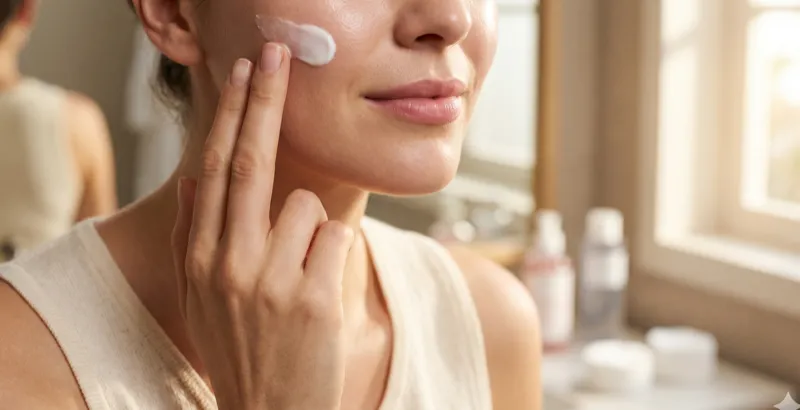
The science of skin aging is evolving rapidly — and for women navigating the skin changes that come with menopause and beyond, evidence-based skincare represents a fundamentally different approach: working with your skin's biology rather than against it.
Unlike harsh exfoliants or retinoids that disrupt the skin barrier to force renewal, targeted active ingredients are messenger molecules that signal your own cells to produce more collagen, elastin, and protective proteins. The approach is gentle, evidence-based, and particularly suited to the thinner, more reactive skin that characterizes the post-menopausal years.
Combining Oral and Topical Approaches for Maximum Structural Rebuilding
The combination of oral collagen supplements with topical collagen-stimulating treatments represents the most comprehensive approach to dermal structural rebuilding currently available without prescription intervention. Each approach stimulates collagen production through a different mechanism, and because these mechanisms are biologically independent, their effects are additive rather than redundant. Oral collagen peptides stimulate fibroblasts through chemotactic signaling (the peptides attract and activate fibroblasts from inside the body). Topical peptides stimulate through TGF-beta receptor activation (growth factor signaling at the skin surface). Topical retinol stimulates through RAR/RXR nuclear receptor activation (direct gene transcription modulation). Topical vitamin C supports through cofactor activity (ensuring structural quality of all produced collagen). Four independent pathways, all converging on the same outcome: more collagen in the dermis.[1]
The evidence for oral collagen supplements: a 2019 systematic review by Choi et al. (Journal of Drugs in Dermatology) analyzed 11 randomized, placebo-controlled trials encompassing over 800 participants. The meta-analysis found that oral hydrolyzed collagen supplementation (2.5-10g daily) significantly improved skin elasticity (Cutometer measurements) and skin hydration (Corneometer measurements) compared to placebo, with effects becoming statistically significant at 4-8 weeks. The mechanism: hydrolyzed collagen peptides (particularly the dipeptides prolyl-hydroxyproline and hydroxyprolyl-glycine) survive gastric digestion, appear in the bloodstream within 1-2 hours, and accumulate in the dermis where they are recognized by fibroblasts as collagen turnover signals. The fibroblasts interpret these peptide signals as evidence of collagen degradation, triggering compensatory collagen production — effectively tricking fibroblasts into producing more collagen without actual degradation having occurred.
Clinical research confirms that how to combine oral and topical for maximum effect: The protocol: (1) Oral: 2.5-5g hydrolyzed collagen peptides daily, taken on an empty stomach or with a light meal. Co-supplement with 100-250mg vitamin C to enhance the fibroblast response to the collagen peptide signal. Marine or bovine sources are both evidence-supported; choose based on dietary preference. (2) Topical morning: vitamin C serum (cofactor pathway) → peptide cream (TGF-beta pathway) → ceramide moisturizer → SPF 50. (3) Topical evening: retinol 3-4 nights per week with sandwich method (RAR/RXR pathway) → peptide cream on non-retinol nights (sustained TGF-beta) → ceramide seal. This protocol activates four independent collagen stimulation pathways: oral chemotactic signaling + topical TGF-beta signaling + topical retinoid receptor signaling + topical vitamin C cofactor support.
Expected results from the combined approach: clinical observation and extrapolation from individual pathway studies suggest that the combined oral + topical approach produces 30-50% greater total collagen improvement compared to topical treatment alone over 12 months. The oral supplement provides a baseline systemic stimulation that the topical treatment amplifies at the skin surface. The practical benefits: faster visible improvement (initial firmness changes at 6-8 weeks versus 10-12 weeks with topical alone), greater magnitude of improvement at 12 months, and improved skin hydration from the hyaluronic acid stimulation that oral collagen peptides also provide. Important caveats: (1) Choose hydrolyzed collagen with molecular weight 2,000-5,000 Daltons — this size range is optimal for digestive survival and bioavailability. (2) Consistency matters more than dose — 2.5g daily for 6 months outperforms 10g daily for 6 weeks. (3) Oral collagen supplements are exactly that — supplements. They enhance topical treatment but do not replace it. A woman who takes collagen supplements without any topical treatment will see modest improvement; a woman who combines both will see substantially greater improvement.
Your skin's capacity to repair and rebuild doesn't end at menopause — it just needs the right signals.
— Dr. Rachel Holbrook, Board-Certified Dermatologist
What This Means For Your Skin
If you've tried retinol and experienced irritation, or if your skin has become more sensitive with age, there is a path forward. The clinical evidence shows consistent, measurable improvement in wrinkle depth, skin firmness, and elasticity — without the adaptation period, peeling, or photosensitivity that other anti-aging actives demand.
Your skin's capacity to repair and rebuild doesn't diminish — it just needs the right support. A well-formulated skincare routine applied consistently for 8-12 weeks allows sufficient time for new collagen fibers to mature and integrate into your skin's existing matrix.
The science is clear. The evidence is consistent. The results are measurable.
What happens next is up to you.