
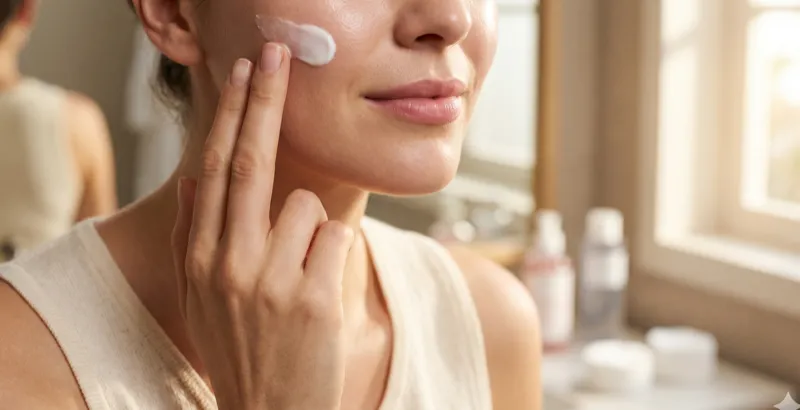
The science of skin aging is evolving rapidly — and for women navigating the skin changes that come with menopause and beyond, evidence-based skincare represents a fundamentally different approach: working with your skin's biology rather than against it.
Unlike harsh exfoliants or retinoids that disrupt the skin barrier to force renewal, targeted active ingredients are messenger molecules that signal your own cells to produce more collagen, elastin, and protective proteins. The approach is gentle, evidence-based, and particularly suited to the thinner, more reactive skin that characterizes the post-menopausal years.
Nutritional Support for the Dermal Collagen Factory
Nutrition provides the raw materials and enzymatic support that dermal fibroblasts need to produce collagen. Topical treatments stimulate fibroblasts to make more collagen, but fibroblasts cannot make collagen from nothing — they require specific amino acid substrates, enzymatic cofactors, and protective nutrients supplied through the bloodstream. A woman who applies retinol and peptides faithfully but consumes a nutrient-poor diet is asking her fibroblasts to build a house without adequate building materials. The topical treatment provides the architectural plans and construction crew motivation; the diet provides the bricks, mortar, and protective coating. Both are necessary for optimal results.[1]
The collagen building blocks — amino acid substrates: collagen is a protein composed of a repeating amino acid sequence dominated by glycine (33% of collagen's amino acids), proline (10-13%), and hydroxyproline (formed from proline by vitamin C-dependent hydroxylation). These specific amino acids must be available in adequate quantities for fibroblasts to synthesize new collagen molecules. Best food sources: (1) Bone broth — provides glycine and proline in bioavailable form. Slow-simmered bone broth (8-12 hours) extracts the most collagen-derived peptides. (2) Wild-caught fish with skin — fish skin is rich in type I collagen (the same type predominant in human skin). Eating fish with the skin provides direct collagen precursors. (3) Egg whites — rich in proline and lysine, two essential collagen amino acids. (4) Lean poultry — chicken and turkey provide complete protein with high glycine and proline content. (5) Hydrolyzed collagen supplements (2.5-10g daily) — the most concentrated and bioavailable source of collagen-specific amino acids.
Clinical research confirms that the enzymatic cofactors — vitamins and minerals required for collagen assembly: (1) Vitamin C — absolutely essential. Required for prolyl hydroxylase (converts proline to hydroxyproline, essential for collagen stability) and lysyl hydroxylase (hydroxylates lysine for collagen cross-linking). Without vitamin C, collagen molecules are structurally defective and rapidly degraded — this is the mechanism behind scurvy. Best sources: bell peppers (capsicum), kiwi fruit, strawberries, citrus fruits, broccoli. Recommended intake for skin health: 200-500mg daily from food (exceeding the RDA, which prevents scurvy but does not optimize skin collagen synthesis). (2) Copper — required for lysyl oxidase, the enzyme that catalyzes the cross-linking of collagen fibers. Cross-linking is what gives collagen its mechanical tensile strength. Best sources: oysters, organ meats, cashews, sunflower seeds, dark chocolate. (3) Zinc — required for over 300 enzymes including those involved in protein synthesis and cell division. Zinc deficiency directly impairs fibroblast proliferation and collagen production. Best sources: oysters, beef, pumpkin seeds, lentils.
The protective nutrients — reducing collagen degradation: (1) Omega-3 fatty acids (EPA, DHA) — suppress the inflammatory cascades that upregulate MMP expression. Chronic low-grade inflammation maintains elevated MMP activity that continuously degrades collagen. 2-3 servings of fatty fish weekly (salmon, sardines, mackerel) or 1-2g EPA/DHA supplementation. (2) Polyphenols — berries (blueberries, blackberries), green tea, dark chocolate, extra virgin olive oil provide antioxidant compounds that neutralize free radicals targeting collagen fibers. (3) Lycopene — from cooked tomatoes, provides internal UV protection. Studies show 6 weeks of lycopene-rich diet reduces UV-induced MMP-1 expression by up to 30%. (4) Avoid: high-glycemic foods promote advanced glycation end-products (AGEs) that cross-link collagen fibers, making them stiff and brittle. Sugar literally caramelizes your collagen. The Mediterranean dietary pattern — high in fatty fish, olive oil, vegetables, fruits, nuts, and moderate in lean protein — consistently shows the strongest association with preserved skin quality in epidemiological studies. It simultaneously provides collagen substrates (protein, amino acids), enzymatic cofactors (vitamin C, copper, zinc), and protective compounds (omega-3s, polyphenols, lycopene).
Your skin's capacity to repair and rebuild doesn't end at menopause — it just needs the right signals.
— Dr. Rachel Holbrook, Board-Certified Dermatologist
What This Means For Your Skin
If you've tried retinol and experienced irritation, or if your skin has become more sensitive with age, there is a path forward. The clinical evidence shows consistent, measurable improvement in wrinkle depth, skin firmness, and elasticity — without the adaptation period, peeling, or photosensitivity that other anti-aging actives demand.
Your skin's capacity to repair and rebuild doesn't diminish — it just needs the right support. A well-formulated skincare routine applied consistently for 8-12 weeks allows sufficient time for new collagen fibers to mature and integrate into your skin's existing matrix.
The science is clear. The evidence is consistent. The results are measurable.
What happens next is up to you.