
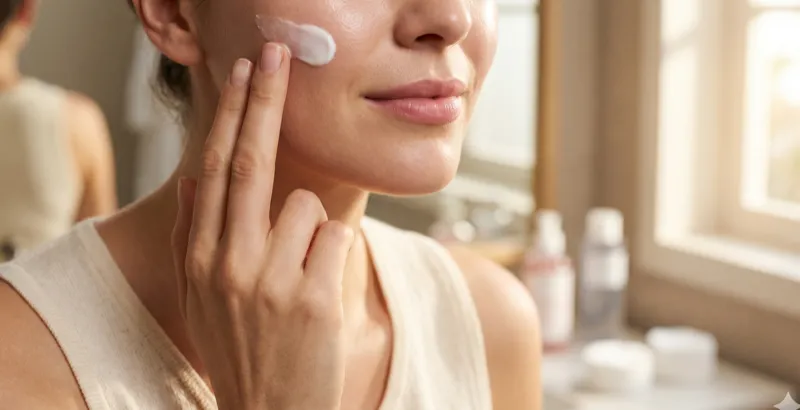
The science of skin aging is evolving rapidly — and for women navigating the skin changes that come with menopause and beyond, evidence-based skincare represents a fundamentally different approach: working with your skin's biology rather than against it.
Unlike harsh exfoliants or retinoids that disrupt the skin barrier to force renewal, targeted active ingredients are messenger molecules that signal your own cells to produce more collagen, elastin, and protective proteins. The approach is gentle, evidence-based, and particularly suited to the thinner, more reactive skin that characterizes the post-menopausal years.
How Physical Activity Stimulates Dermal Structural Renewal
The relationship between exercise and skin collagen production is supported by a growing body of evidence demonstrating that regular physical activity produces measurable improvements in skin structure and appearance that go beyond the indirect benefits of cardiovascular health and weight management. A landmark 2014 study from McMaster University by Crane et al. compared skin biopsies from sedentary and exercising adults over age 40. The exercisers showed significantly thicker dermis with denser collagen architecture compared to sedentary age-matched controls — their skin microscopically resembled that of adults 20-30 years younger. Even more remarkably, when previously sedentary participants began a moderate exercise program, their skin biopsies showed measurable improvement in dermal structure within 12 weeks. Exercise is not merely associated with better skin — it appears to directly stimulate dermal remodeling.[1]
The mechanisms through which exercise stimulates skin collagen: (1) Growth hormone release — exercise, particularly high-intensity interval training and resistance training, triggers significant growth hormone (GH) pulses from the pituitary gland. GH directly stimulates fibroblast proliferation and collagen synthesis through the GH-IGF-1 axis. The exercise-induced GH pulse can be 2-10 times higher than resting levels, providing a potent periodic stimulus for collagen production. (2) Increased dermal blood flow — during exercise, cardiac output increases by 4-7 fold, and blood flow to the skin increases significantly (both for thermoregulation and as part of systemic circulation enhancement). This increased perfusion delivers more oxygen, nutrients, and amino acid substrates to dermal fibroblasts, supporting their synthetic activity. (3) IL-15 myokine release — contracting skeletal muscles release IL-15, a myokine that has been shown to improve skin structure. Crane et al. found elevated IL-15 levels in the skin of exercisers compared to sedentary controls.
Clinical research confirms that (4) Mechanotransduction — the mechanical forces generated during exercise (muscle contraction, joint movement, gravitational loading) create mechanical stimuli that fibroblasts sense and respond to. Fibroblasts are mechanosensitive cells — they increase collagen production in response to appropriate mechanical loading. Resistance training, which generates the greatest mechanical forces, may provide the strongest mechanotransduction signal to dermal fibroblasts. (5) Cortisol regulation — chronic stress elevates cortisol, which suppresses collagen synthesis and promotes MMP activity. Regular exercise reduces baseline cortisol levels and improves stress resilience, removing the hormonal brake on collagen production. (6) Improved sleep quality — exercise enhances sleep depth and duration, optimizing the nocturnal growth hormone pulse that drives overnight collagen repair.
The exercise protocol for maximum skin collagen benefit: (1) Resistance training 2-3 times per week — provides the greatest growth hormone response and mechanotransduction stimulus. Compound movements (squats, deadlifts, rows) that recruit large muscle groups produce the largest GH pulses. (2) Moderate cardio 3-5 times per week — 30-45 minutes of brisk walking, cycling, or swimming increases dermal blood flow and IL-15 release. (3) HIIT intervals 1-2 times per week — high-intensity intervals produce the largest exercise-induced GH pulses, providing periodic strong stimulation of fibroblast activity. (4) Important caveat: outdoor exercise requires additional UV protection. The skin benefits of exercise are negated if outdoor workouts result in chronic UV exposure without sunscreen. Apply SPF 50 before outdoor exercise, choose morning or late afternoon timing when UV intensity is lower, and wear UV-protective clothing when possible. Indoor exercise (gym, home workouts) provides all the collagen benefits without UV risk. (5) Post-exercise nutrition: consume 20-30g protein within 60 minutes of exercise to provide amino acid substrates for the GH-stimulated collagen synthesis. The combination of exercise + topical collagen treatment + adequate nutrition represents the most comprehensive collagen-building strategy available — stimulating collagen from every available pathway: topical (retinol + peptides + vitamin C), oral (collagen supplements), hormonal (exercise-induced GH), mechanical (resistance training mechanotransduction), and circulatory (exercise-enhanced dermal perfusion).
Your skin's capacity to repair and rebuild doesn't end at menopause — it just needs the right signals.
— Dr. Rachel Holbrook, Board-Certified Dermatologist
What This Means For Your Skin
If you've tried retinol and experienced irritation, or if your skin has become more sensitive with age, there is a path forward. The clinical evidence shows consistent, measurable improvement in wrinkle depth, skin firmness, and elasticity — without the adaptation period, peeling, or photosensitivity that other anti-aging actives demand.
Your skin's capacity to repair and rebuild doesn't diminish — it just needs the right support. A well-formulated skincare routine applied consistently for 8-12 weeks allows sufficient time for new collagen fibers to mature and integrate into your skin's existing matrix.
The science is clear. The evidence is consistent. The results are measurable.
What happens next is up to you.