
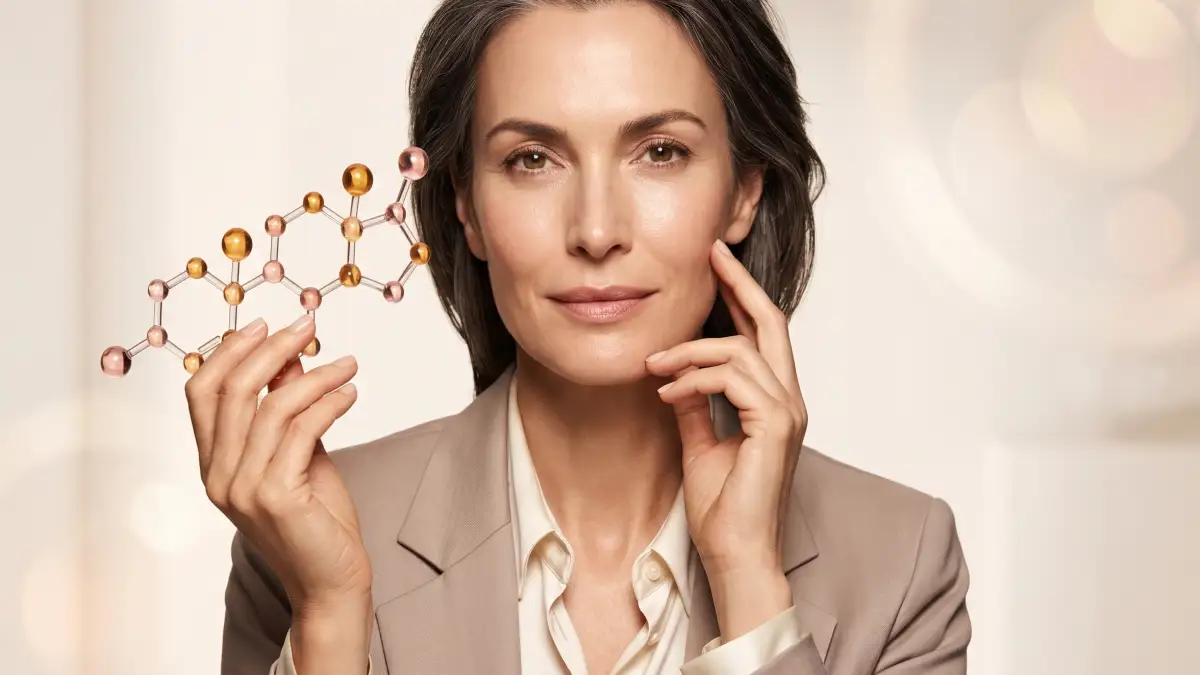
The science of skin aging is evolving rapidly — and for women navigating the skin changes that come with menopause and beyond, evidence-based skincare represents a fundamentally different approach: working with your skin's biology rather than against it.
Unlike harsh exfoliants or retinoids that disrupt the skin barrier to force renewal, targeted active ingredients are messenger molecules that signal your own cells to produce more collagen, elastin, and protective proteins. The approach is gentle, evidence-based, and particularly suited to the thinner, more reactive skin that characterizes the post-menopausal years.
Plant Estrogens That Support Aging Skin Naturally
Phytoestrogens — plant-derived compounds that structurally resemble human estradiol and can bind to estrogen receptors — represent a non-hormonal approach to partially restoring estrogen signaling in aging skin. The most clinically studied phytoestrogens for skin are isoflavones from soy (genistein and daidzein) and red clover (biochanin A and formononetin), which bind preferentially to estrogen receptor beta (ERβ) — the dominant estrogen receptor type in skin. This selective binding means phytoestrogens can activate skin-specific estrogen pathways without the systemic hormonal effects that concern many women about conventional hormone replacement.[1]
Clinical evidence for topical phytoestrogen skin benefits is substantial. A randomized controlled trial of topical genistein (soy isoflavone) applied to postmenopausal facial skin for 24 weeks demonstrated: 23% increase in dermal collagen content, significant improvement in skin elasticity measured by cutometer, increased hyaluronic acid production in the treated dermis, and no measurable systemic estrogenic effects (serum estrogen levels remained unchanged). The mechanism is direct: genistein binds to ERβ on fibroblasts, activating the same collagen-stimulating gene transcription programs that endogenous estrogen normally drives — but the topical application limits the effect to the skin without systemic absorption.
Clinical research confirms that red clover isoflavones have shown similar benefits in clinical studies, with particular effectiveness for improving skin moisture and reducing trans-epidermal water loss. A double-blind placebo-controlled study of oral red clover isoflavone supplementation (80mg daily) in menopausal women found significant improvement in skin hydration, texture, and overall skin condition after 90 days compared to placebo. Equol — a metabolite of daidzein produced by gut bacteria — shows even stronger estrogen receptor binding than its parent compound, though only approximately 30-50% of women possess the gut bacteria capable of producing equol from dietary soy.
Practical application of phytoestrogens for skin: topical formulations containing 1-4% genistein or soy isoflavone extract applied to the face provide direct ERβ activation in the skin. Oral supplementation with soy isoflavones (40-80mg daily) or red clover extract provides systemic phytoestrogen levels that support skin from within. Dietary sources — fermented soy products (tempeh, miso, natto) provide more bioavailable isoflavones than unfermented soy. The combination of topical and oral phytoestrogens creates a dual-pathway approach that partially compensates for estrogen decline. Important caveat: phytoestrogens provide approximately 10-20% of the receptor activation of endogenous estrogen — they are a meaningful supplement but not a full replacement for estrogen signaling. Women seeking maximum skin benefit should combine phytoestrogen use with retinoid therapy and comprehensive collagen-stimulating skincare for additive effects across multiple pathways.
Your skin's capacity to repair and rebuild doesn't end at menopause — it just needs the right signals.
— Dr. Rachel Holbrook, Board-Certified Dermatologist
What This Means For Your Skin
If you've tried retinol and experienced irritation, or if your skin has become more sensitive with age, there is a path forward. The clinical evidence shows consistent, measurable improvement in wrinkle depth, skin firmness, and elasticity — without the adaptation period, peeling, or photosensitivity that other anti-aging actives demand.
Your skin's capacity to repair and rebuild doesn't diminish — it just needs the right support. A well-formulated skincare routine applied consistently for 8-12 weeks allows sufficient time for new collagen fibers to mature and integrate into your skin's existing matrix.
The science is clear. The evidence is consistent. The results are measurable.
What happens next is up to you.