
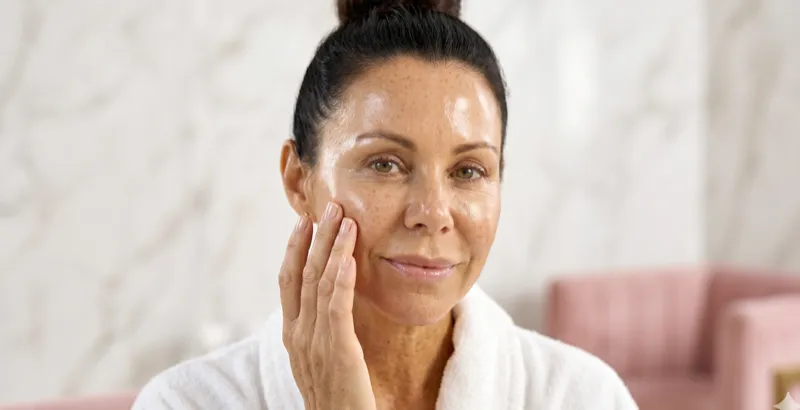
The science of skin aging is evolving rapidly — and for women navigating the skin changes that come with menopause and beyond, evidence-based skincare represents a fundamentally different approach: working with your skin's biology rather than against it.
Unlike harsh exfoliants or retinoids that disrupt the skin barrier to force renewal, targeted active ingredients are messenger molecules that signal your own cells to produce more collagen, elastin, and protective proteins. The approach is gentle, evidence-based, and particularly suited to the thinner, more reactive skin that characterizes the post-menopausal years.
Best Ingredients During and After Microneedling
The choice of serum applied during and immediately after microneedling dramatically influences treatment outcomes because the micro-channels created by needling increase topical ingredient absorption by 200-400% — a phenomenon documented in a 2009 study in the European Journal of Pharmaceutics and Biopharmaceutics that used radiolabeled tracer molecules to quantify trans-epidermal penetration through needle-created channels. This enhanced absorption window lasts approximately 2-4 hours after needling before the channels close through the natural wound-healing process. During this window, both beneficial ingredients and potentially harmful ones penetrate to the papillary dermis at concentrations far exceeding normal topical delivery. This dual reality makes serum selection critical: the right ingredients amplify microneedling's collagen benefits, while wrong ingredients can cause inflammation, sensitization, or toxicity at dermal concentrations they would never reach through intact skin.[1]
Hyaluronic acid is the gold-standard microneedling serum, recommended by the majority of dermatological guidelines and supported by the strongest clinical evidence. Its advantages during microneedling are multiple: (1) its high viscosity provides lubrication that allows smooth device gliding across the skin, (2) its humectant properties draw water into the newly created micro-channels, providing the hydration that supports the wound-healing cascade, (3) low molecular weight HA fragments that reach the dermis through the channels stimulate fibroblast HA synthesis and trigger a mild inflammatory response that enhances the collagen induction signal, and (4) it is non-irritating, non-sensitizing, and bioidentical to the HA naturally present in the dermis. A 2018 comparative study in the Journal of Cosmetic Dermatology tested 5 different serum types applied during 0.5mm microneedling and found that hyaluronic acid produced the best outcomes for collagen induction scores, patient comfort, and adverse event rates (zero adverse events in the HA group).
Clinical research confirms that growth factor serums represent the second most evidence-supported category for microneedling enhancement. Epidermal growth factor (EGF), fibroblast growth factor (FGF), and platelet-derived growth factor (PDGF) are the same signaling molecules that the body naturally releases during wound healing — applying them topically during microneedling amplifies the wound-healing signal and accelerates the transition from the inflammatory phase to the proliferative phase. A 2015 study in the Journal of Drugs in Dermatology demonstrated that microneedling combined with a growth factor serum produced 30% greater improvement in photoaging scores compared to microneedling with saline alone over 6 sessions. However, growth factor serums carry specific considerations for women over 40: they are significantly more expensive ($100-300 versus $15-40 for HA), some contain preservatives that may irritate through open micro-channels, and the long-term safety of repeated high-concentration growth factor delivery to the dermis has not been established in multi-year studies.
Ingredients to strictly avoid during and immediately after microneedling include: retinol and retinoids (dermal-level concentration causes severe irritation and can trigger prolonged inflammatory response), L-ascorbic acid at low pH (the acid pH causes burning in open channels — use ascorbyl glucoside or sodium ascorbyl phosphate as pH-neutral alternatives if vitamin C is desired), alpha-hydroxy acids and beta-hydroxy acids (exfoliating acids in open channels cause chemical burns at the dermal level), essential oils and fragrances (known sensitizers that are tolerated on intact skin but trigger contact dermatitis when delivered to the dermis), and niacinamide above 5% concentration (can cause histamine-mediated flushing when delivered dermally in sensitive individuals). Post-microneedling, wait 24 hours before reintroducing any of these ingredients. The 24-hour rule applies to all active ingredients — during this period, use only hyaluronic acid serum, a gentle ceramide moisturizer, and mineral sunscreen (chemical sunscreen filters should also be avoided as they can sensitize through open channels).
Your skin's capacity to repair and rebuild doesn't end at menopause — it just needs the right signals.
— Dr. Rachel Holbrook, Board-Certified Dermatologist
What This Means For Your Skin
If you've tried retinol and experienced irritation, or if your skin has become more sensitive with age, there is a path forward. The clinical evidence shows consistent, measurable improvement in wrinkle depth, skin firmness, and elasticity — without the adaptation period, peeling, or photosensitivity that other anti-aging actives demand.
Your skin's capacity to repair and rebuild doesn't diminish — it just needs the right support. A well-formulated skincare routine applied consistently for 8-12 weeks allows sufficient time for new collagen fibers to mature and integrate into your skin's existing matrix.
The science is clear. The evidence is consistent. The results are measurable.
What happens next is up to you.