
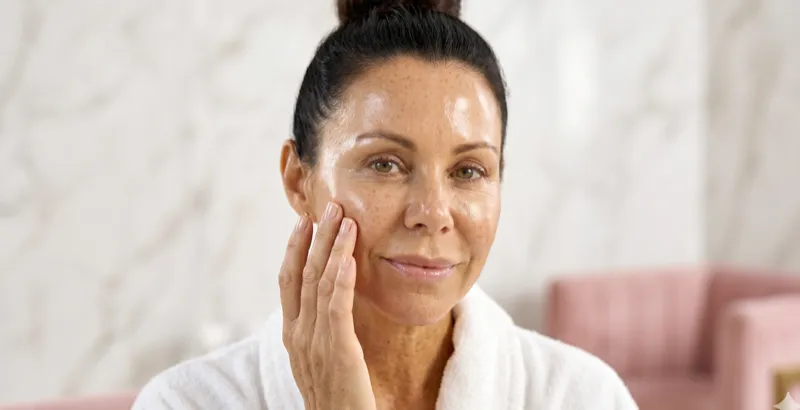
The science of skin aging is evolving rapidly — and for women navigating the skin changes that come with menopause and beyond, evidence-based skincare represents a fundamentally different approach: working with your skin's biology rather than against it.
Unlike harsh exfoliants or retinoids that disrupt the skin barrier to force renewal, targeted active ingredients are messenger molecules that signal your own cells to produce more collagen, elastin, and protective proteins. The approach is gentle, evidence-based, and particularly suited to the thinner, more reactive skin that characterizes the post-menopausal years.
Comparing Two Popular Anti-Aging Treatments for Women Over 40
Microneedling and chemical peels are the two most accessible professional-grade anti-aging treatments adaptable for at-home use, and their comparative advantages for mature skin depend on the specific aging concern being addressed, skin sensitivity, and tolerance for downtime. Microneedling works through mechanical micro-injury that triggers the wound-healing collagen cascade — its primary strength is dermal collagen stimulation and structural rebuilding. Chemical peels work through controlled acid-induced dissolution of the epidermal surface — their primary strength is surface resurfacing, texture refinement, and pigmentation correction. A 2016 split-face comparative study in the Journal of Cosmetic Dermatology assigned women aged 40-55 to receive microneedling on one side of the face and glycolic acid peels on the other for 6 sessions over 3 months. Microneedling produced superior results for wrinkle depth reduction (38% vs 24%) and skin firmness (27% vs 14%), while glycolic acid peels produced superior results for pigmentation uniformity (41% vs 22%) and surface texture smoothness (35% vs 28%).[1]
For mature skin specifically, microneedling offers advantages in collagen rebuilding that chemical peels cannot match at at-home concentrations. The mechanical injury of needling creates a wound-healing response that deposits new collagen in the papillary and upper reticular dermis — the layer where structural support for wrinkle prevention resides. At-home chemical peels (8-15% glycolic acid, 1-2% salicylic acid) only affect the epidermis and the very uppermost papillary dermis, stimulating modest collagen through mild inflammatory signaling but not reaching the depth where significant structural remodeling occurs. Professional-strength peels (30-70% glycolic acid, TCA 15-35%) reach the papillary dermis and produce meaningful collagen stimulation, but these concentrations are not appropriate for at-home use on mature skin due to the risk of acid burns, hyperpigmentation, and scarring on the thinner, barrier-compromised epidermis of women over 40.
Clinical research confirms that chemical peels offer advantages in surface-level concerns that microneedling addresses more slowly. Dead cell accumulation, superficial pigmentation, surface roughness, and comedonal congestion — all issues that contribute to dull, aged-looking mature skin — respond more quickly to chemical exfoliation than to microneedling. A glycolic acid peel produces visible brightening and smoothing within 24 hours of treatment through immediate corneocyte dissolution, while microneedling-induced surface improvement requires weeks as the accelerated cell turnover cycle gradually replaces old surface cells. For women whose primary complaint is dull, rough, or unevenly toned skin (rather than wrinkle depth or laxity), chemical peels may provide faster visible gratification — and faster results improve treatment adherence, which is the strongest predictor of long-term outcomes regardless of modality.
The optimal approach for most women over 40 is to combine both treatments in a complementary protocol that leverages each modality's strengths. The recommended combination schedule: perform 0.5mm microneedling every 14 days (for dermal collagen induction), with a glycolic acid peel (10-15% for 10 minutes, rinsed) on the intervening weeks (for surface refinement and pigmentation correction). Never perform both treatments in the same week — the combined barrier disruption exceeds the mature skin's recovery capacity and increases the risk of irritation and PIH. This alternating schedule provides near-continuous anti-aging treatment: every 7 days, the skin receives either a collagen-stimulating intervention (microneedling) or a surface-refining intervention (chemical peel), with each treatment's recovery completing before the next treatment occurs. A 2018 pilot study evaluating this alternating protocol in women aged 45-60 found that the combination produced 34% greater overall photoaging improvement at 6 months compared to either modality alone.
Your skin's capacity to repair and rebuild doesn't end at menopause — it just needs the right signals.
— Dr. Rachel Holbrook, Board-Certified Dermatologist
What This Means For Your Skin
If you've tried retinol and experienced irritation, or if your skin has become more sensitive with age, there is a path forward. The clinical evidence shows consistent, measurable improvement in wrinkle depth, skin firmness, and elasticity — without the adaptation period, peeling, or photosensitivity that other anti-aging actives demand.
Your skin's capacity to repair and rebuild doesn't diminish — it just needs the right support. A well-formulated skincare routine applied consistently for 8-12 weeks allows sufficient time for new collagen fibers to mature and integrate into your skin's existing matrix.
The science is clear. The evidence is consistent. The results are measurable.
What happens next is up to you.