
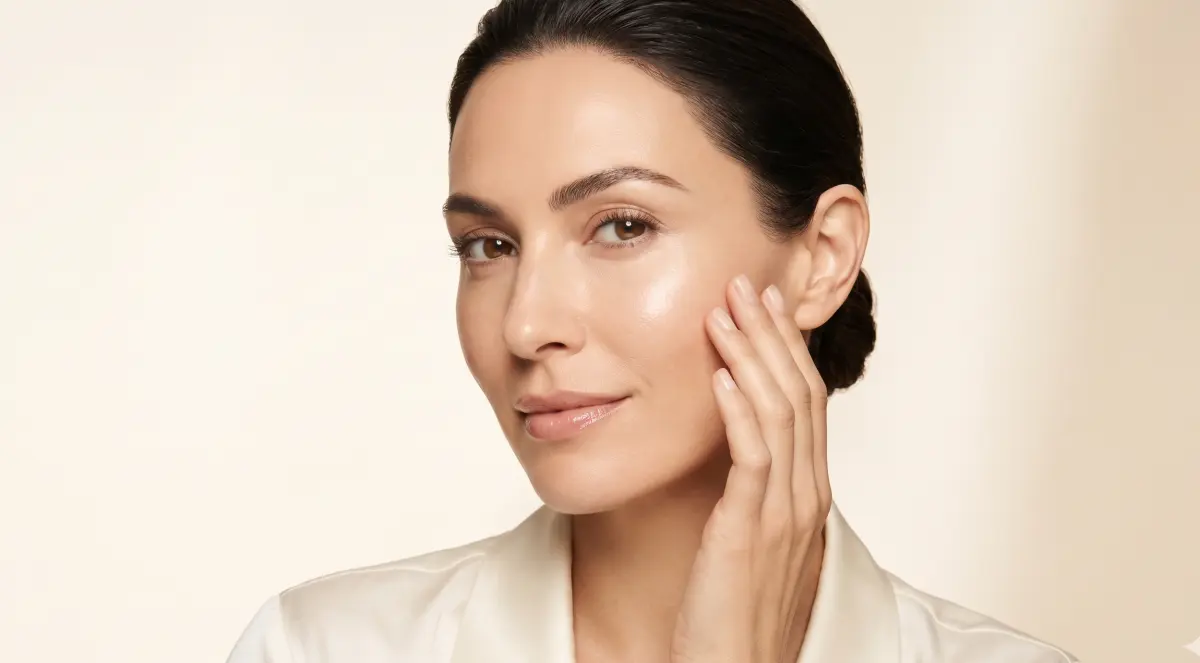
The science of skin aging is evolving rapidly — and for women navigating the skin changes that come with menopause and beyond, evidence-based skincare represents a fundamentally different approach: working with your skin's biology rather than against it.
Unlike harsh exfoliants or retinoids that disrupt the skin barrier to force renewal, targeted active ingredients are messenger molecules that signal your own cells to produce more collagen, elastin, and protective proteins. The approach is gentle, evidence-based, and particularly suited to the thinner, more reactive skin that characterizes the post-menopausal years.
How Glycolic Acid Transforms Texture Through Chemical Resurfacing
Glycolic acid holds a unique position among skincare ingredients: it is simultaneously the most potent over-the-counter chemical exfoliant and a clinically proven collagen stimulator, making it a dual-action texture improvement tool. With a molecular weight of just 76 daltons — the smallest of all alpha-hydroxy acids — glycolic acid penetrates the stratum corneum more effectively than any other AHA, reaching the viable epidermis and even the upper dermis at higher concentrations. This deep penetration is what makes glycolic acid both more effective and more potentially irritating than larger AHAs like lactic or mandelic acid.[1]
The exfoliation mechanism of glycolic acid is well-characterized: it disrupts ionic bonds between corneocytes by chelating the calcium ions that stabilize corneodesmosomes — the protein rivets holding dead cells together. As these bonds dissolve, the compacted dead cell layer loosens and sheds, revealing the smoother, more reflective epidermis beneath. At concentrations of 5-10% in daily-use products, glycolic acid produces gentle, ongoing exfoliation that maintains surface smoothness without the aggressive peeling associated with higher-concentration professional peels. The textural improvement from this mechanism alone is visible within 2-4 weeks: skin feels smoother to the touch and appears more luminous as the regularized surface reflects light more uniformly.
Clinical research confirms that the collagen-stimulating properties of glycolic acid extend its benefits beyond surface exfoliation. Bernstein et al. demonstrated that topical glycolic acid increases type I collagen mRNA expression, hyaluronic acid content, and glycosaminoglycan synthesis in the dermis. The mechanism appears to involve acidification of the upper dermis, which triggers a wound-healing-like response in fibroblasts, stimulating them to produce new extracellular matrix components. This dual action — surface exfoliation plus dermal stimulation — makes glycolic acid one of the most effective single ingredients for comprehensive texture improvement. Professional glycolic peels at 30-70% concentration produce more dramatic results by creating a controlled chemical injury that triggers a robust collagen remodeling response over 4-8 weeks.
The protocol for glycolic acid in mature skin follows a graduated approach to build tolerance while maximizing results. Phase 1 (weeks 1-4): introduce glycolic acid at 5% in a leave-on product (serum or moisturizer), applied every other evening after cleansing. If well-tolerated, increase to nightly use. Phase 2 (weeks 5-12): increase concentration to 8-10% nightly, and add a weekly 15-20% glycolic peel mask (10-minute application). Phase 3 (ongoing maintenance): continue nightly 10% glycolic acid with weekly peel, and consider professional 30% glycolic peels monthly for accelerated results. Critical considerations: glycolic acid must always be paired with daily sunscreen — AHA-treated skin is significantly more photosensitive. On retinoid nights, skip glycolic acid to avoid over-exfoliation. The optimal schedule alternates glycolic acid and retinoid on different evenings, producing complementary texture benefits through different pathways.
Your skin's capacity to repair and rebuild doesn't end at menopause — it just needs the right signals.
— Dr. Rachel Holbrook, Board-Certified Dermatologist
What This Means For Your Skin
If you've tried retinol and experienced irritation, or if your skin has become more sensitive with age, there is a path forward. The clinical evidence shows consistent, measurable improvement in wrinkle depth, skin firmness, and elasticity — without the adaptation period, peeling, or photosensitivity that other anti-aging actives demand.
Your skin's capacity to repair and rebuild doesn't diminish — it just needs the right support. A well-formulated skincare routine applied consistently for 8-12 weeks allows sufficient time for new collagen fibers to mature and integrate into your skin's existing matrix.
The science is clear. The evidence is consistent. The results are measurable.
What happens next is up to you.