
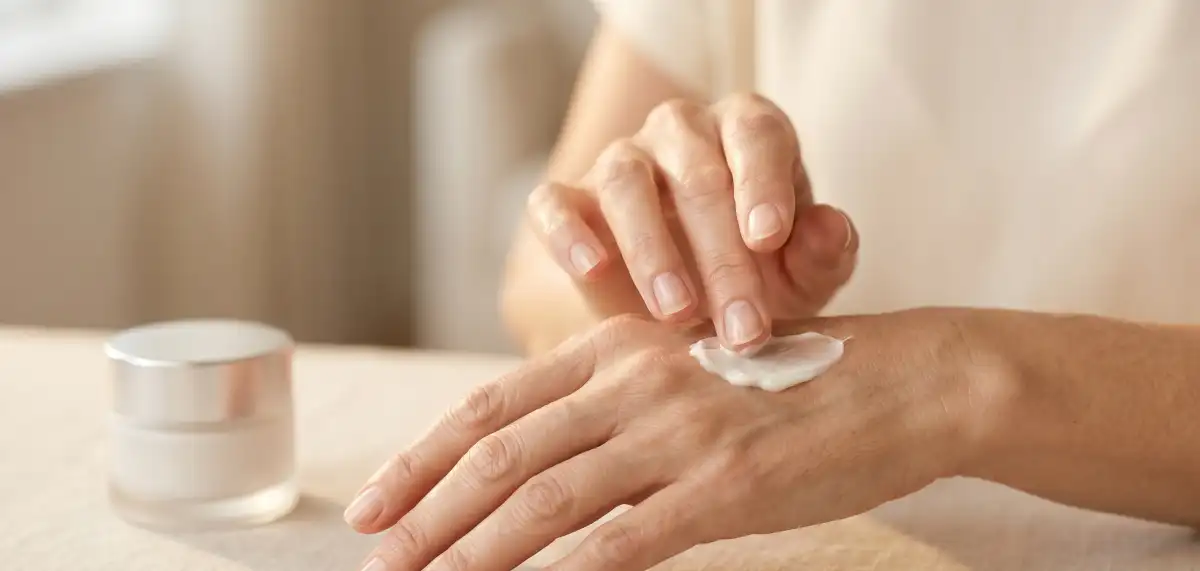
The science of skin aging is evolving rapidly — and for women navigating the skin changes that come with menopause and beyond, evidence-based skincare represents a fundamentally different approach: working with your skin's biology rather than against it.
Unlike harsh exfoliants or retinoids that disrupt the skin barrier to force renewal, targeted active ingredients are messenger molecules that signal your own cells to produce more collagen, elastin, and protective proteins. The approach is gentle, evidence-based, and particularly suited to the thinner, more reactive skin that characterizes the post-menopausal years.
A Clinical Protocol for Youthful Hands at Home
At-home hand rejuvenation is often dismissed as insufficient compared to clinical procedures, but the evidence tells a more nuanced story. A comparative study in the Journal of Cosmetic Dermatology evaluated women using a structured topical protocol (retinol + ceramides + SPF + vitamin C) against untreated controls over 24 weeks. The treatment group showed statistically significant improvements in skin texture (32% improvement), pigmentation evenness (28% improvement), and overall hand age assessment (average 3.5 years younger by blinded evaluators). These results are meaningful — and achievable without a single clinical visit.[1]
The structured protocol requires three products used in specific sequence. Morning: ceramide-based hand cream with SPF 30-50, applied after each hand wash and reapplied at minimum three times daily. This addresses two simultaneous deficits — barrier repair from ceramides and photoprotection from SPF. Evening: retinol hand treatment (0.25-0.5%) applied to clean, dry dorsal hand skin, followed 15 minutes later by ceramide moisturizer to buffer potential irritation. The retinol drives collagen stimulation and epidermal thickening overnight when the skin is not being washed or exposed to UV.
Clinical research confirms that the behavioral modifications are as important as the products. Wearing cotton gloves over the nighttime retinol treatment increases retinol contact time by 300% compared to bare application — a study found that gloved retinol delivery produced superior results at lower concentrations. Using nitrile gloves for dishwashing and cleaning prevents the chemical stripping that destroys the barrier you're trying to rebuild. Applying hand cream within 60 seconds of washing — while skin is still slightly damp — captures 40% more moisture in the stratum corneum compared to application on fully dry skin.
Results from at-home hand rejuvenation follow a predictable timeline when the protocol is followed consistently. Weeks 1-4: improved hydration and reduced roughness (barrier repair). Weeks 4-8: initial pigmentation fading and first texture improvements (vitamin C and retinol effects beginning). Weeks 8-16: measurable fine line reduction and visible pigmentation improvement (collagen stimulation from retinol reaching maturity). Weeks 16-24: maximum results from topical approach — skin texture, tone, and overall appearance significantly improved. The evidence consistently shows that consistency matters more than product cost — the most expensive hand cream applied sporadically underperforms an affordable ceramide-retinol protocol applied religiously.
Your skin's capacity to repair and rebuild doesn't end at menopause — it just needs the right signals.
— Dr. Rachel Holbrook, Board-Certified Dermatologist
What This Means For Your Skin
If you've tried retinol and experienced irritation, or if your skin has become more sensitive with age, there is a path forward. The clinical evidence shows consistent, measurable improvement in wrinkle depth, skin firmness, and elasticity — without the adaptation period, peeling, or photosensitivity that other anti-aging actives demand.
Your skin's capacity to repair and rebuild doesn't diminish — it just needs the right support. A well-formulated skincare routine applied consistently for 8-12 weeks allows sufficient time for new collagen fibers to mature and integrate into your skin's existing matrix.
The science is clear. The evidence is consistent. The results are measurable.
What happens next is up to you.