
The science of skin aging is evolving rapidly — and for women navigating the skin changes that come with menopause and beyond, evidence-based skincare represents a fundamentally different approach: working with your skin's biology rather than against it.
Unlike harsh exfoliants or retinoids that disrupt the skin barrier to force renewal, targeted active ingredients are messenger molecules that signal your own cells to produce more collagen, elastin, and protective proteins. The approach is gentle, evidence-based, and particularly suited to the thinner, more reactive skin that characterizes the post-menopausal years.
Prevention Strategies That Keep Hands Looking Younger for Longer
Prevention of hand aging is dramatically more effective than treatment — and the evidence base quantifies exactly how much more effective. A prospective study following women from age 40 tracked those who adopted hand protection strategies versus those who did not. At the 10-year mark, the protected group showed 45% less photodamage, 30% fewer solar lentigines, and skin elasticity measurements equivalent to women 8 years younger. The unprotected group showed age-appropriate or accelerated aging across all parameters. Prevention didn't just slow aging — it fundamentally altered the aging trajectory.[1]
The three pillars of hand protection map directly to the three primary causes of hand aging. Pillar one — UV protection — addresses photoaging, which accounts for an estimated 80% of visible hand aging (versus 20% from intrinsic chronological aging). Daily broad-spectrum SPF 30-50 applied after each hand wash blocks the UV radiation that drives collagen destruction, elastin degradation, and melanocyte hyperactivity. The Australian Nambour Trial — the gold-standard sunscreen study — demonstrated that consistent sunscreen use on hands prevented age spot formation by 24% and measurably slowed overall skin aging.
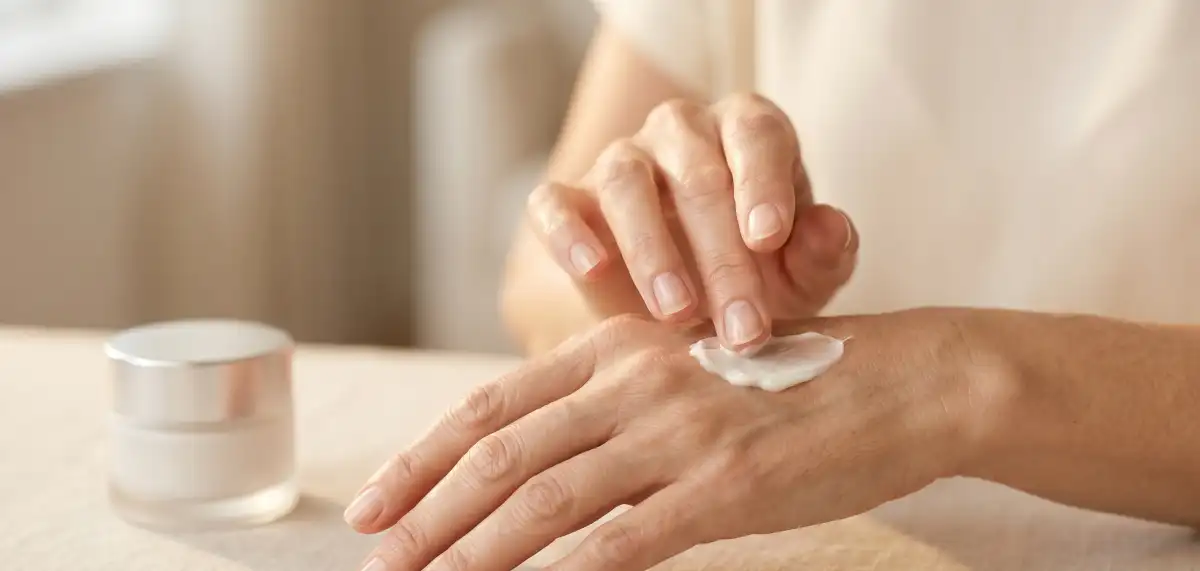
Clinical research confirms that pillar two — barrier protection — addresses the chemical and mechanical damage that hands endure daily. Wearing gloves for cleaning and dishwashing prevents surfactant-induced barrier stripping. Using gentle, pH-balanced hand soaps instead of harsh antibacterial formulations preserves the lipid barrier. Applying ceramide hand cream within 60 seconds of every hand wash restores the lipids that washing removes. A study in the British Journal of Dermatology found that workers who followed a 'wash-apply' protocol had measurably better hand skin integrity after one year than those who applied cream intermittently.
Pillar three — active protection — involves treating the skin to maintain its structural integrity against the inevitable biological decline. Nightly retinol (starting at 0.25% from age 40) maintains collagen production and epidermal thickness. Daily vitamin C (15%) provides collagen cofactor support and antioxidant protection. These actives work prophylactically — preventing degradation before it becomes visible — rather than therapeutically trying to reverse established damage. The clinical principle is clear: one year of prevention produces more benefit than three years of treatment for the same degree of aging. The optimal time to start hand protection is before visible aging begins — ideally by age 40, but measurably beneficial at any starting point.
Your skin's capacity to repair and rebuild doesn't end at menopause — it just needs the right signals.
— Dr. Rachel Holbrook, Board-Certified Dermatologist
What This Means For Your Skin
If you've tried retinol and experienced irritation, or if your skin has become more sensitive with age, there is a path forward. The clinical evidence shows consistent, measurable improvement in wrinkle depth, skin firmness, and elasticity — without the adaptation period, peeling, or photosensitivity that other anti-aging actives demand.
Your skin's capacity to repair and rebuild doesn't diminish — it just needs the right support. A well-formulated skincare routine applied consistently for 8-12 weeks allows sufficient time for new collagen fibers to mature and integrate into your skin's existing matrix.
The science is clear. The evidence is consistent. The results are measurable.
What happens next is up to you.