
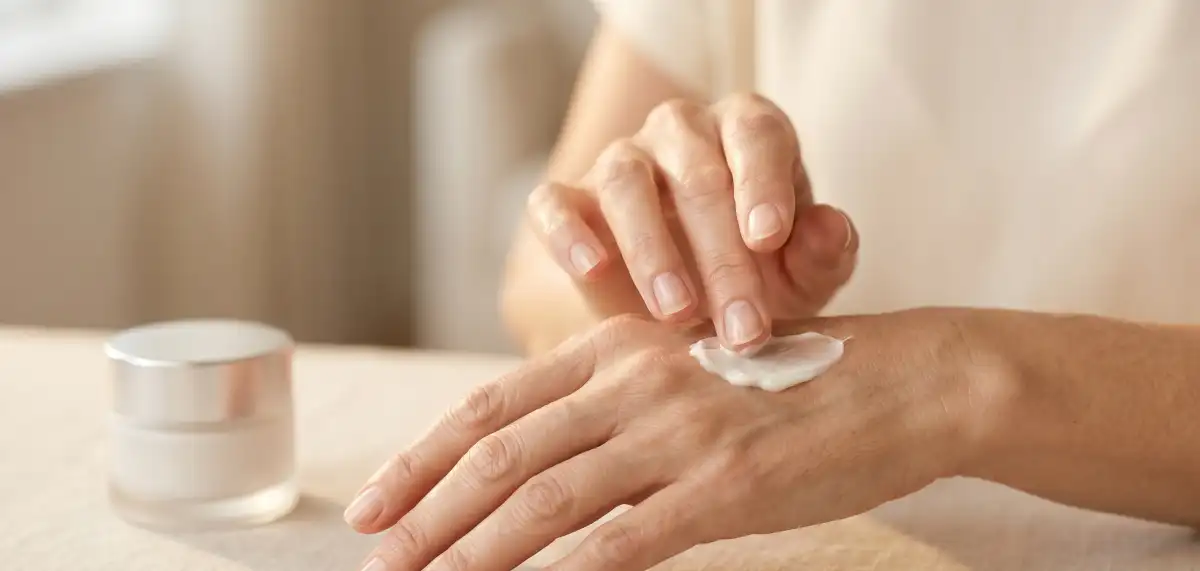
The science of skin aging is evolving rapidly — and for women navigating the skin changes that come with menopause and beyond, evidence-based skincare represents a fundamentally different approach: working with your skin's biology rather than against it.
Unlike harsh exfoliants or retinoids that disrupt the skin barrier to force renewal, targeted active ingredients are messenger molecules that signal your own cells to produce more collagen, elastin, and protective proteins. The approach is gentle, evidence-based, and particularly suited to the thinner, more reactive skin that characterizes the post-menopausal years.
How L-Ascorbic Acid Fades Spots and Boosts Collagen
Vitamin C (L-ascorbic acid) serves dual functions on aging hands that make it one of the most evidence-supported topical interventions: it inhibits melanin production to fade existing age spots, and it provides the essential cofactor for collagen cross-linking that hand skin increasingly lacks with age. A study in the Journal of Clinical and Aesthetic Dermatology found that 15% L-ascorbic acid applied daily to photodamaged skin (including dorsal hands) produced statistically significant improvements in pigmentation (40% reduction in melanin index), fine wrinkles (36% reduction), and overall photodamage score after 12 weeks.[1]
The mechanism of vitamin C's anti-pigmentation effect on hands is well characterized. L-ascorbic acid inhibits tyrosinase — the enzyme that catalyzes the rate-limiting step in melanin synthesis — through copper chelation at the enzyme's active site. Additionally, vitamin C reduces oxidized melanin precursors back to their colorless forms, providing an immediate visible brightening effect. On hands, where solar lentigines contain melanocytes with constitutively elevated tyrosinase activity, sustained vitamin C application progressively reduces melanin output from these overactive cells. The effect is gradual — typically 8-12 weeks for visible fading — but clinically meaningful.
Clinical research confirms that the collagen support function of vitamin C is particularly relevant for aging hands. Collagen synthesis requires vitamin C as a cofactor for prolyl hydroxylase and lysyl hydroxylase — the enzymes that stabilize the triple-helix collagen structure through hydroxylation of proline and lysine residues. Without adequate vitamin C at the tissue level, even retinoid-stimulated fibroblasts produce structurally weak collagen that degrades rapidly. A study in the American Journal of Clinical Nutrition confirmed that skin vitamin C levels decline with age and that topical application restores tissue concentrations more effectively than oral supplementation for skin-specific benefits.
Application protocol for hands requires adaptation from facial use. The primary challenge is contact time — vitamin C applied to hands in the morning is removed by the first hand wash, typically within 30-60 minutes. Two strategies address this: apply vitamin C serum to hands immediately after the morning's first wash, allow 10 minutes for penetration, then apply SPF hand cream over it (the serum has partially absorbed before the next wash), or apply vitamin C to hands in the evening before the ceramide night cream, when the product will remain undisturbed for hours. Evening application may be more practical for most women, and the antioxidant and collagen-support benefits are not time-of-day dependent.
Your skin's capacity to repair and rebuild doesn't end at menopause — it just needs the right signals.
— Dr. Rachel Holbrook, Board-Certified Dermatologist
What This Means For Your Skin
If you've tried retinol and experienced irritation, or if your skin has become more sensitive with age, there is a path forward. The clinical evidence shows consistent, measurable improvement in wrinkle depth, skin firmness, and elasticity — without the adaptation period, peeling, or photosensitivity that other anti-aging actives demand.
Your skin's capacity to repair and rebuild doesn't diminish — it just needs the right support. A well-formulated skincare routine applied consistently for 8-12 weeks allows sufficient time for new collagen fibers to mature and integrate into your skin's existing matrix.
The science is clear. The evidence is consistent. The results are measurable.
What happens next is up to you.