
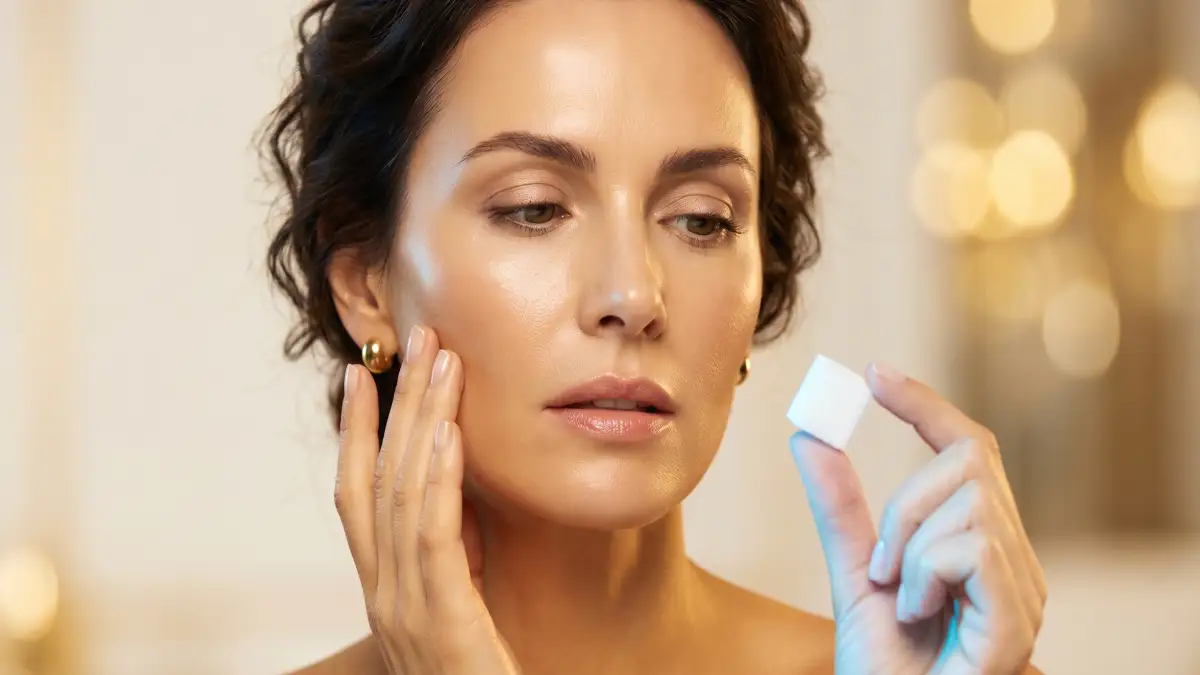
The science of skin aging is evolving rapidly — and for women navigating the skin changes that come with menopause and beyond, evidence-based skincare represents a fundamentally different approach: working with your skin's biology rather than against it.
Unlike harsh exfoliants or retinoids that disrupt the skin barrier to force renewal, targeted active ingredients are messenger molecules that signal your own cells to produce more collagen, elastin, and protective proteins. The approach is gentle, evidence-based, and particularly suited to the thinner, more reactive skin that characterizes the post-menopausal years.
Clinically Studied Compounds That Fight Glycation
Carnosine (beta-alanyl-L-histidine) is the most extensively studied topical anti-glycation agent, functioning as a sacrificial nucleophile that preferentially reacts with reactive carbonyl groups before they can attach to collagen. In vitro studies demonstrate that carnosine reduces AGE formation by up to 60% in collagen incubated with glucose, and topical application has shown measurable improvements in skin elasticity and glycation markers in clinical trials.[1]
Aminoguanidine was the first compound identified as a specific AGE inhibitor, working by trapping reactive dicarbonyl intermediates (methylglyoxal, glyoxal) that serve as precursors to cross-linking AGEs. While systemic use showed toxicity concerns, topical formulations have demonstrated significant reduction in collagen cross-linking without systemic absorption, making it a promising ingredient for targeted anti-glycation skincare.
Clinical research confirms that niacinamide (vitamin B3) provides dual anti-glycation protection: it serves as a precursor to NAD+, which fuels the glyoxalase enzyme system responsible for detoxifying methylglyoxal, and it independently inhibits the transfer of glycation intermediates to protein substrates. Clinical studies confirm that 4-5% niacinamide reduces yellowing and improves skin elasticity — both hallmarks of glycation reduction.
Emerging research highlights several additional anti-glycation candidates with clinical promise. Alpha-lipoic acid chelates metal ions that catalyze glycation reactions and regenerates other antioxidants. Benfotiamine, a lipid-soluble vitamin B1 derivative, activates transketolase to divert sugar metabolism away from glycation pathways. Blueberry extract rich in anthocyanins has shown AGE-inhibiting activity comparable to aminoguanidine in comparative studies, offering a botanical alternative.
Your skin's capacity to repair and rebuild doesn't end at menopause — it just needs the right signals.
— Dr. Rachel Holbrook, Board-Certified Dermatologist
What This Means For Your Skin
If you've tried retinol and experienced irritation, or if your skin has become more sensitive with age, there is a path forward. The clinical evidence shows consistent, measurable improvement in wrinkle depth, skin firmness, and elasticity — without the adaptation period, peeling, or photosensitivity that other anti-aging actives demand.
Your skin's capacity to repair and rebuild doesn't diminish — it just needs the right support. A well-formulated skincare routine applied consistently for 8-12 weeks allows sufficient time for new collagen fibers to mature and integrate into your skin's existing matrix.
The science is clear. The evidence is consistent. The results are measurable.
What happens next is up to you.