
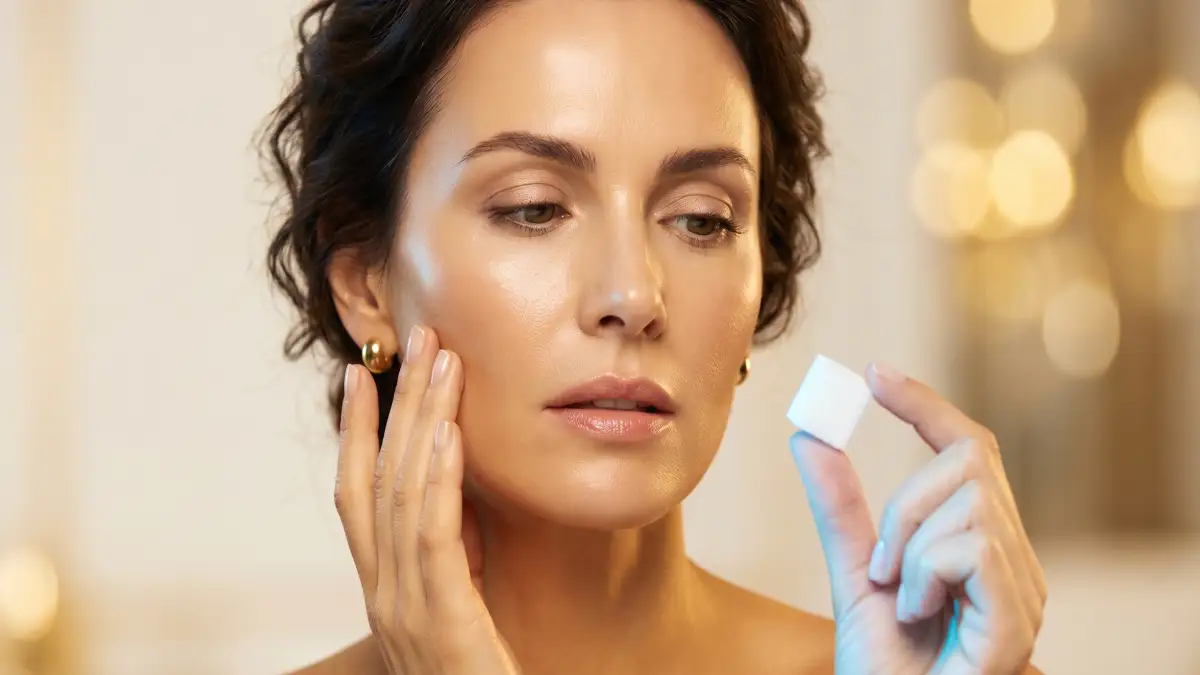
The science of skin aging is evolving rapidly — and for women navigating the skin changes that come with menopause and beyond, evidence-based skincare represents a fundamentally different approach: working with your skin's biology rather than against it.
Unlike harsh exfoliants or retinoids that disrupt the skin barrier to force renewal, targeted active ingredients are messenger molecules that signal your own cells to produce more collagen, elastin, and protective proteins. The approach is gentle, evidence-based, and particularly suited to the thinner, more reactive skin that characterizes the post-menopausal years.
Comparing Sugar Damage and Free Radical Damage in Skin
Glycation and oxidation represent two distinct but deeply interconnected pathways of skin aging. Oxidative stress from UV radiation, pollution, and metabolic processes generates free radicals that damage DNA, lipids, and proteins through electron theft. Glycation damages proteins through sugar-mediated cross-linking. While antioxidant skincare has dominated the anti-aging market for decades, glycation causes structural damage that antioxidants alone cannot prevent or repair.[1]
The convergence of these pathways — termed glycoxidation — produces the most destructive AGE variants. Oxidative conditions accelerate the Maillard reaction by generating reactive carbonyl species from lipid peroxidation, while AGEs themselves generate free radicals through RAGE-mediated NADPH oxidase activation. Research by Baynes and Thorpe established that oxidative stress and glycation share common intermediates, creating a vicious cycle where each process amplifies the other.
Clinical research confirms that the clinical manifestations differ in characteristic ways. Oxidative damage primarily causes uneven pigmentation, fine lines, and DNA mutations that increase skin cancer risk. Glycation damage produces deep wrinkles, tissue stiffness, yellowing, and loss of elastic recovery. However, most aging skin shows evidence of both processes occurring simultaneously, with their combined effect exceeding the sum of individual contributions.
An effective anti-aging strategy must address both pathways. Antioxidants (vitamin C, vitamin E, ferulic acid) neutralize free radicals and interrupt the oxidative phase of glycoxidation. Anti-glycation agents (carnosine, niacinamide, aminoguanidine) trap reactive carbonyls and prevent sugar attachment to collagen. The combination provides synergistic protection that neither approach achieves alone — antioxidants protect against 40-60% of glycation by preventing oxidative catalysis of the Maillard reaction.
Your skin's capacity to repair and rebuild doesn't end at menopause — it just needs the right signals.
— Dr. Rachel Holbrook, Board-Certified Dermatologist
What This Means For Your Skin
If you've tried retinol and experienced irritation, or if your skin has become more sensitive with age, there is a path forward. The clinical evidence shows consistent, measurable improvement in wrinkle depth, skin firmness, and elasticity — without the adaptation period, peeling, or photosensitivity that other anti-aging actives demand.
Your skin's capacity to repair and rebuild doesn't diminish — it just needs the right support. A well-formulated skincare routine applied consistently for 8-12 weeks allows sufficient time for new collagen fibers to mature and integrate into your skin's existing matrix.
The science is clear. The evidence is consistent. The results are measurable.
What happens next is up to you.