
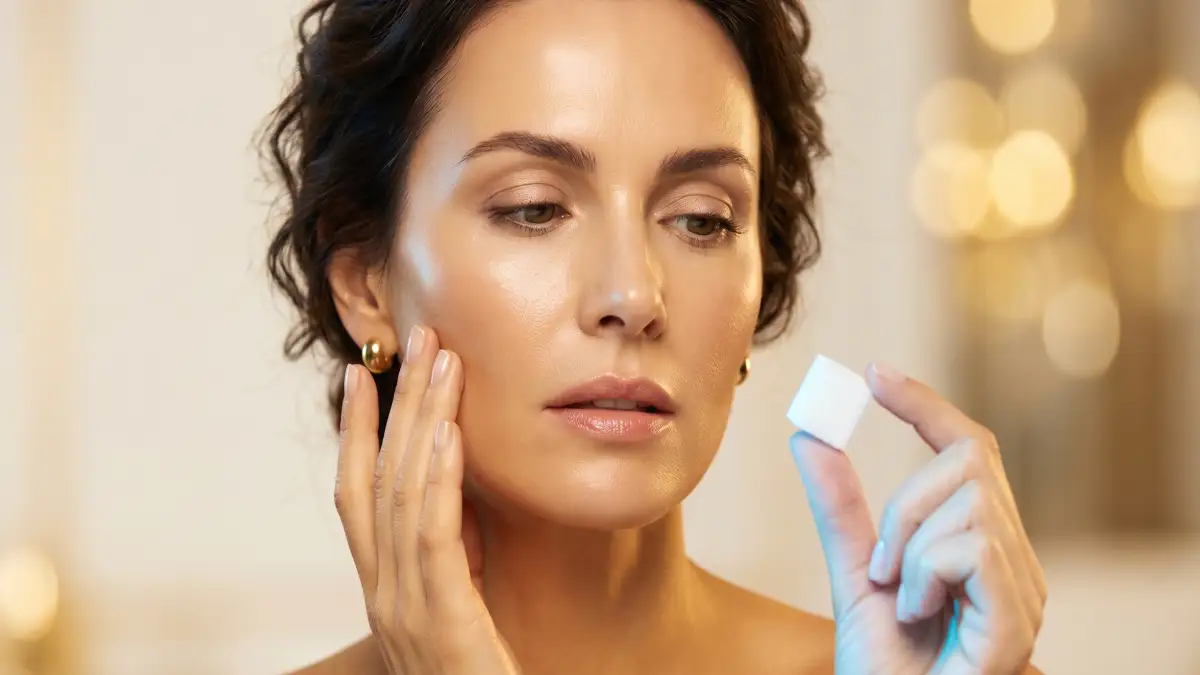
The science of skin aging is evolving rapidly — and for women navigating the skin changes that come with menopause and beyond, evidence-based skincare represents a fundamentally different approach: working with your skin's biology rather than against it.
Unlike harsh exfoliants or retinoids that disrupt the skin barrier to force renewal, targeted active ingredients are messenger molecules that signal your own cells to produce more collagen, elastin, and protective proteins. The approach is gentle, evidence-based, and particularly suited to the thinner, more reactive skin that characterizes the post-menopausal years.
How Sugar-Induced Cross-Links Accelerate Dermal Aging
Glycation is a non-enzymatic reaction in which reducing sugars such as glucose and fructose bond covalently to the amino groups on collagen fibers, initiating a cascade that produces advanced glycation end-products (AGEs). Research published in Dermato-Endocrinology demonstrates that AGE accumulation in dermal collagen increases approximately 3.7% per year after age 20, fundamentally altering the biomechanical properties of skin.[1]
The Maillard reaction — the same browning process that occurs in cooking — happens continuously in living tissue at body temperature. When collagen undergoes glycation, the resulting cross-links between fibers create a rigid, inflexible matrix that resists normal enzymatic turnover. This means glycated collagen cannot be broken down and replaced through the body's natural remodeling processes, leading to permanent structural damage that accumulates over decades.
Clinical research confirms that clinical observations confirm that heavily glycated skin exhibits a characteristic yellowish discoloration, increased stiffness measured by cutometry, and reduced elastic recovery. These changes correlate with increased wrinkle depth and decreased wound healing capacity, particularly in patients with chronically elevated blood glucose levels.
The implications for anti-aging skincare are profound: stimulating new collagen production without addressing glycation is like building a house on a crumbling foundation. Effective dermal rejuvenation requires both collagen synthesis stimulation and glycation prevention strategies working in tandem to maintain the structural integrity of the extracellular matrix.
Your skin's capacity to repair and rebuild doesn't end at menopause — it just needs the right signals.
— Dr. Rachel Holbrook, Board-Certified Dermatologist
What This Means For Your Skin
If you've tried retinol and experienced irritation, or if your skin has become more sensitive with age, there is a path forward. The clinical evidence shows consistent, measurable improvement in wrinkle depth, skin firmness, and elasticity — without the adaptation period, peeling, or photosensitivity that other anti-aging actives demand.
Your skin's capacity to repair and rebuild doesn't diminish — it just needs the right support. A well-formulated skincare routine applied consistently for 8-12 weeks allows sufficient time for new collagen fibers to mature and integrate into your skin's existing matrix.
The science is clear. The evidence is consistent. The results are measurable.
What happens next is up to you.