
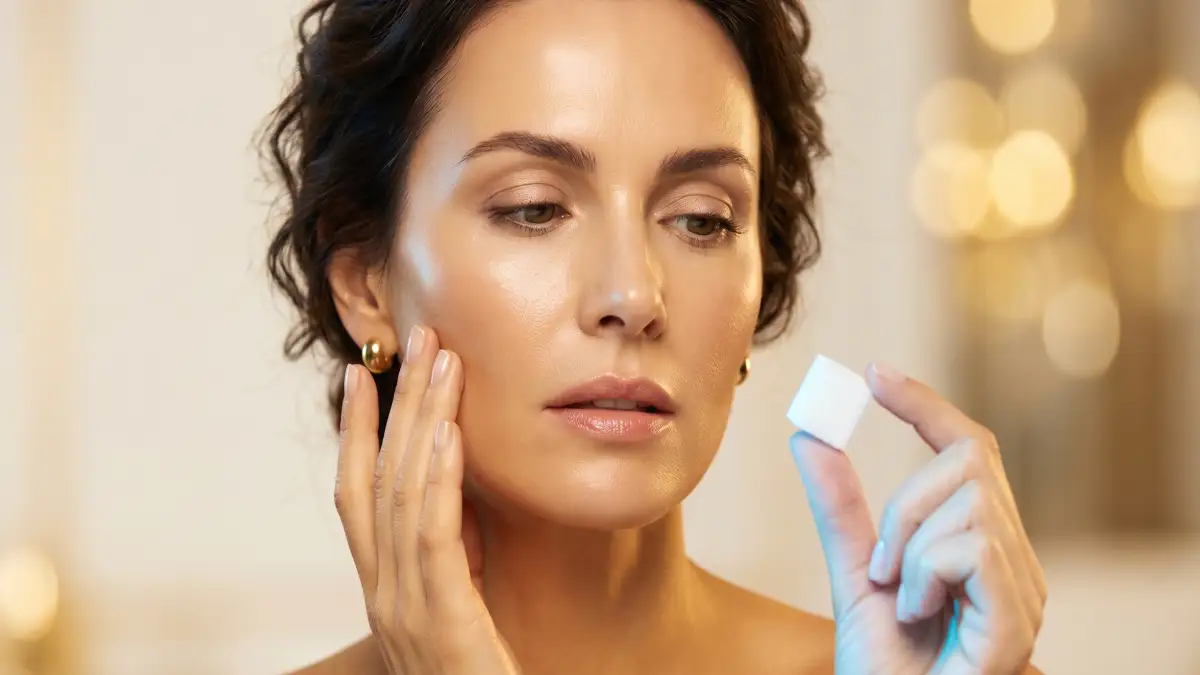
The science of skin aging is evolving rapidly — and for women navigating the skin changes that come with menopause and beyond, evidence-based skincare represents a fundamentally different approach: working with your skin's biology rather than against it.
Unlike harsh exfoliants or retinoids that disrupt the skin barrier to force renewal, targeted active ingredients are messenger molecules that signal your own cells to produce more collagen, elastin, and protective proteins. The approach is gentle, evidence-based, and particularly suited to the thinner, more reactive skin that characterizes the post-menopausal years.
Why Menopausal Women Face Accelerated Glycation Damage
Menopause creates a perfect storm for glycation-mediated skin aging through two converging mechanisms. First, declining estrogen levels reduce dermal collagen production by approximately 30% in the first five postmenopausal years, shrinking the pool of healthy collagen available. Second, the metabolic changes accompanying menopause — increased insulin resistance, redistribution of body fat, and altered glucose metabolism — elevate blood sugar levels and accelerate glycation of the remaining collagen.[1]
Estrogen is a natural anti-glycation agent that most women lose during the menopausal transition. Research demonstrates that estradiol directly inhibits AGE formation by competing with glucose for binding sites on collagen molecules and by enhancing the glyoxalase detoxification pathway that neutralizes reactive glycation intermediates. The withdrawal of this protective effect during menopause can increase the rate of collagen glycation by 25-40% compared to premenopausal levels.
Clinical research confirms that the compounding effect is mathematically devastating: if a woman produces 30% less collagen while simultaneously glycating existing collagen 30% faster, the net functional collagen loss during the menopausal transition far exceeds what either mechanism would produce alone. This explains the rapid and often dramatic skin changes many women experience between ages 45 and 55 — changes that cannot be attributed solely to chronological aging.
Targeted interventions for menopausal glycation must address both sides of the equation. Collagen-stimulating treatments rebuild depleted reserves while anti-glycation strategies protect new and existing collagen from sugar-mediated cross-linking. Phytoestrogens such as genistein from soy have demonstrated both estrogenic collagen-protective effects and direct AGE-inhibiting properties in clinical studies, making them particularly relevant for menopausal skincare formulations.
Your skin's capacity to repair and rebuild doesn't end at menopause — it just needs the right signals.
— Dr. Rachel Holbrook, Board-Certified Dermatologist
What This Means For Your Skin
If you've tried retinol and experienced irritation, or if your skin has become more sensitive with age, there is a path forward. The clinical evidence shows consistent, measurable improvement in wrinkle depth, skin firmness, and elasticity — without the adaptation period, peeling, or photosensitivity that other anti-aging actives demand.
Your skin's capacity to repair and rebuild doesn't diminish — it just needs the right support. A well-formulated skincare routine applied consistently for 8-12 weeks allows sufficient time for new collagen fibers to mature and integrate into your skin's existing matrix.
The science is clear. The evidence is consistent. The results are measurable.
What happens next is up to you.