
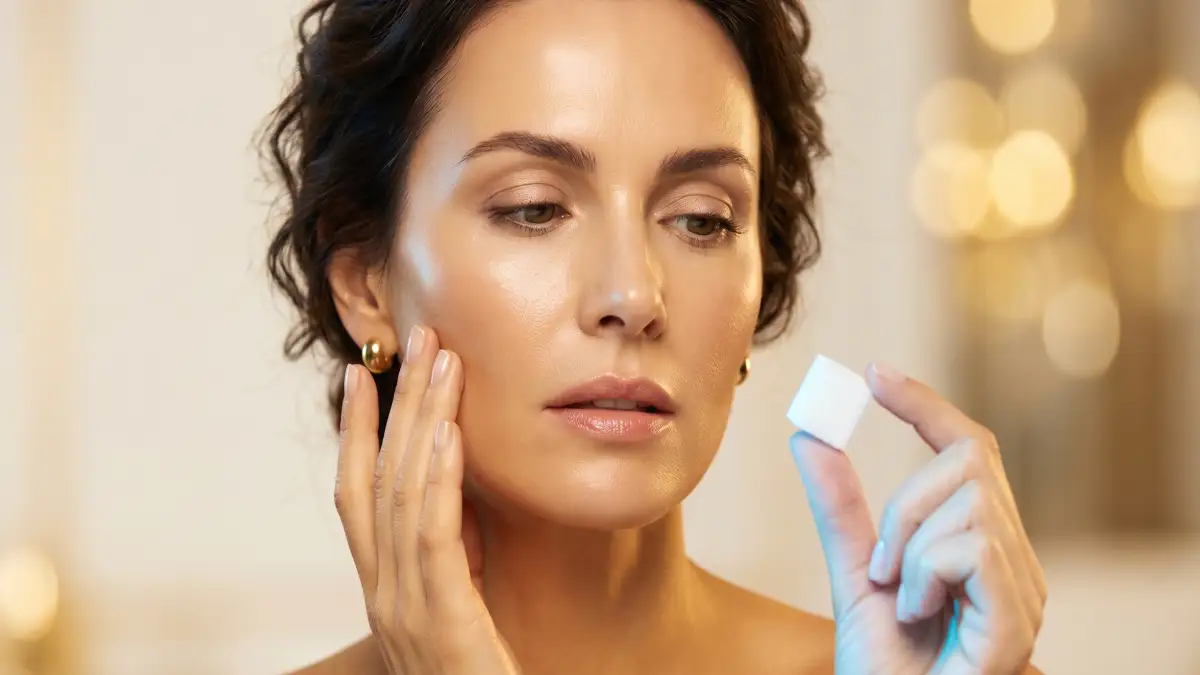
The science of skin aging is evolving rapidly — and for women navigating the skin changes that come with menopause and beyond, evidence-based skincare represents a fundamentally different approach: working with your skin's biology rather than against it.
Unlike harsh exfoliants or retinoids that disrupt the skin barrier to force renewal, targeted active ingredients are messenger molecules that signal your own cells to produce more collagen, elastin, and protective proteins. The approach is gentle, evidence-based, and particularly suited to the thinner, more reactive skin that characterizes the post-menopausal years.
How Glucose Spikes Directly Damage Your Skin's Collagen
The relationship between blood glucose and skin aging is dose-dependent and cumulative. Longitudinal studies tracking HbA1c levels (a measure of average blood sugar over 3 months) against perceived facial age have demonstrated that for every 1% increase in HbA1c, subjects appear approximately 5 months older than their chronological age. This correlation persists even after controlling for sun exposure, smoking, and BMI — establishing glycation as an independent aging accelerant.[1]
Insulin resistance, which affects an estimated 40% of adults over 40, creates a particularly damaging environment for skin collagen. When cells become resistant to insulin, glucose remains elevated in the bloodstream for prolonged periods after meals, dramatically increasing exposure time for glycation reactions. The hyperinsulinemia that accompanies insulin resistance also triggers increased sebum production and inflammatory pathways that compound glycation-mediated damage.
Clinical research confirms that continuous glucose monitoring studies reveal that even non-diabetic individuals experience significant glycemic variability throughout the day, with postprandial spikes exceeding 160 mg/dL after high-carbohydrate meals. Each spike represents a burst of glycation activity — glucose molecules attacking collagen's exposed amino groups at rates proportional to concentration. The cumulative effect of thousands of these daily spikes over decades accounts for the progressive collagen stiffening measured in aging skin.
Emerging research suggests that glycemic variability — the magnitude of glucose fluctuations rather than average glucose — may be more damaging to collagen than sustained moderate elevation. Rapid oscillations between high and low glucose generate oxidative stress that amplifies glycation through a process called glycoxidation, producing the most destructive AGE variants including carboxymethyllysine (CML) and methylglyoxal-derived cross-links.
Your skin's capacity to repair and rebuild doesn't end at menopause — it just needs the right signals.
— Dr. Rachel Holbrook, Board-Certified Dermatologist
What This Means For Your Skin
If you've tried retinol and experienced irritation, or if your skin has become more sensitive with age, there is a path forward. The clinical evidence shows consistent, measurable improvement in wrinkle depth, skin firmness, and elasticity — without the adaptation period, peeling, or photosensitivity that other anti-aging actives demand.
Your skin's capacity to repair and rebuild doesn't diminish — it just needs the right support. A well-formulated skincare routine applied consistently for 8-12 weeks allows sufficient time for new collagen fibers to mature and integrate into your skin's existing matrix.
The science is clear. The evidence is consistent. The results are measurable.
What happens next is up to you.