
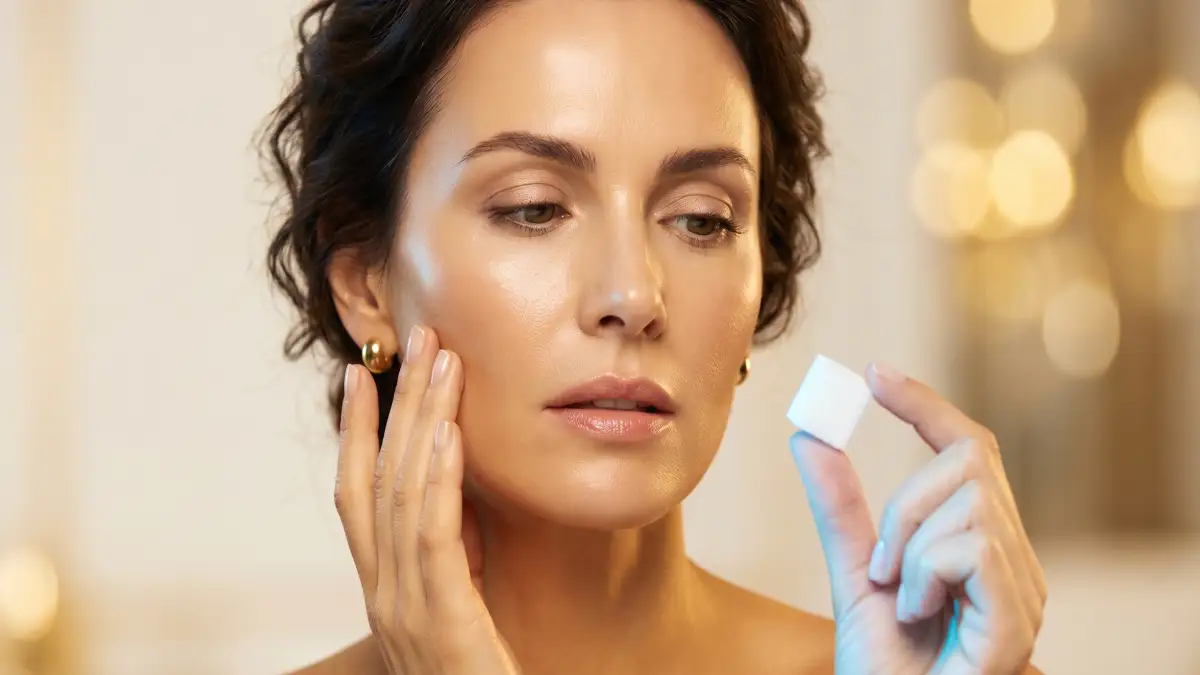
The science of skin aging is evolving rapidly — and for women navigating the skin changes that come with menopause and beyond, evidence-based skincare represents a fundamentally different approach: working with your skin's biology rather than against it.
Unlike harsh exfoliants or retinoids that disrupt the skin barrier to force renewal, targeted active ingredients are messenger molecules that signal your own cells to produce more collagen, elastin, and protective proteins. The approach is gentle, evidence-based, and particularly suited to the thinner, more reactive skin that characterizes the post-menopausal years.
The Molecular Pathway From Glucose to Collagen Decay
The damage sugar inflicts on collagen follows a well-characterized biochemical pathway. When blood glucose levels rise — whether from dietary intake or metabolic dysfunction — excess glucose molecules attach to collagen's lysine and arginine residues through a process called the Amadori rearrangement. This initial attachment is reversible, but within weeks it progresses to irreversible AGE formation.[1]
Dyer and colleagues demonstrated in their landmark 1993 study that skin collagen from diabetic patients contained significantly higher concentrations of the AGE compound pentosidine compared to age-matched controls. More critically, even in non-diabetic individuals, pentosidine levels doubled between ages 20 and 80, confirming that glycation is a universal aging mechanism that dietary sugar dramatically accelerates.
Clinical research confirms that fructose is approximately ten times more reactive than glucose in glycation reactions, making high-fructose corn syrup and excessive fruit juice consumption particularly damaging to dermal collagen. The resulting AGE cross-links transform collagen type III (the soft, pliable collagen of youthful skin) into a rigid structure resembling collagen type I, fundamentally changing skin texture and resilience.
Beyond structural damage, glycated collagen activates the receptor for AGEs (RAGE) on keratinocytes and fibroblasts, triggering inflammatory cascades that produce matrix metalloproteinases — enzymes that further degrade the remaining healthy collagen. This creates a destructive feedback loop where glycation simultaneously damages existing collagen and accelerates the breakdown of unaffected fibers.
Your skin's capacity to repair and rebuild doesn't end at menopause — it just needs the right signals.
— Dr. Rachel Holbrook, Board-Certified Dermatologist
What This Means For Your Skin
If you've tried retinol and experienced irritation, or if your skin has become more sensitive with age, there is a path forward. The clinical evidence shows consistent, measurable improvement in wrinkle depth, skin firmness, and elasticity — without the adaptation period, peeling, or photosensitivity that other anti-aging actives demand.
Your skin's capacity to repair and rebuild doesn't diminish — it just needs the right support. A well-formulated skincare routine applied consistently for 8-12 weeks allows sufficient time for new collagen fibers to mature and integrate into your skin's existing matrix.
The science is clear. The evidence is consistent. The results are measurable.
What happens next is up to you.