
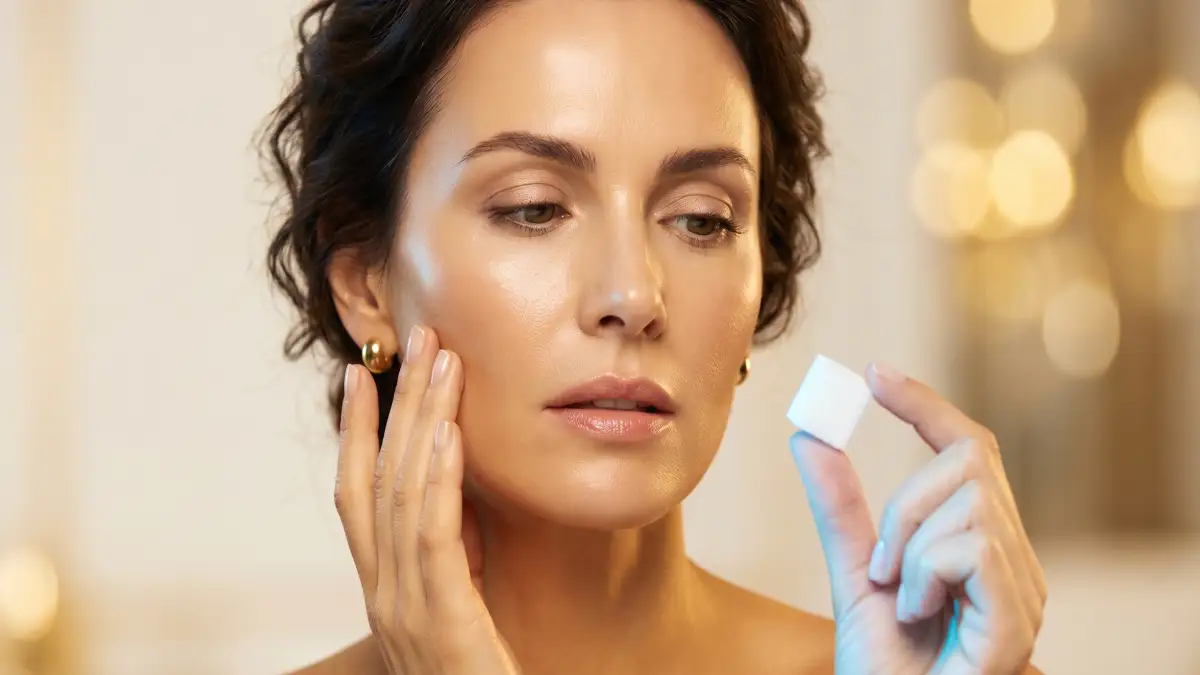
The science of skin aging is evolving rapidly — and for women navigating the skin changes that come with menopause and beyond, evidence-based skincare represents a fundamentally different approach: working with your skin's biology rather than against it.
Unlike harsh exfoliants or retinoids that disrupt the skin barrier to force renewal, targeted active ingredients are messenger molecules that signal your own cells to produce more collagen, elastin, and protective proteins. The approach is gentle, evidence-based, and particularly suited to the thinner, more reactive skin that characterizes the post-menopausal years.
The Science of De-Glycation and Collagen Renewal
The question of reversing glycation damage requires distinguishing between individual fiber damage and overall skin quality. At the molecular level, established AGE cross-links in collagen are considered irreversible — no clinically available treatment can break pentosidine or glucosepane cross-links in living tissue. However, the body continuously produces new collagen, and a strategic approach that combines accelerated collagen turnover with glycation prevention can progressively replace glycated fibers with healthy ones.[1]
AGE breaker compounds represent an active area of pharmaceutical research. Alagebrium (ALT-711) was the first compound demonstrated to cleave established AGE cross-links in vivo, showing significant improvements in arterial and myocardial stiffness in clinical trials. While dermatological applications remain investigational, the proof of concept that AGE cross-links can be chemically cleaved has generated significant interest in topical formulations targeting skin-specific glycation products.
Clinical research confirms that the most practical clinical approach to glycation reversal combines three strategies: prevention of new glycation through blood sugar management and anti-glycation compounds, accelerated turnover of glycated collagen through retinoids and professional treatments that stimulate matrix metalloproteinase activity and new collagen synthesis, and protection of newly formed collagen through antioxidant and anti-glycation barriers. With this combined approach, measurable improvements in skin elasticity and AGE fluorescence have been documented within 6-12 months.
Realistic expectations are essential. Complete reversal of decades of glycation damage is not achievable with current technology. However, clinical studies consistently show that patients who implement comprehensive anti-glycation protocols experience meaningful improvements in skin texture, elasticity, and appearance — with the most dramatic results in those who simultaneously address dietary sugar intake and topical collagen stimulation.
Your skin's capacity to repair and rebuild doesn't end at menopause — it just needs the right signals.
— Dr. Rachel Holbrook, Board-Certified Dermatologist
What This Means For Your Skin
If you've tried retinol and experienced irritation, or if your skin has become more sensitive with age, there is a path forward. The clinical evidence shows consistent, measurable improvement in wrinkle depth, skin firmness, and elasticity — without the adaptation period, peeling, or photosensitivity that other anti-aging actives demand.
Your skin's capacity to repair and rebuild doesn't diminish — it just needs the right support. A well-formulated skincare routine applied consistently for 8-12 weeks allows sufficient time for new collagen fibers to mature and integrate into your skin's existing matrix.
The science is clear. The evidence is consistent. The results are measurable.
What happens next is up to you.