
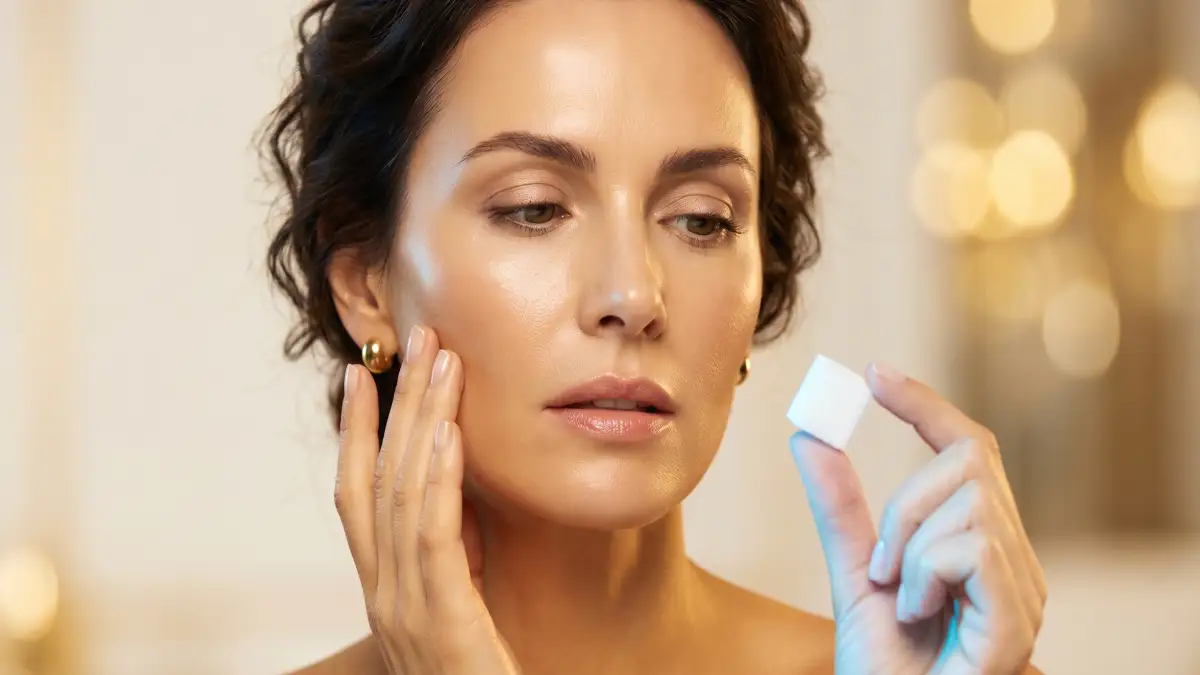
The science of skin aging is evolving rapidly — and for women navigating the skin changes that come with menopause and beyond, evidence-based skincare represents a fundamentally different approach: working with your skin's biology rather than against it.
Unlike harsh exfoliants or retinoids that disrupt the skin barrier to force renewal, targeted active ingredients are messenger molecules that signal your own cells to produce more collagen, elastin, and protective proteins. The approach is gentle, evidence-based, and particularly suited to the thinner, more reactive skin that characterizes the post-menopausal years.
Understanding Advanced Glycation End-Products in Skin
Advanced glycation end-products (AGEs) are a heterogeneous group of compounds formed through non-enzymatic glycosylation and oxidation of proteins, lipids, and nucleic acids. In skin, the primary targets are the long-lived structural proteins collagen and elastin, whose slow turnover rate — estimated at 10-15 years for dermal collagen — makes them particularly vulnerable to cumulative glycation damage.[1]
Sell and Monnier's groundbreaking research identified pentosidine as a major fluorescent cross-link in aged human extracellular matrix, establishing it as a biomarker for glycation-mediated aging. Their work revealed that pentosidine accumulates linearly with age in skin collagen and correlates directly with decreased skin elasticity and increased fragility.
Clinical research confirms that aGEs exert their pathological effects through two mechanisms: direct structural modification of the extracellular matrix and activation of the cell-surface receptor RAGE. Structural modification creates inter-molecular and intra-molecular cross-links that increase collagen stiffness by up to 35% in heavily glycated tissue. RAGE activation triggers NF-kB signaling, producing chronic low-grade inflammation that accelerates tissue degradation.
The clinical significance of AGEs extends beyond aesthetics. Glycation-modified collagen shows impaired interaction with cell-surface integrins, disrupting fibroblast adhesion and migration. This impairment directly reduces the skin's capacity for wound healing and regeneration, explaining why highly glycated skin recovers more slowly from procedures and shows diminished response to topical anti-aging treatments.
Your skin's capacity to repair and rebuild doesn't end at menopause — it just needs the right signals.
— Dr. Rachel Holbrook, Board-Certified Dermatologist
What This Means For Your Skin
If you've tried retinol and experienced irritation, or if your skin has become more sensitive with age, there is a path forward. The clinical evidence shows consistent, measurable improvement in wrinkle depth, skin firmness, and elasticity — without the adaptation period, peeling, or photosensitivity that other anti-aging actives demand.
Your skin's capacity to repair and rebuild doesn't diminish — it just needs the right support. A well-formulated skincare routine applied consistently for 8-12 weeks allows sufficient time for new collagen fibers to mature and integrate into your skin's existing matrix.
The science is clear. The evidence is consistent. The results are measurable.
What happens next is up to you.