
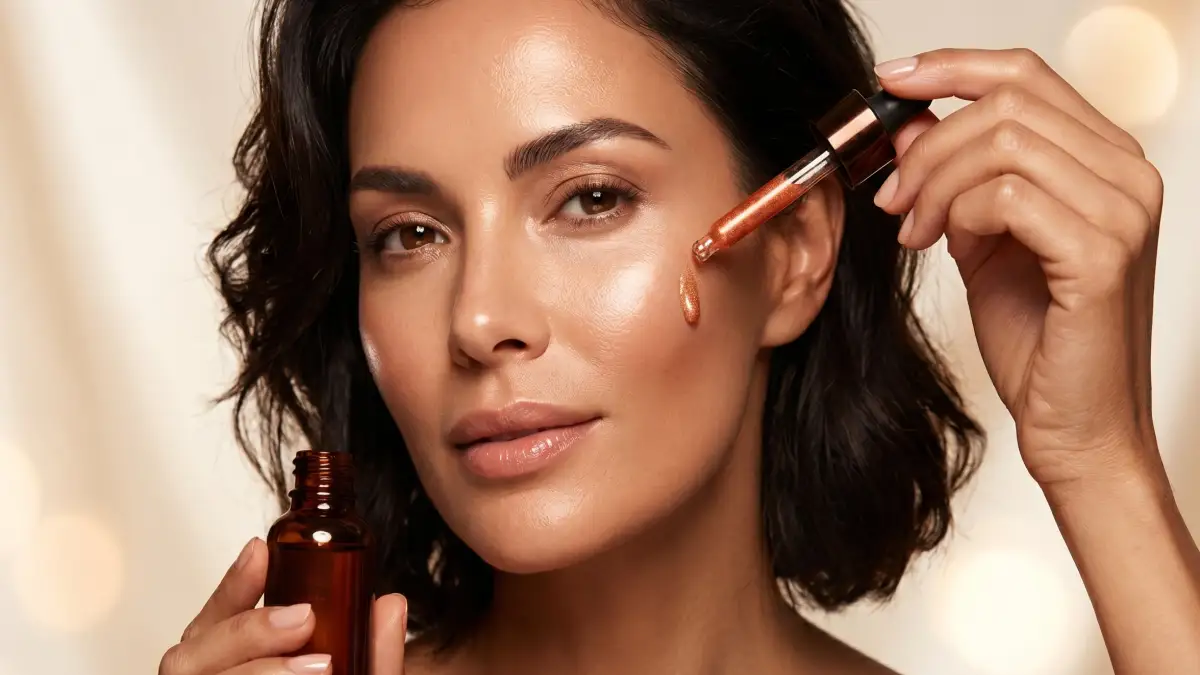
The science of skin aging is evolving rapidly — and for women navigating the skin changes that come with menopause and beyond, evidence-based skincare represents a fundamentally different approach: working with your skin's biology rather than against it.
Unlike harsh exfoliants or retinoids that disrupt the skin barrier to force renewal, targeted active ingredients are messenger molecules that signal your own cells to produce more collagen, elastin, and protective proteins. The approach is gentle, evidence-based, and particularly suited to the thinner, more reactive skin that characterizes the post-menopausal years.
GHK-Cu for Rosacea and Reactive Skin Types
For women with sensitive, reactive, or rosacea-prone skin, the search for effective anti-aging ingredients is particularly challenging. Most evidence-based anti-aging actives — retinoids, alpha-hydroxy acids, vitamin C at therapeutic concentrations, high-percentage niacinamide — carry a significant risk of triggering irritation, flushing, stinging, or flare-ups in sensitized skin. GHK-Cu copper peptides represent a rare exception: an ingredient with documented anti-aging efficacy comparable to retinoids that simultaneously demonstrates potent anti-inflammatory and barrier-repairing properties. Clinical studies have consistently reported zero irritation, erythema, or barrier disruption with GHK-Cu application, even in subjects with pre-existing skin sensitivity. This tolerability profile is not incidental — it stems directly from the peptide's anti-inflammatory mechanism of action, which suppresses the very inflammatory pathways that drive sensitivity and rosacea.[1]
The biological basis for GHK-Cu's suitability for sensitive and rosacea-prone skin lies in its gene expression effects on inflammatory mediators. Gene array analysis has shown that GHK-Cu downregulates multiple genes in the inflammatory cascade including interleukin-6 (IL-6), interleukin-8 (IL-8), and tumor necrosis factor alpha (TNF-alpha) — cytokines that are specifically elevated in rosacea and chronic skin sensitivity. The peptide also suppresses expression of matrix metalloproteinases (MMPs) including MMP-1, MMP-2, and MMP-9, which are overexpressed in rosacea and contribute to the dermal degradation and vascular fragility characteristic of the condition. Simultaneously, GHK-Cu upregulates anti-inflammatory pathways and antioxidant defense systems, including superoxide dismutase and metallothionein — a protein that chelates excess metal ions and protects cells from oxidative damage. This dual action of inflammatory suppression and antioxidant upregulation addresses the two primary drivers of rosacea pathology: dysregulated innate immune response and oxidative stress.
Clinical research confirms that beyond inflammation control, GHK-Cu supports skin barrier function — a critical consideration for sensitive skin types. The peptide stimulates synthesis of glycosaminoglycans including hyaluronic acid and dermatan sulfate, which maintain dermal hydration and structural integrity. It promotes the production of decorin, a small leucine-rich proteoglycan that regulates collagen fiber assembly and has documented anti-inflammatory properties independent of GHK-Cu. And it stimulates the production of type IV collagen and laminin, components of the basement membrane that anchors the epidermis to the dermis. A stronger, better-organized dermal-epidermal junction translates directly into improved barrier function, reduced transepidermal water loss, and decreased susceptibility to irritant penetration. For rosacea patients, whose barrier function is characteristically impaired, these effects are therapeutically meaningful beyond mere anti-aging cosmetic benefit.
Practical considerations for using copper peptides on sensitive or rosacea-prone skin include starting with a low-concentration product (0.01-0.05%) to confirm tolerance, though adverse reactions are extremely rare in clinical literature. Apply to clean, slightly damp skin in the morning before moisturizer and sunscreen. For rosacea patients, copper peptides can be used as a foundation ingredient in a minimal routine — cleanser, copper peptide serum, barrier-supporting moisturizer, mineral sunscreen — providing anti-aging benefit without the risk of triggering flares. The peptide is compatible with other rosacea-friendly ingredients including azelaic acid, centella asiatica, and niacinamide at modest concentrations. Women with rosacea who have been unable to tolerate retinoids may find copper peptides provide an alternative pathway to collagen stimulation without the inflammatory cost that makes retinoid use impractical for their skin type.
Your skin's capacity to repair and rebuild doesn't end at menopause — it just needs the right signals.
— Dr. Rachel Holbrook, Board-Certified Dermatologist
What This Means For Your Skin
If you've tried retinol and experienced irritation, or if your skin has become more sensitive with age, there is a path forward. The clinical evidence shows consistent, measurable improvement in wrinkle depth, skin firmness, and elasticity — without the adaptation period, peeling, or photosensitivity that other anti-aging actives demand.
Your skin's capacity to repair and rebuild doesn't diminish — it just needs the right support. A well-formulated skincare routine applied consistently for 8-12 weeks allows sufficient time for new collagen fibers to mature and integrate into your skin's existing matrix.
The science is clear. The evidence is consistent. The results are measurable.
What happens next is up to you.