
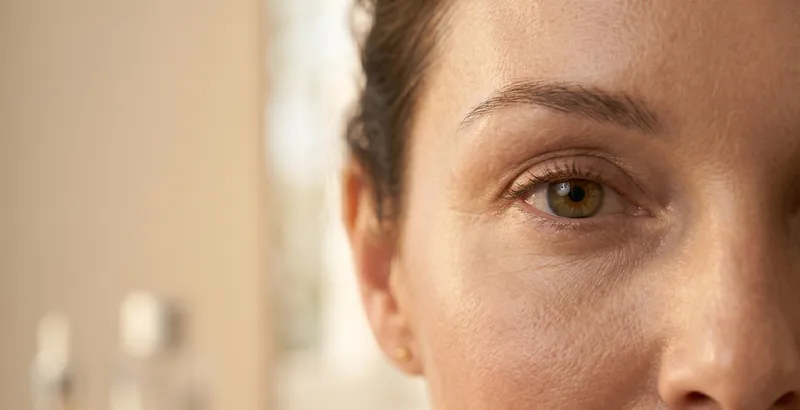
The science of skin aging is evolving rapidly — and for women navigating the skin changes that come with menopause and beyond, evidence-based skincare represents a fundamentally different approach: working with your skin's biology rather than against it.
Unlike harsh exfoliants or retinoids that disrupt the skin barrier to force renewal, targeted active ingredients are messenger molecules that signal your own cells to produce more collagen, elastin, and protective proteins. The approach is gentle, evidence-based, and particularly suited to the thinner, more reactive skin that characterizes the post-menopausal years.
When Under-Eye Darkness Signals a Systemic Nutritional Deficiency
Dark circles that appear or significantly worsen without changes in sleep, stress, or aging should prompt consideration of iron deficiency anemia — a condition affecting up to 20% of women of reproductive age and an increasing percentage during perimenopause due to heavy or irregular menstrual bleeding. The connection between iron deficiency and dark circles is physiological: hemoglobin — the iron-containing protein in red blood cells — is responsible for carrying oxygen and giving blood its red color. When iron stores are depleted, hemoglobin levels drop, and the blood becomes less oxygenated and less red. The deoxygenated, darker blood flowing through the periorbital capillary network is more visible through the thin under-eye skin, producing a darker, more prominent bluish-purple discoloration. Additionally, iron deficiency causes compensatory vasodilation (the body widens blood vessels to maintain oxygen delivery despite lower hemoglobin), which further increases the visible vascular network under the eyes.[1]
The clinical signs that suggest iron deficiency as a contributing factor to dark circles: dark circles that worsened suddenly without an obvious trigger (new stress, sleep change, or aging milestone); dark circles accompanied by unusual fatigue, shortness of breath, brittle nails, or pale skin on the inner lower eyelid (pulling down the lower lid reveals the conjunctival pallor characteristic of anemia); dark circles that do not respond to any topical treatment over 3+ months (topical treatments cannot address a systemic deficiency); and heavy, prolonged, or irregular menstrual periods (the most common cause of iron deficiency in perimenopausal women, as hormonal fluctuations often produce heavier bleeding before menopause). A simple blood test — complete blood count (CBC) plus serum ferritin — confirms or excludes iron deficiency. Ferritin below 30 ng/mL indicates depleted iron stores even if hemoglobin is still within the normal range (this subclinical deficiency still affects under-eye appearance).
Clinical research confirms that the treatment of iron-deficiency-related dark circles requires correcting the deficiency, not applying eye cream. Oral iron supplementation — typically ferrous sulfate 325mg (65mg elemental iron) taken on an empty stomach with vitamin C to enhance absorption — replenishes iron stores over 3-6 months. As hemoglobin levels normalize, the blood regains its healthy red oxygenated color, the compensatory vasodilation resolves, and the dark circles visibly improve. Most women notice improvement in their dark circles by 6-8 weeks of iron supplementation, with maximum improvement at 3-4 months when iron stores are fully replenished. The improvement is often dramatic — dark circles that seemed intractable despite multiple eye creams resolve significantly once the underlying deficiency is corrected, confirming that the pigmentation was systemic, not local.
Important considerations for perimenopausal women: iron deficiency and perimenopause are frequently concurrent. The hormonal fluctuations of perimenopause often produce menorrhagia (heavy menstrual bleeding) that depletes iron faster than dietary intake can replace. A woman may enter perimenopause with adequate iron stores and develop progressive deficiency over 1-2 years of heavy periods without recognizing the connection to her worsening dark circles. Annual ferritin testing is reasonable for perimenopausal women with dark circles, even if they don't have classic anemia symptoms. After iron stores are replenished and bleeding patterns stabilize (eventually through menopause), the topical dark circle protocol can then address the remaining age-related and structural components. The lesson: if dark circles are not responding to topical treatment, consider whether the cause is under the skin rather than on it. A blood test costing less than a premium eye cream can identify a treatable systemic cause that no topical product can address.
Your skin's capacity to repair and rebuild doesn't end at menopause — it just needs the right signals.
— Dr. Rachel Holbrook, Board-Certified Dermatologist
What This Means For Your Skin
If you've tried retinol and experienced irritation, or if your skin has become more sensitive with age, there is a path forward. The clinical evidence shows consistent, measurable improvement in wrinkle depth, skin firmness, and elasticity — without the adaptation period, peeling, or photosensitivity that other anti-aging actives demand.
Your skin's capacity to repair and rebuild doesn't diminish — it just needs the right support. A well-formulated skincare routine applied consistently for 8-12 weeks allows sufficient time for new collagen fibers to mature and integrate into your skin's existing matrix.
The science is clear. The evidence is consistent. The results are measurable.
What happens next is up to you.