
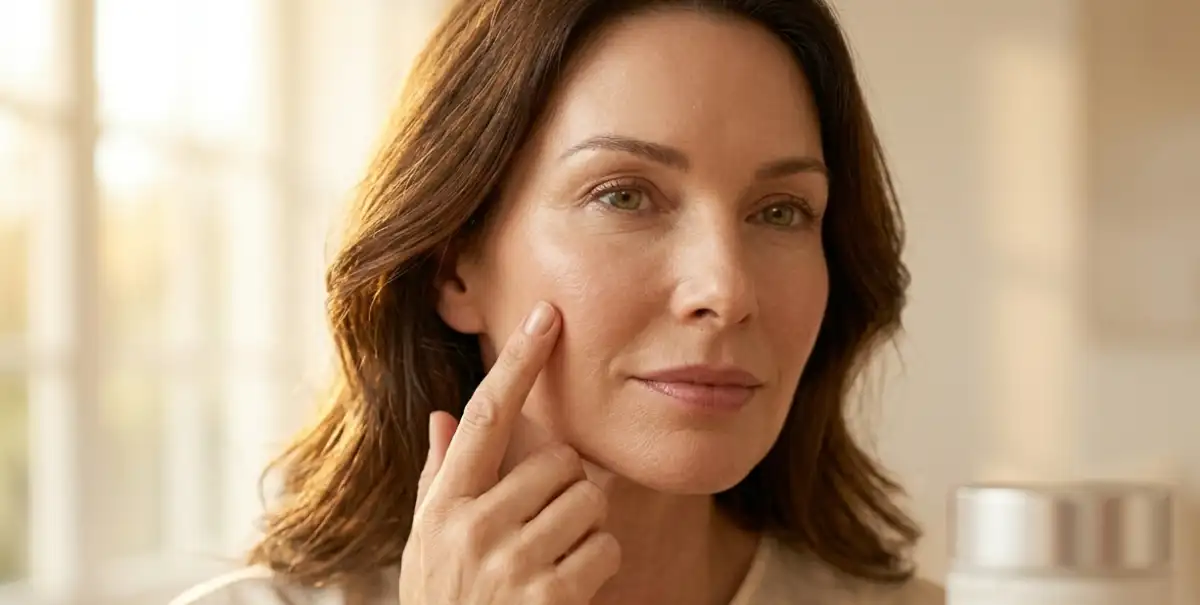
The science of skin aging is evolving rapidly — and for women navigating the skin changes that come with menopause and beyond, evidence-based skincare represents a fundamentally different approach: working with your skin's biology rather than against it.
Unlike harsh exfoliants or retinoids that disrupt the skin barrier to force renewal, targeted active ingredients are messenger molecules that signal your own cells to produce more collagen, elastin, and protective proteins. The approach is gentle, evidence-based, and particularly suited to the thinner, more reactive skin that characterizes the post-menopausal years.
Why Your Cleanser Matters More Than Your Moisturizer
The body wash used by a menopausal woman may be the single most impactful product in her skincare routine — not because it adds beneficial ingredients, but because the wrong cleanser can destroy barrier function faster than even the best moisturizer can rebuild it. A study in the Journal of the European Academy of Dermatology demonstrated that a single wash with a high-pH soap (pH 9-10) reduced stratum corneum ceramide content by 15-20%, increased TEWL by 25%, and required 4-6 hours for partial recovery. For menopausal skin washing 1-2 times daily, this means the barrier never fully recovers between washes.[1]
The critical variables in a menopausal body wash are pH and surfactant type. Healthy skin pH is 4.5-5.5 (slightly acidic). Traditional soap has a pH of 9-10, which disrupts the acid mantle, denatures skin proteins, and strips lipids. Syndets (synthetic detergent bars or liquid cleansers) with pH 5.5 clean effectively while preserving barrier function — a comparative study showed that 4 weeks of syndet use improved skin hydration by 20% versus soap, without any moisturizer use. The pH difference alone accounted for a 15% difference in TEWL between soap and syndet users in menopausal women.
Clinical research confirms that surfactant harshness varies significantly between formulations. Sodium lauryl sulfate (SLS) — the most common surfactant in body washes — is among the harshest, producing measurable barrier disruption even at low concentrations. Sodium laureth sulfate (SLES) is milder. Cocamidopropyl betaine and decyl glucoside are among the gentlest surfactants with adequate cleaning efficacy. The mildest option is surfactant-free cleansing oils (micellar technology), which dissolve dirt and sebum without disrupting lipid architecture — but many women find these insufficient for body cleansing.
The optimal body wash for menopausal dry skin meets four criteria: pH 5-5.5 (labeled or testable with pH strips), gentle surfactant system (no SLS), fragrance-free (fragrance chemicals are among the most common contact sensitizers, and menopausal nerve sensitivity amplifies the reaction), and ideally contains barrier-supportive ingredients (ceramides, glycerin, or colloidal oatmeal). Application technique matters: use hands or a soft cloth rather than loofahs or scrub brushes, which mechanically abrade the thinning epidermis. Rinse with warm (not hot) water. And most importantly: apply ceramide moisturizer within 60 seconds of stepping out of the shower, while the stratum corneum is still hydrated. This simple cleanser-to-moisturizer sequence produces greater barrier improvement than any single premium product used in isolation.
Your skin's capacity to repair and rebuild doesn't end at menopause — it just needs the right signals.
— Dr. Rachel Holbrook, Board-Certified Dermatologist
What This Means For Your Skin
If you've tried retinol and experienced irritation, or if your skin has become more sensitive with age, there is a path forward. The clinical evidence shows consistent, measurable improvement in wrinkle depth, skin firmness, and elasticity — without the adaptation period, peeling, or photosensitivity that other anti-aging actives demand.
Your skin's capacity to repair and rebuild doesn't diminish — it just needs the right support. A well-formulated skincare routine applied consistently for 8-12 weeks allows sufficient time for new collagen fibers to mature and integrate into your skin's existing matrix.
The science is clear. The evidence is consistent. The results are measurable.
What happens next is up to you.