
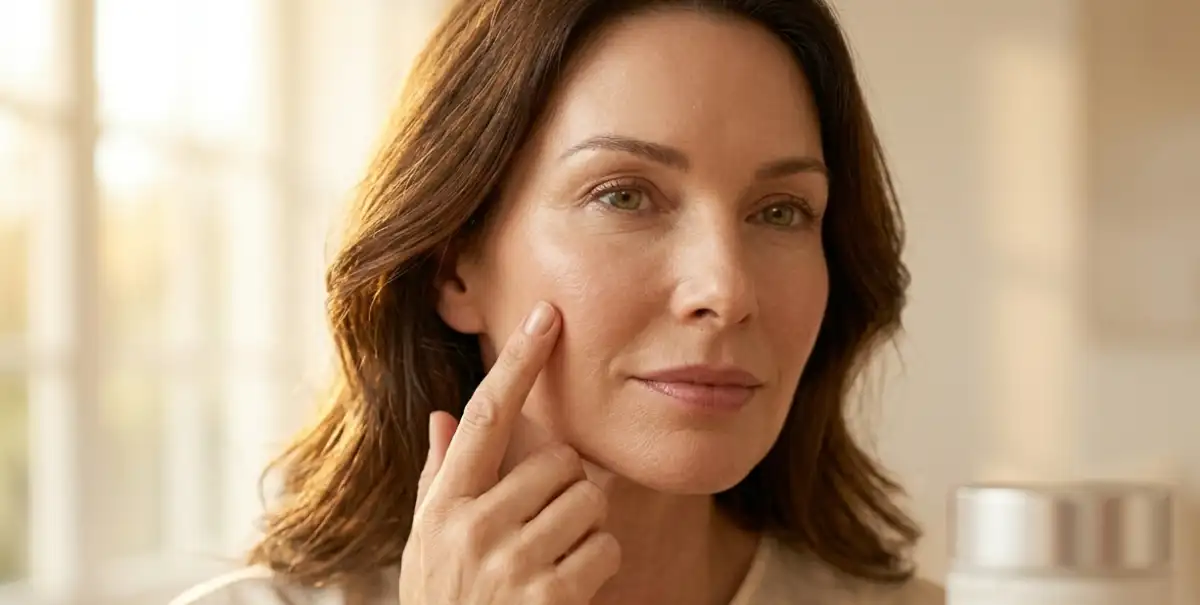
The science of skin aging is evolving rapidly — and for women navigating the skin changes that come with menopause and beyond, evidence-based skincare represents a fundamentally different approach: working with your skin's biology rather than against it.
Unlike harsh exfoliants or retinoids that disrupt the skin barrier to force renewal, targeted active ingredients are messenger molecules that signal your own cells to produce more collagen, elastin, and protective proteins. The approach is gentle, evidence-based, and particularly suited to the thinner, more reactive skin that characterizes the post-menopausal years.
Oral Barrier Support: What Clinical Trials Show
The supplement market for menopausal skin is vast, but the clinical evidence narrows the effective options to four categories with genuine randomized-controlled-trial support. The strongest evidence belongs to omega-3 fatty acids: EPA and DHA supplementation at 2-3g daily consistently improves skin hydration and reduces TEWL in post-menopausal women across multiple studies. The mechanism is anti-inflammatory: omega-3s are converted to resolvins and protectins that reduce the chronic low-grade inflammation that menopause produces in skin, while serving as building blocks for the prostaglandins that regulate barrier permeability.[1]
Oral ceramide supplements (phytoceramides from wheat, rice, or sweet potato) represent the most directly targeted approach. A double-blind, placebo-controlled trial in Japanese post-menopausal women found that 1.8mg daily of wheat-derived ceramides improved skin hydration scores by 35% and reduced TEWL by 9% after 12 weeks. The ceramides are absorbed in the gut, transported via the bloodstream, and incorporated into the stratum corneum lipid matrix — providing systemic barrier support that reaches all body sites, including areas that topical application may miss. The effect size is smaller than topical ceramide application but additive — women using both oral and topical ceramides showed the best outcomes.
Clinical research confirms that collagen peptides (hydrolyzed collagen, 5-10g daily) improve skin hydration through a mechanism distinct from barrier repair. Collagen peptides stimulate fibroblast production of hyaluronic acid and glycosaminoglycans, increasing the dermal water-holding capacity that menopause depletes. A meta-analysis of 19 randomized controlled trials found that oral collagen supplementation improved skin hydration by 28% and reduced objective signs of skin aging by 15% compared to placebo. The hydration improvement was visible as early as 4 weeks and continued improving through 12 weeks of supplementation.
Phytoestrogen supplements (soy isoflavones 40-80mg daily, or red clover isoflavones) address the hormonal root cause by providing weak estrogen receptor agonist activity. A systematic review found that isoflavone supplementation improved skin thickness, elasticity, and hydration in post-menopausal women, though the effect was modest (10-20% improvement) and required 12-24 weeks to manifest. The clinical recommendation is clear: supplements complement topical care but do not replace it. The optimal approach is topical ceramide treatment as the foundation, with omega-3 and/or oral ceramides as systemic support. Supplements alone, without topical barrier repair, show insufficient improvement to resolve menopausal dryness.
Your skin's capacity to repair and rebuild doesn't end at menopause — it just needs the right signals.
— Dr. Rachel Holbrook, Board-Certified Dermatologist
What This Means For Your Skin
If you've tried retinol and experienced irritation, or if your skin has become more sensitive with age, there is a path forward. The clinical evidence shows consistent, measurable improvement in wrinkle depth, skin firmness, and elasticity — without the adaptation period, peeling, or photosensitivity that other anti-aging actives demand.
Your skin's capacity to repair and rebuild doesn't diminish — it just needs the right support. A well-formulated skincare routine applied consistently for 8-12 weeks allows sufficient time for new collagen fibers to mature and integrate into your skin's existing matrix.
The science is clear. The evidence is consistent. The results are measurable.
What happens next is up to you.