
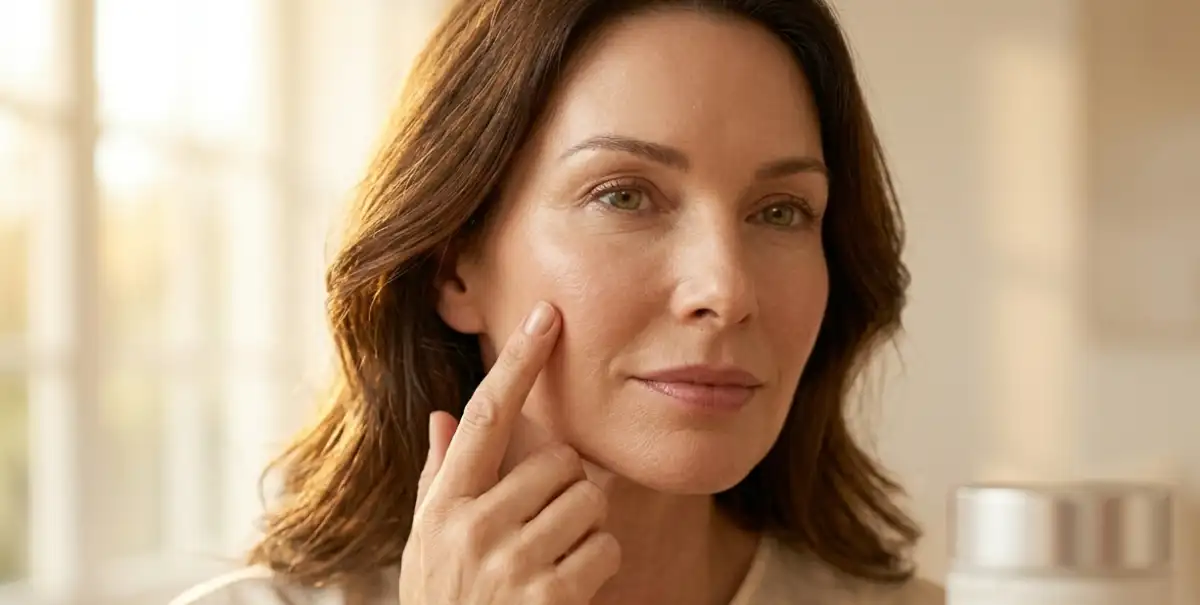
The science of skin aging is evolving rapidly — and for women navigating the skin changes that come with menopause and beyond, evidence-based skincare represents a fundamentally different approach: working with your skin's biology rather than against it.
Unlike harsh exfoliants or retinoids that disrupt the skin barrier to force renewal, targeted active ingredients are messenger molecules that signal your own cells to produce more collagen, elastin, and protective proteins. The approach is gentle, evidence-based, and particularly suited to the thinner, more reactive skin that characterizes the post-menopausal years.
Evidence-Based Plant Oils, Oatmeal, and Honey for Barrier Support
Natural remedies for menopausal dry skin range from clinically validated to completely ineffective — and the distinction matters because some popular natural approaches can actually worsen the barrier compromise that drives menopausal dryness. The evidence clearly separates three categories: natural ingredients with strong clinical support, those with moderate support, and those that are actively harmful despite their 'natural' reputation. Navigating this landscape requires the same evidence-based approach used for pharmaceutical skincare.[1]
Clinically validated natural remedies include colloidal oatmeal, sunflower seed oil, and medical-grade honey. Colloidal oatmeal (Avena sativa) has the strongest evidence base — recognized by the FDA as a skin protectant, it contains avenanthramides (anti-inflammatory compounds that inhibit NF-kB signaling), beta-glucan (a polysaccharide that forms a protective film), and lipids that supplement the barrier. A randomized trial found that colloidal oatmeal cream improved skin hydration by 30% and reduced TEWL by 18% in post-menopausal women over 8 weeks. Sunflower seed oil, rich in linoleic acid, has been shown to enhance barrier function when applied topically — a study confirmed improved TEWL values and stratum corneum integrity within 4 weeks.
Clinical research confirms that moderate-evidence natural remedies include shea butter (contains triterpene alcohols with anti-inflammatory activity), jojoba oil (compositionally similar to human sebum, providing a biomimetic occlusive layer), and aloe vera (evidence for hydration and anti-inflammatory effects, though most studies use concentrations higher than commercial products provide). These ingredients work best when combined with ceramide-containing products rather than used alone — they provide occlusion and supplementary benefits but do not replace the specific lipids that menopausal skin lacks.
Importantly, some popular 'natural' ingredients are contraindicated for menopausal dry skin. Coconut oil, despite its popularity, contains high concentrations of lauric acid that can disrupt the lipid lamellae organization in already-compromised skin — a study found that coconut oil worsened TEWL in subjects with barrier compromise, while sunflower oil improved it. Essential oils (lavender, tea tree, peppermint) contain terpenes and linalool that are known skin sensitizers — problematic for menopausal skin with increased nerve sensitivity. Lemon juice and apple cider vinegar, sometimes recommended as 'natural toners,' have pH values of 2-3 that can chemically damage the already-thin menopausal epidermis.
Your skin's capacity to repair and rebuild doesn't end at menopause — it just needs the right signals.
— Dr. Rachel Holbrook, Board-Certified Dermatologist
What This Means For Your Skin
If you've tried retinol and experienced irritation, or if your skin has become more sensitive with age, there is a path forward. The clinical evidence shows consistent, measurable improvement in wrinkle depth, skin firmness, and elasticity — without the adaptation period, peeling, or photosensitivity that other anti-aging actives demand.
Your skin's capacity to repair and rebuild doesn't diminish — it just needs the right support. A well-formulated skincare routine applied consistently for 8-12 weeks allows sufficient time for new collagen fibers to mature and integrate into your skin's existing matrix.
The science is clear. The evidence is consistent. The results are measurable.
What happens next is up to you.