
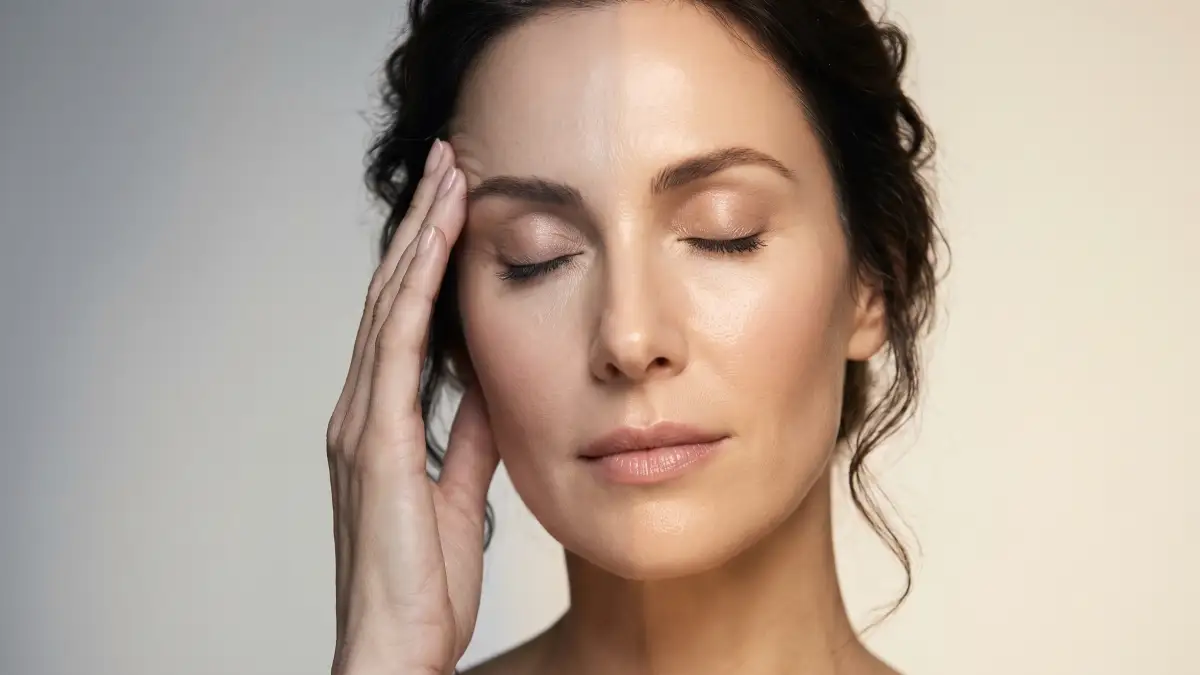
The science of skin aging is evolving rapidly — and for women navigating the skin changes that come with menopause and beyond, evidence-based skincare represents a fundamentally different approach: working with your skin's biology rather than against it.
Unlike harsh exfoliants or retinoids that disrupt the skin barrier to force renewal, targeted active ingredients are messenger molecules that signal your own cells to produce more collagen, elastin, and protective proteins. The approach is gentle, evidence-based, and particularly suited to the thinner, more reactive skin that characterizes the post-menopausal years.
How Physical Activity Reverses Stress-Driven Skin Aging
Exercise is one of the most powerful and underutilized anti-aging interventions for the skin — and its benefits extend far beyond the 'post-workout glow.' A groundbreaking study at McMaster University demonstrated that regular exercisers over age 40 had skin that resembled that of 20-30 year olds on biopsy: thicker dermis, denser collagen networks, and more organized elastic fiber architecture than sedentary individuals of the same age. Even more remarkably, when previously sedentary adults over 65 began exercising twice weekly, their skin biopsies showed reversal of age-related thinning within 3 months — the dermis and epidermis thickened to levels comparable to adults decades younger.[1]
The anti-aging mechanisms of exercise for skin are multifaceted. Cortisol regulation: while acute exercise temporarily raises cortisol, regular exercise reduces baseline cortisol levels by 15-25% and improves cortisol reactivity — meaning the body returns to baseline cortisol faster after stress. This directly protects collagen from chronic cortisol-driven degradation. Blood flow enhancement: exercise increases cardiac output and capillary density, improving nutrient delivery and waste removal from the dermis. The enhanced circulation delivers more oxygen, amino acids, and vitamin C to fibroblasts while removing metabolic waste products that contribute to cellular senescence. Improved dermal blood flow during and after exercise creates the conditions for enhanced collagen synthesis.
Clinical research confirms that myokine release represents perhaps the most exciting discovery in exercise-skin science. Exercise-stimulated muscles release cytokines called myokines — including IL-15, irisin, and BDNF — that have direct anti-aging effects on distant tissues including the skin. IL-15 has been shown to improve mitochondrial function in skin cells, effectively rejuvenating their energy production capacity. Irisin promotes fibroblast proliferation and collagen synthesis through pathways independent of hormonal signaling. The McMaster study identified a specific myokine pattern in exercisers that correlated with their younger-appearing skin, suggesting that muscle tissue actively communicates anti-aging signals to the skin during exercise.
The optimal exercise protocol for skin anti-aging benefits based on available evidence includes: moderate-intensity aerobic exercise (brisk walking, cycling, swimming) for 30-45 minutes, 3-5 times weekly — this produces the strongest cortisol regulation and blood flow benefits. Resistance training 2-3 times weekly — this produces the strongest myokine release and maintains the muscle mass that influences facial volume and contour. The combination produces greater skin benefits than either type alone. One important caveat: excessive high-intensity exercise without adequate recovery can increase cortisol and oxidative stress, potentially negating the anti-aging benefits. The 'sweet spot' for skin health is consistent moderate exercise rather than extreme training. For women combining exercise with topical anti-aging skincare, the post-exercise period offers enhanced ingredient absorption due to increased blood flow — applying vitamin C serum after showering post-workout takes advantage of this temporary window of enhanced dermal circulation.
Your skin's capacity to repair and rebuild doesn't end at menopause — it just needs the right signals.
— Dr. Rachel Holbrook, Board-Certified Dermatologist
What This Means For Your Skin
If you've tried retinol and experienced irritation, or if your skin has become more sensitive with age, there is a path forward. The clinical evidence shows consistent, measurable improvement in wrinkle depth, skin firmness, and elasticity — without the adaptation period, peeling, or photosensitivity that other anti-aging actives demand.
Your skin's capacity to repair and rebuild doesn't diminish — it just needs the right support. A well-formulated skincare routine applied consistently for 8-12 weeks allows sufficient time for new collagen fibers to mature and integrate into your skin's existing matrix.
The science is clear. The evidence is consistent. The results are measurable.
What happens next is up to you.