
The science of skin aging is evolving rapidly — and for women navigating the skin changes that come with menopause and beyond, evidence-based skincare represents a fundamentally different approach: working with your skin's biology rather than against it.
Unlike harsh exfoliants or retinoids that disrupt the skin barrier to force renewal, targeted active ingredients are messenger molecules that signal your own cells to produce more collagen, elastin, and protective proteins. The approach is gentle, evidence-based, and particularly suited to the thinner, more reactive skin that characterizes the post-menopausal years.
Topical Strategies to Support Temple Skin Quality and Slow Volume Loss
Skincare for the temple area is frequently overlooked — most women apply their serums and moisturizers to the central face (forehead, cheeks, chin) while neglecting the lateral face including the temples. This oversight is significant because the skin overlying the temporal fossa is thinner than central facial skin, making it more vulnerable to collagen loss, photodamage, and visible aging. Additionally, the temple area receives significant UV exposure due to its lateral positioning — it catches sunlight from the side that the nose and brow ridges partially shade from direct frontal exposure. Deliberate inclusion of the temple area in your skincare routine preserves skin quality and maintains the dermal scaffolding that supports the soft tissues underneath.[1]
The topical ingredients most relevant to temple skin health are the same evidence-based actives that benefit the rest of the face, applied with intentional attention to the temple region. Retinoids (retinol 0.3-0.5% or prescription tretinoin) stimulate collagen production in the temporal dermis, maintaining skin thickness and structural integrity over the bone. Vitamin C serum (15-20% L-ascorbic acid) provides antioxidant protection against the UV damage that the temples are particularly susceptible to, while also serving as a collagen synthesis cofactor. Peptides (Matrixyl, copper peptides) support fibroblast activity in the temporal dermis. Sunscreen (SPF 30-50) applied generously to the temple area prevents the photodamage that accelerates both skin aging and the vascular deterioration that contributes to fat atrophy.
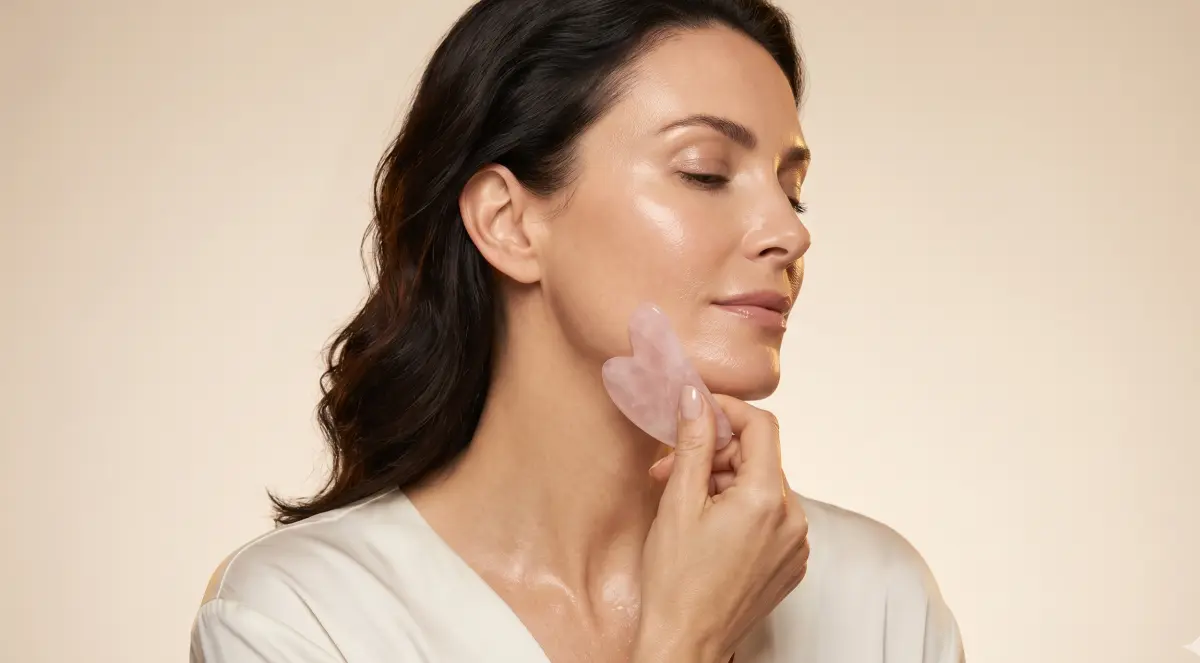
Clinical research confirms that the application technique for temple skincare matters. When applying serums and moisturizers, deliberately extend application to the temple area using upward and outward strokes that follow the temporal fascia. Gentle massage of the temple area during product application improves local circulation, which benefits both ingredient absorption and the vascular supply to the temporal fat pad and muscle. Facial massage tools (gua sha, jade roller) can be incorporated specifically along the temporal ridge, promoting lymphatic drainage and blood flow. While these techniques cannot reverse established volume loss, they contribute to maintaining the tissue quality that supports the temple region.
Realistic expectations for topical temple care: skincare operates at the epidermal and dermal level — it cannot directly address the fat atrophy, muscle wasting, or bone resorption that causes temple hollowing. A woman with established temple concavity will not see the temples fill from topical products alone. What skincare can do is: maintain the quality and thickness of the overlying skin (preventing the 'papery' appearance of very thin temporal skin), preserve the collagen network that provides a smooth surface over the bone, protect against further UV-driven tissue damage, and create the best possible canvas for injectable treatments if pursued. Think of temple skincare as preventive maintenance and quality optimization — not as a volume restoration treatment.
Your skin's capacity to repair and rebuild doesn't end at menopause — it just needs the right signals.
— Dr. Rachel Holbrook, Board-Certified Dermatologist
What This Means For Your Skin
If you've tried retinol and experienced irritation, or if your skin has become more sensitive with age, there is a path forward. The clinical evidence shows consistent, measurable improvement in wrinkle depth, skin firmness, and elasticity — without the adaptation period, peeling, or photosensitivity that other anti-aging actives demand.
Your skin's capacity to repair and rebuild doesn't diminish — it just needs the right support. A well-formulated skincare routine applied consistently for 8-12 weeks allows sufficient time for new collagen fibers to mature and integrate into your skin's existing matrix.
The science is clear. The evidence is consistent. The results are measurable.
What happens next is up to you.