
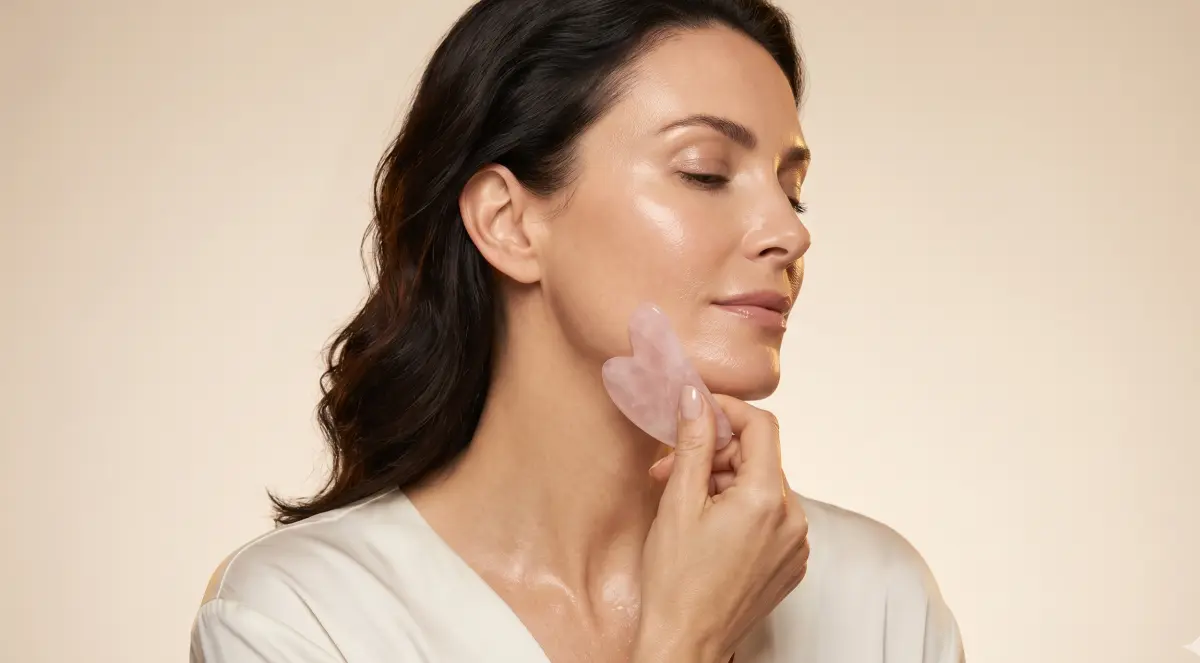
The science of skin aging is evolving rapidly — and for women navigating the skin changes that come with menopause and beyond, evidence-based skincare represents a fundamentally different approach: working with your skin's biology rather than against it.
Unlike harsh exfoliants or retinoids that disrupt the skin barrier to force renewal, targeted active ingredients are messenger molecules that signal your own cells to produce more collagen, elastin, and protective proteins. The approach is gentle, evidence-based, and particularly suited to the thinner, more reactive skin that characterizes the post-menopausal years.
Proactive Strategies to Delay and Minimize Temple Volume Loss
Preventing temple hollowing is significantly more effective than treating established hollowing — once the fat pad has deflated, the muscle has atrophied, and the bone has resorbed, these changes cannot be reversed with topical or lifestyle interventions alone. However, the rate of temple volume loss is significantly modifiable, and women who implement proactive strategies in their 40s can delay visible hollowing by 5-10 years compared to those who take no preventive action. Prevention works by addressing the modifiable factors that accelerate the natural, age-related volume decline.[1]
Weight stability is the single most impactful modifiable factor for facial fat preservation. The facial fat compartments, including the superficial temporal fat pad, respond to energy balance — caloric deficit depletes them, while caloric surplus replenishes them, but the replenishment becomes less efficient with each weight cycle. Women who maintain a stable body weight (avoiding both significant gain and significant loss) preserve their facial fat compartments more effectively than those who diet frequently. This does not mean carrying excess weight — it means finding and maintaining a healthy, sustainable weight rather than repeatedly losing and regaining. A BMI of 21-24 is generally optimal for facial fullness preservation.
Clinical research confirms that sun protection for the temple area deserves specific emphasis because the temples receive disproportionate UV exposure from lateral sun angles. This UV exposure damages the dermal collagen that provides structural support, the vascular network that nourishes the temporal fat pad, and the fascial framework that holds tissues in position. Broad-spectrum SPF 30-50 applied to the temples daily — not just the central face — is essential. Physical sun protection (wide-brimmed hats, UV-blocking sunglasses with wide temples) provides additional protection that sunscreen alone cannot match. The compounding effect of daily UV protection over years produces measurable differences in temporal tissue quality.
Nutritional and lifestyle factors that support temple volume preservation: adequate protein intake (0.8-1.0g per kg body weight) maintains temporalis muscle mass; calcium (1000-1200mg daily) and vitamin D (1000-2000 IU daily) support temporal bone density, particularly important during perimenopause; omega-3 fatty acids support the vascular health that nourishes facial fat compartments; moderate exercise maintains overall tissue health without the facial fat depletion associated with extreme endurance training; stress management reduces cortisol-driven fat catabolism in the face; and sleep optimization supports the nocturnal growth hormone release that maintains tissue regeneration throughout the face. Combined with diligent temple-area skincare (retinoid, vitamin C, sunscreen), these preventive measures create a comprehensive defense against the triple-tissue volume loss that produces temple hollowing.
Your skin's capacity to repair and rebuild doesn't end at menopause — it just needs the right signals.
— Dr. Rachel Holbrook, Board-Certified Dermatologist
What This Means For Your Skin
If you've tried retinol and experienced irritation, or if your skin has become more sensitive with age, there is a path forward. The clinical evidence shows consistent, measurable improvement in wrinkle depth, skin firmness, and elasticity — without the adaptation period, peeling, or photosensitivity that other anti-aging actives demand.
Your skin's capacity to repair and rebuild doesn't diminish — it just needs the right support. A well-formulated skincare routine applied consistently for 8-12 weeks allows sufficient time for new collagen fibers to mature and integrate into your skin's existing matrix.
The science is clear. The evidence is consistent. The results are measurable.
What happens next is up to you.