
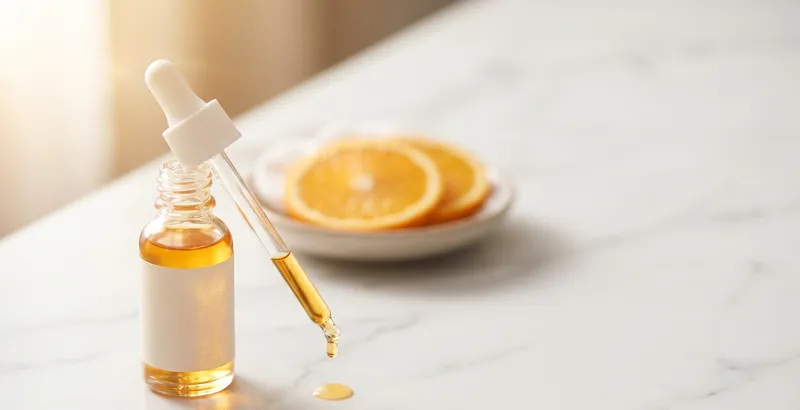
The science of skin aging is evolving rapidly — and for women navigating the skin changes that come with menopause and beyond, evidence-based skincare represents a fundamentally different approach: working with your skin's biology rather than against it.
Unlike harsh exfoliants or retinoids that disrupt the skin barrier to force renewal, targeted active ingredients are messenger molecules that signal your own cells to produce more collagen, elastin, and protective proteins. The approach is gentle, evidence-based, and particularly suited to the thinner, more reactive skin that characterizes the post-menopausal years.
Bioavailability, Stability, and Efficacy Comparison of Ascorbate Forms
The topical vitamin C market encompasses over a dozen distinct molecular forms, each with fundamentally different physicochemical properties, penetration mechanisms, stability profiles, and biological activities. Understanding these differences is essential for mature skin care because the wrong derivative choice can mean the difference between meaningful clinical results and expensive placebo effect. L-ascorbic acid (LAA) remains the most extensively studied and only form with direct, immediate biological activity — it requires no enzymatic conversion and can function as an antioxidant, collagen cofactor, and tyrosinase inhibitor the moment it reaches viable epidermal and dermal cells. Its three hydroxyl groups and the C2-C3 enediol double bond confer its electron-donating capacity, but this same reactivity makes it extraordinarily sensitive to oxidation by oxygen, light, heat, metal ions, and alkaline pH. In aqueous solution above pH 4.0, LAA auto-oxidizes within days, forming dehydroascorbic acid (DHAA), then irreversibly degrading to 2,3-diketogulonic acid, which has no beneficial skin activity and may generate free radicals. This instability has driven the development of modified derivatives that sacrifice some immediate activity for dramatically improved shelf life and formulation flexibility.[1]
Ascorbyl glucoside (AA-2G) represents the most widely used water-soluble derivative, featuring a glucose molecule bonded to the C2 hydroxyl group that protects the reactive enediol system from oxidation. This modification confers remarkable stability — AA-2G solutions maintain potency for years at room temperature and remain active at neutral pH, eliminating the irritation concerns of low-pH LAA formulations. However, the glucose moiety must be cleaved by epidermal alpha-glucosidase before free ascorbic acid is released, and this enzymatic conversion is incomplete and slow, with in vivo studies suggesting only 5-15% of applied AA-2G ultimately generates intracellular ascorbate. Despite this apparent limitation, clinical studies demonstrate meaningful improvements in pigmentation and photodamage at concentrations of 2-5%, likely because the sustained, slow-release kinetics provide continuous low-level ascorbate delivery over 8-12 hours — potentially more physiologically relevant than the spike-and-crash pattern of direct LAA application. Sodium ascorbyl phosphate (SAP) offers a different stability solution through phosphorylation at C2, with phosphatase enzymes in the epidermis liberating active ascorbic acid. SAP is stable at pH 7.0 and well-tolerated by sensitive skin, showing particular efficacy against inflammatory acne (via antimicrobial activity against P. acnes) and mild pigmentation, though head-to-head studies suggest approximately 60% lower collagen stimulation compared to equimolar LAA.
Clinical research confirms that lipid-soluble derivatives represent a fundamentally different approach to the penetration challenge in mature skin. Ascorbyl tetraisopalmitate (ATIP, also called tetrahexyldecyl ascorbate or THDA) replaces all four hydroxyl groups with isopalmitic acid chains, creating a completely lipophilic molecule that dissolves into the intercellular lipid matrix of the stratum corneum rather than requiring aqueous-phase diffusion. This is particularly advantageous in mature skin where reduced natural moisturizing factor and altered ceramide composition compromise the aqueous penetration pathway that LAA depends upon. ATIP demonstrates superior penetration in ex vivo skin models using tape-stripping protocols, achieving 3-4 fold higher dermal concentrations than equimolar LAA after 24 hours. Once within cells, intracellular esterases cleave the palmitate groups to regenerate free ascorbic acid. Clinical trials using 5-10% ATIP in postmenopausal women show statistically significant improvements in fine wrinkle depth, skin elasticity (measured by Cutometer), and collagen density (assessed by high-frequency ultrasound) comparable to 15-20% LAA formulations, with dramatically lower irritation scores. The newer derivative 3-O-ethyl ascorbic acid (ethyl ascorbic acid) represents perhaps the optimal compromise — maintaining direct activity without enzymatic conversion while resisting oxidation at pH 4.0-6.0 and penetrating through both aqueous and lipid pathways.
For women over 40 making evidence-based choices, the selection depends on specific skin conditions, tolerance profile, and treatment goals. Pure LAA (15-20%, pH < 3.5) remains the gold standard for maximum collagen stimulation and photoprotection but requires careful product selection (amber glass, airless pump, fresh stock), proper storage, and tolerance building. It is best suited for women with intact barrier function and no active sensitization. Ascorbyl glucoside (5-10%) or 3-O-ethyl ascorbic acid (5-10%) are optimal for women experiencing menopausal barrier compromise, rosacea tendency, or retinoid-induced sensitivity — they provide meaningful benefits without triggering the inflammation cascade that worsens aging. ATIP (3-10%) excels in very dry, mature skin with compromised aqueous penetration and works well in oil-based serums and lipid-rich formulations that complement diminished epidermal lipids. Combination strategies using LAA in the morning (for UV photoprotection synergy) and a stable derivative at night (for sustained collagen support without oxidation concerns during the overnight repair window) can optimize benefits across all mechanisms. The key clinical message is that any well-formulated vitamin C product used consistently will outperform the theoretically superior form used inconsistently — adherence trumps potency in long-term anti-aging outcomes.
Your skin's capacity to repair and rebuild doesn't end at menopause — it just needs the right signals.
— Dr. Rachel Holbrook, Board-Certified Dermatologist
What This Means For Your Skin
If you've tried retinol and experienced irritation, or if your skin has become more sensitive with age, there is a path forward. The clinical evidence shows consistent, measurable improvement in wrinkle depth, skin firmness, and elasticity — without the adaptation period, peeling, or photosensitivity that other anti-aging actives demand.
Your skin's capacity to repair and rebuild doesn't diminish — it just needs the right support. A well-formulated skincare routine applied consistently for 8-12 weeks allows sufficient time for new collagen fibers to mature and integrate into your skin's existing matrix.
The science is clear. The evidence is consistent. The results are measurable.
What happens next is up to you.