
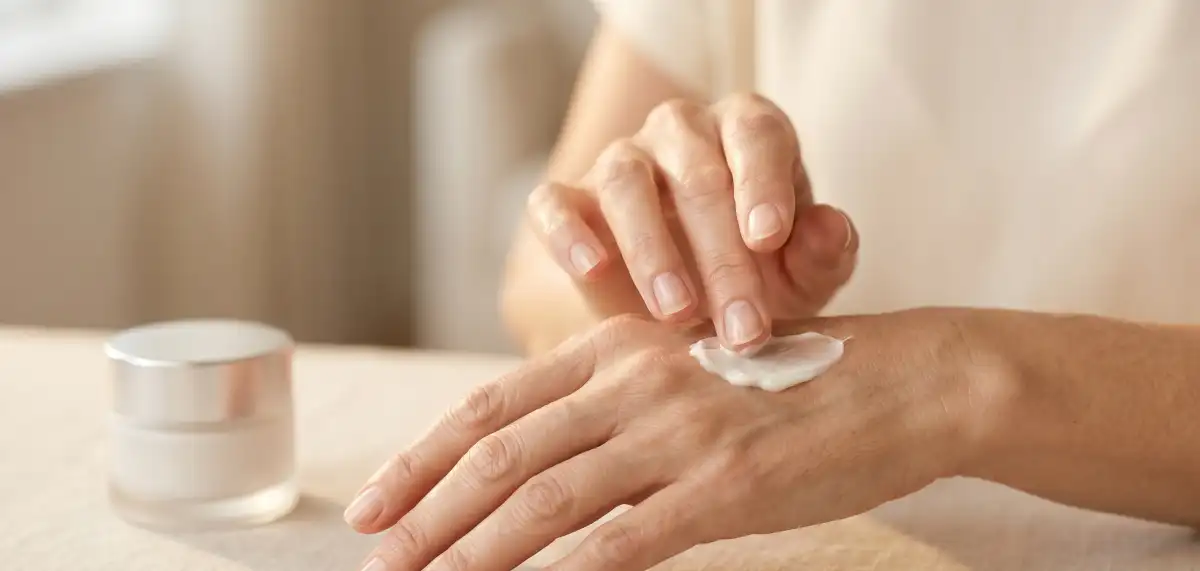
The science of skin aging is evolving rapidly — and for women navigating the skin changes that come with menopause and beyond, evidence-based skincare represents a fundamentally different approach: working with your skin's biology rather than against it.
Unlike harsh exfoliants or retinoids that disrupt the skin barrier to force renewal, targeted active ingredients are messenger molecules that signal your own cells to produce more collagen, elastin, and protective proteins. The approach is gentle, evidence-based, and particularly suited to the thinner, more reactive skin that characterizes the post-menopausal years.
Why Hormonal Decline Triggers or Worsens Hand Dermatitis
Hand eczema during menopause represents the collision of two barrier-compromising forces: the constant chemical and mechanical assault that all hands endure, plus the estrogen-driven collapse of the skin's self-repair mechanisms. This collision explains why women who have never had hand eczema may develop it during menopause, and why women with pre-existing hand eczema often experience dramatic worsening during the hormonal transition. A population-based study found that the incidence of new-onset hand eczema increased by 35% in the perimenopausal and early post-menopausal age group compared to women five years younger.[1]
The mechanism involves estrogen's role in maintaining the hand's lipid barrier — which is already the most compromised barrier on the body due to constant washing. Estrogen stimulates ceramide biosynthesis through the enzyme serine palmitoyltransferase, promotes lamellar body secretion from keratinocytes, and regulates involucrin expression (a protein critical to the cornified envelope that forms the barrier's structural backbone). When estrogen declines during menopause, all three processes diminish simultaneously. The result is a barrier that was already being stripped 8-10 times daily by hand washing but could previously rebuild between washes — now it can no longer keep pace.
Clinical research confirms that the immune component adds a second layer of vulnerability. Estrogen normally exerts anti-inflammatory effects through estrogen receptor-beta signaling in skin immune cells. Menopausal estrogen decline shifts the cutaneous immune environment toward a more pro-inflammatory state, lowering the threshold for irritant and allergic reactions. Chemicals and fragrances that hands tolerated for years may suddenly produce inflammatory responses — not because exposure changed, but because the immune threshold decreased. A study in Contact Dermatitis found that patch test positivity rates increased by 20-30% in post-menopausal women compared to pre-menopausal controls for common hand allergens.
Management of menopausal hand eczema requires a protection-first, treatment-second approach. Barrier protection: cotton-lined gloves for all wet work, fragrance-free pH-balanced hand soap, and ceramide cream applied within 60 seconds of every wash. Active treatment: for mild eczema, colloidal oatmeal preparations provide anti-inflammatory benefits without barrier compromise. For moderate flares, tacrolimus 0.1% ointment is preferred over topical corticosteroids for hand eczema because steroids cause skin atrophy — accelerating the thinning that menopause is already producing. Overnight ceramide occlusion with cotton gloves 3-4 nights weekly maintains barrier integrity between flares.
Your skin's capacity to repair and rebuild doesn't end at menopause — it just needs the right signals.
— Dr. Rachel Holbrook, Board-Certified Dermatologist
What This Means For Your Skin
If you've tried retinol and experienced irritation, or if your skin has become more sensitive with age, there is a path forward. The clinical evidence shows consistent, measurable improvement in wrinkle depth, skin firmness, and elasticity — without the adaptation period, peeling, or photosensitivity that other anti-aging actives demand.
Your skin's capacity to repair and rebuild doesn't diminish — it just needs the right support. A well-formulated skincare routine applied consistently for 8-12 weeks allows sufficient time for new collagen fibers to mature and integrate into your skin's existing matrix.
The science is clear. The evidence is consistent. The results are measurable.
What happens next is up to you.