
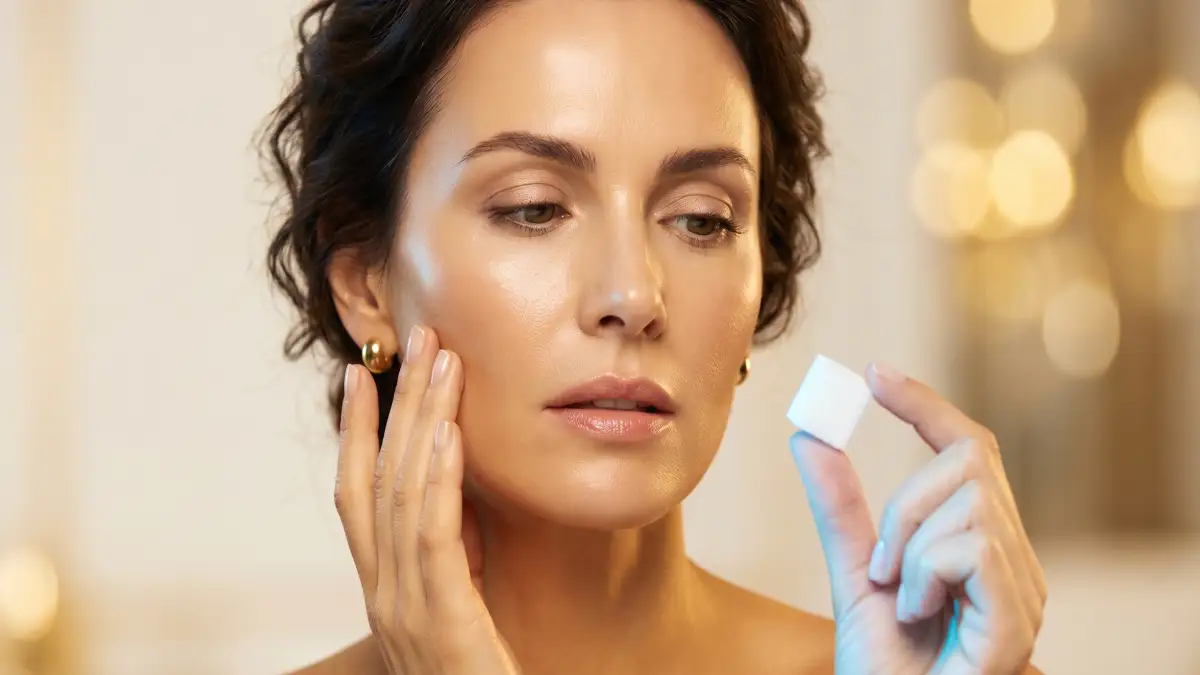
The science of skin aging is evolving rapidly — and for women navigating the skin changes that come with menopause and beyond, evidence-based skincare represents a fundamentally different approach: working with your skin's biology rather than against it.
Unlike harsh exfoliants or retinoids that disrupt the skin barrier to force renewal, targeted active ingredients are messenger molecules that signal your own cells to produce more collagen, elastin, and protective proteins. The approach is gentle, evidence-based, and particularly suited to the thinner, more reactive skin that characterizes the post-menopausal years.
How Blood Sugar Control Transforms Skin Quality
Clinical trials consistently demonstrate that low-glycemic diets produce measurable improvements in skin quality beyond glycation reduction alone. A landmark Australian study by Smith and colleagues found that subjects following a low-glycemic diet for 12 weeks showed significant reductions in acne lesion counts, sebum production, and inflammatory markers — improvements attributed to lower insulin and IGF-1 levels that reduce androgen-mediated sebaceous activity.[1]
The anti-aging benefits of glycemic control extend to collagen quality. When postprandial glucose remains below 120 mg/dL — achievable through low-glycemic food choices — the rate of non-enzymatic glycosylation drops by approximately 50% compared to typical Western diet patterns that regularly spike glucose above 160 mg/dL. Over years, this reduced glycation rate translates to significantly less collagen cross-linking and better preserved skin elasticity.
Clinical research confirms that low-glycemic eating patterns also support the skin's antioxidant defense systems. Stable blood glucose reduces mitochondrial superoxide production — the primary intracellular source of free radicals. Lower oxidative stress means less glycoxidation, fewer inflammatory cascades, and better preservation of both collagen and elastin fibers. Patients adopting low-glycemic diets frequently report improved skin radiance and reduced redness within 4-6 weeks, corresponding to reduced systemic inflammation.
Practical implementation focuses on replacing refined carbohydrates with whole grains, legumes, and non-starchy vegetables while maintaining adequate protein for collagen synthesis. Research indicates that combining low-glycemic eating with regular physical activity — which independently improves insulin sensitivity and glucose disposal — provides the most robust anti-glycation dietary strategy, with skin AGE fluorescence reductions of 15-20% measurable after 6 months.
Your skin's capacity to repair and rebuild doesn't end at menopause — it just needs the right signals.
— Dr. Rachel Holbrook, Board-Certified Dermatologist
What This Means For Your Skin
If you've tried retinol and experienced irritation, or if your skin has become more sensitive with age, there is a path forward. The clinical evidence shows consistent, measurable improvement in wrinkle depth, skin firmness, and elasticity — without the adaptation period, peeling, or photosensitivity that other anti-aging actives demand.
Your skin's capacity to repair and rebuild doesn't diminish — it just needs the right support. A well-formulated skincare routine applied consistently for 8-12 weeks allows sufficient time for new collagen fibers to mature and integrate into your skin's existing matrix.
The science is clear. The evidence is consistent. The results are measurable.
What happens next is up to you.