
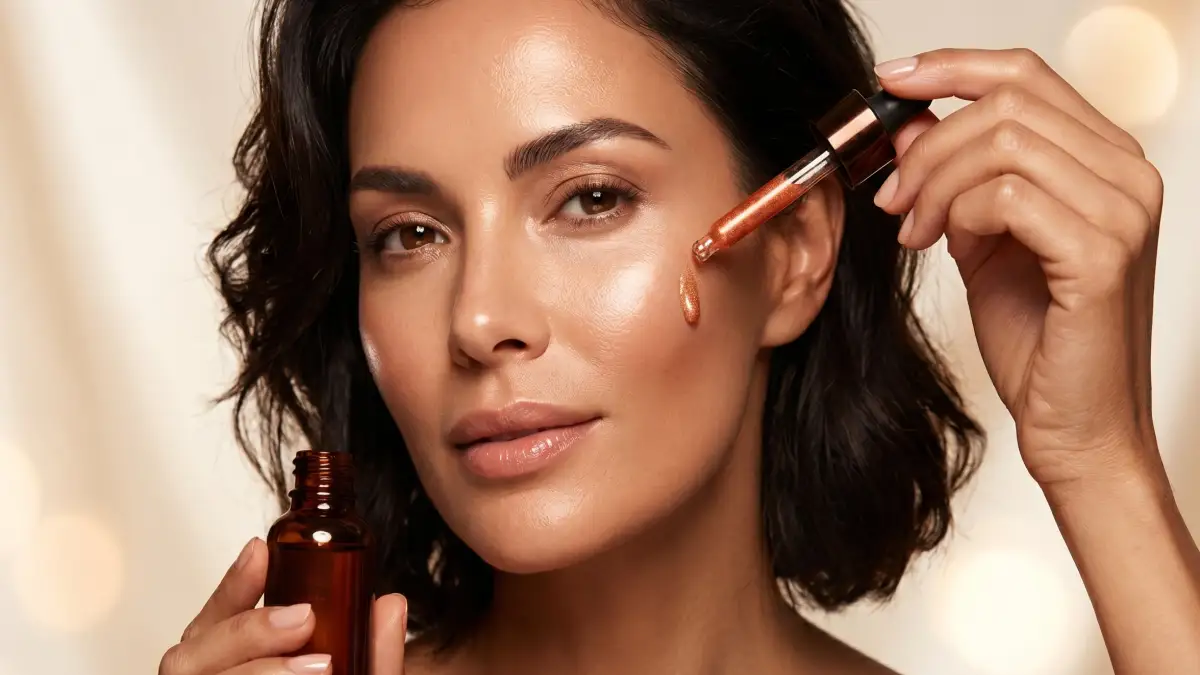
The science of skin aging is evolving rapidly — and for women navigating the skin changes that come with menopause and beyond, evidence-based skincare represents a fundamentally different approach: working with your skin's biology rather than against it.
Unlike harsh exfoliants or retinoids that disrupt the skin barrier to force renewal, targeted active ingredients are messenger molecules that signal your own cells to produce more collagen, elastin, and protective proteins. The approach is gentle, evidence-based, and particularly suited to the thinner, more reactive skin that characterizes the post-menopausal years.
Realistic Timelines for GHK-Cu Results
Setting realistic expectations for copper peptide results requires understanding the biological timeline of dermal remodeling. Unlike ingredients that produce rapid surface-level changes through hydration or exfoliation, GHK-Cu works by reprogramming gene expression in fibroblasts and keratinocytes — a process that requires cell cycles to manifest as visible change. The first measurable effects occur at the cellular level within 48-72 hours of initial application: fibroblast proliferation increases, collagen mRNA expression is upregulated, and glycosaminoglycan production begins to rise. However, these molecular changes require 4-6 weeks of consistent twice-daily application before they translate into clinically detectable improvements in skin parameters. Studies using high-frequency ultrasound have documented measurable increases in dermal density beginning at week 4-6, with progressive improvement continuing through week 12 and beyond.[1]
The clinical progression of visible improvements follows a characteristic pattern documented across multiple studies. During weeks 1-3, users typically notice improved skin hydration and a subtle improvement in skin texture — this reflects the rapid increase in glycosaminoglycan and hyaluronic acid production that GHK-Cu stimulates. The skin feels smoother and appears slightly more luminous, though these early changes are modest. Weeks 4-8 mark the transition period where collagen remodeling becomes clinically apparent: fine lines begin to soften (particularly around the eyes and mouth), skin firmness improves measurably on cutometry testing, and overall skin tone becomes more even as GHK-Cu's anti-inflammatory effects reduce chronic subclinical redness. The most significant changes emerge during weeks 8-16, when accumulated collagen deposition produces visible improvement in skin thickness, elasticity, and wrinkle depth that is apparent to both the user and clinical evaluators.
Clinical research confirms that it is essential to understand what copper peptides can and cannot achieve. Clinical evidence supports meaningful improvement in fine to moderate wrinkles, skin firmness and elasticity, skin thickness and density, uneven skin tone, and overall skin quality. However, GHK-Cu will not produce the dramatic wrinkle-erasing effects of injectable treatments, nor will it reverse deep structural volume loss, significant gravitational laxity, or deeply etched expression lines. The appropriate clinical comparison is with other topical actives — and in this context, copper peptides perform comparably to tretinoin for dermal collagen stimulation with superior tolerability. Studies measuring patient-reported outcomes consistently show high satisfaction rates, with approximately 70-80% of subjects rating their skin as improved or significantly improved after 12 weeks of consistent copper peptide use.
Factors that influence individual response timelines include age, baseline skin condition, concurrent skincare routine, and consistency of application. Women in their 40s with mild to moderate photodamage typically see faster and more dramatic results than women in their 60s with severe cumulative damage — though both groups show measurable improvement. UV exposure during the treatment period can significantly blunt results, as ongoing photodamage counteracts the regenerative signaling that GHK-Cu initiates. The most successful clinical outcomes are observed in women who combine copper peptide use with broad-spectrum sunscreen, maintain twice-daily application consistency, and pair the peptide with complementary actives such as vitamin C (morning) or retinol (evening) that stimulate collagen through independent pathways.
Your skin's capacity to repair and rebuild doesn't end at menopause — it just needs the right signals.
— Dr. Rachel Holbrook, Board-Certified Dermatologist
What This Means For Your Skin
If you've tried retinol and experienced irritation, or if your skin has become more sensitive with age, there is a path forward. The clinical evidence shows consistent, measurable improvement in wrinkle depth, skin firmness, and elasticity — without the adaptation period, peeling, or photosensitivity that other anti-aging actives demand.
Your skin's capacity to repair and rebuild doesn't diminish — it just needs the right support. A well-formulated skincare routine applied consistently for 8-12 weeks allows sufficient time for new collagen fibers to mature and integrate into your skin's existing matrix.
The science is clear. The evidence is consistent. The results are measurable.
What happens next is up to you.