
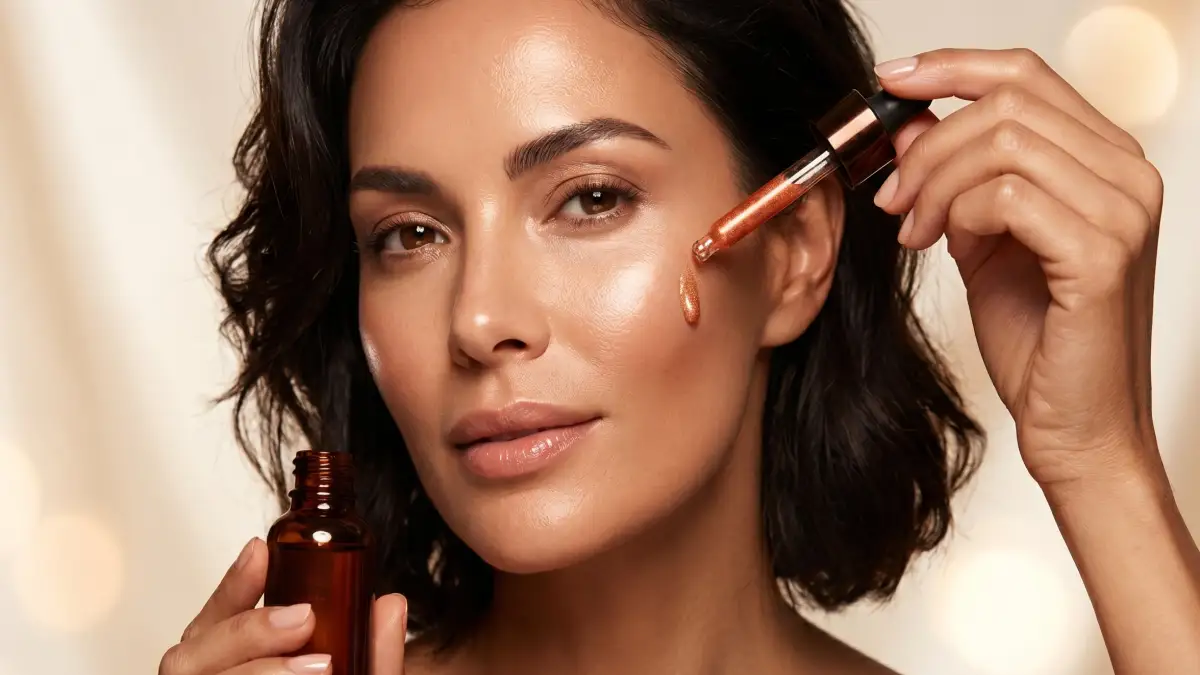
The science of skin aging is evolving rapidly — and for women navigating the skin changes that come with menopause and beyond, evidence-based skincare represents a fundamentally different approach: working with your skin's biology rather than against it.
Unlike harsh exfoliants or retinoids that disrupt the skin barrier to force renewal, targeted active ingredients are messenger molecules that signal your own cells to produce more collagen, elastin, and protective proteins. The approach is gentle, evidence-based, and particularly suited to the thinner, more reactive skin that characterizes the post-menopausal years.
GHK-Cu's Role in Hair Follicle Stimulation
The application of GHK-Cu copper peptides for hair growth and scalp health represents an emerging but biologically compelling area of clinical research. Hair follicles are among the most metabolically active structures in the body, undergoing continuous cycles of growth (anagen), regression (catagen), and rest (telogen). The transition between these phases is governed by complex signaling networks involving Wnt/beta-catenin, BMP, and growth factor pathways — many of which are directly modulated by GHK-Cu. Research has demonstrated that GHK-Cu increases the expression of vascular endothelial growth factor (VEGF) in dermal papilla cells, the specialized fibroblasts at the base of hair follicles that control hair growth cycling. VEGF-mediated angiogenesis improves blood supply to the follicular unit, delivering more nutrients and oxygen to support the energy-intensive process of hair fiber production. This mechanism parallels the established efficacy of minoxidil, which also works partly through follicular vasodilation.[1]
Beyond vascular effects, GHK-Cu influences hair growth through several direct mechanisms relevant to age-related hair thinning in women. The peptide stimulates proliferation of dermal papilla cells and outer root sheath keratinocytes, effectively expanding the cellular machinery of the hair follicle. It also modulates the expression of beta-catenin, a critical signaling molecule in the Wnt pathway that promotes anagen entry — the transition from resting to active growth phase. In women experiencing age-related hair thinning (which affects approximately 40% of women by age 50), the primary pathological change is progressive shortening of the anagen phase, producing thinner, shorter hairs with each successive cycle. By promoting anagen entry and potentially extending anagen duration, GHK-Cu addresses the core mechanism of female pattern hair loss rather than merely treating symptoms.
Clinical research confirms that the anti-inflammatory properties of GHK-Cu are particularly relevant for scalp health and hair retention. Scalp inflammation — whether from environmental damage, hormonal changes, product sensitivity, or conditions like seborrheic dermatitis — creates a hostile microenvironment around hair follicles that can trigger premature catagen entry and accelerate hair shedding. GHK-Cu's documented suppression of pro-inflammatory cytokines (IL-6, TNF-alpha) and upregulation of anti-inflammatory mediators helps maintain a healthier follicular microenvironment. Additionally, the peptide's antioxidant effects protect follicular cells from oxidative damage, which has been implicated in premature hair graying and accelerated follicular aging. Studies on wound healing have shown that GHK-Cu-treated tissue demonstrates improved regeneration of hair follicles — a finding that suggests the peptide may help reactivate miniaturized follicles that have not yet been permanently lost.
Practical application of copper peptides for hair growth requires appropriate expectations and consistent use. The hair growth cycle means that visible results require a minimum of 3-6 months of consistent application, as new hairs must complete a full growth cycle before becoming visible. Topical application directly to the scalp (rather than to the hair itself) is essential, as the active target is the dermal papilla and surrounding follicular structures. GHK-Cu for scalp use is typically formulated at higher concentrations than facial serums and in vehicles optimized for scalp penetration. While the evidence base for GHK-Cu in hair growth is not as extensive as for FDA-approved treatments like minoxidil, the biological mechanisms are well-established and the safety profile is excellent, making it a reasonable adjunctive therapy for women experiencing age-related hair thinning who seek non-pharmaceutical approaches.
Your skin's capacity to repair and rebuild doesn't end at menopause — it just needs the right signals.
— Dr. Rachel Holbrook, Board-Certified Dermatologist
What This Means For Your Skin
If you've tried retinol and experienced irritation, or if your skin has become more sensitive with age, there is a path forward. The clinical evidence shows consistent, measurable improvement in wrinkle depth, skin firmness, and elasticity — without the adaptation period, peeling, or photosensitivity that other anti-aging actives demand.
Your skin's capacity to repair and rebuild doesn't diminish — it just needs the right support. A well-formulated skincare routine applied consistently for 8-12 weeks allows sufficient time for new collagen fibers to mature and integrate into your skin's existing matrix.
The science is clear. The evidence is consistent. The results are measurable.
What happens next is up to you.