
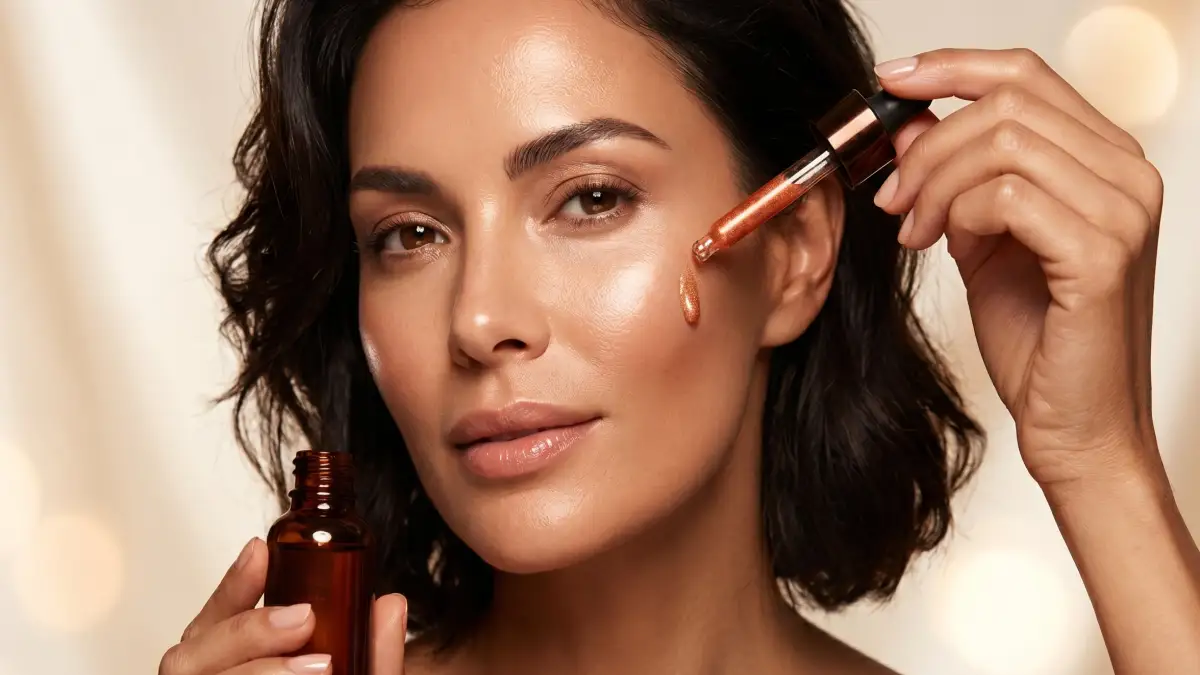
The science of skin aging is evolving rapidly — and for women navigating the skin changes that come with menopause and beyond, evidence-based skincare represents a fundamentally different approach: working with your skin's biology rather than against it.
Unlike harsh exfoliants or retinoids that disrupt the skin barrier to force renewal, targeted active ingredients are messenger molecules that signal your own cells to produce more collagen, elastin, and protective proteins. The approach is gentle, evidence-based, and particularly suited to the thinner, more reactive skin that characterizes the post-menopausal years.
The Science Behind GHK-Cu's Regenerative Effects
GHK-Cu (glycyl-L-histidyl-L-lysine copper complex) is a naturally occurring tripeptide first isolated from human plasma by Dr. Loren Pickart in 1973. The molecule consists of three amino acids — glycine, histidine, and lysine — bound to a copper(II) ion with exceptionally high affinity. This seemingly simple structure belies an extraordinary breadth of biological activity. GHK-Cu has been documented to stimulate collagen synthesis in dermal fibroblasts, promote decorin production, increase glycosaminoglycan synthesis, enhance angiogenesis, accelerate wound contraction, and activate antioxidant enzyme systems including superoxide dismutase (SOD), catalase, and glutathione peroxidase. The peptide's ability to coordinate these diverse regenerative processes stems from its role as a gene expression modulator rather than a simple growth factor or enzyme activator.[1]
The gene expression data compiled through Broad Institute Connectivity Map analysis reveals the true scope of GHK-Cu's biological impact. The peptide upregulates 1,584 genes and downregulates 917 genes, with particularly strong effects on genes governing extracellular matrix assembly, DNA repair, antioxidant defense, ubiquitin-proteasome activity (cellular waste clearance), and anti-inflammatory signaling. Among the most clinically significant upregulated genes are those encoding collagen types I and III (the primary structural proteins of the dermis), tissue inhibitors of metalloproteinases (TIMPs) that protect collagen from enzymatic breakdown, and nerve growth factor (NGF) which supports sensory nerve function in the skin. The downregulated genes include pro-inflammatory cytokines, insulin receptor (contributing to improved metabolic signaling), and several genes associated with metastatic potential — a finding that has generated considerable interest in oncology research.
Clinical research confirms that for topical skincare applications, GHK-Cu's benefits translate into measurable clinical outcomes across multiple skin parameters. Controlled studies have demonstrated increased skin density and thickness as measured by ultrasound, improved elasticity measured by cutometry, reduced fine line depth measured by profilometry, and enhanced skin clarity and evenness of tone assessed by both clinical grading and spectrophotometry. Abdulghani and colleagues found that a cream containing copper-binding peptides applied twice daily for 12 weeks produced improvements in skin ultrastructure comparable to tretinoin cream — including increased epidermal thickness, improved rete ridge pattern, and denser collagen deposition — without the erythema, scaling, or barrier disruption characteristic of retinoid therapy. This tolerability advantage is clinically significant for the mature skin demographic most in need of regenerative intervention.
Beyond direct skin rejuvenation, GHK-Cu demonstrates potent antioxidant and anti-inflammatory properties that protect skin from ongoing damage while simultaneously repairing existing injury. The peptide suppresses oxidative stress by both scavenging reactive oxygen species directly and by upregulating endogenous antioxidant enzymes. It inhibits the release of TGF-beta in its pro-fibrotic form while promoting its anti-inflammatory isoforms, and it blocks lipid peroxidation — a key driver of photoaging. These protective mechanisms work in concert with its regenerative actions, creating a compound effect where skin not only rebuilds more effectively but sustains less daily damage, slowing the net rate of visible aging.
Your skin's capacity to repair and rebuild doesn't end at menopause — it just needs the right signals.
— Dr. Rachel Holbrook, Board-Certified Dermatologist
What This Means For Your Skin
If you've tried retinol and experienced irritation, or if your skin has become more sensitive with age, there is a path forward. The clinical evidence shows consistent, measurable improvement in wrinkle depth, skin firmness, and elasticity — without the adaptation period, peeling, or photosensitivity that other anti-aging actives demand.
Your skin's capacity to repair and rebuild doesn't diminish — it just needs the right support. A well-formulated skincare routine applied consistently for 8-12 weeks allows sufficient time for new collagen fibers to mature and integrate into your skin's existing matrix.
The science is clear. The evidence is consistent. The results are measurable.
What happens next is up to you.