
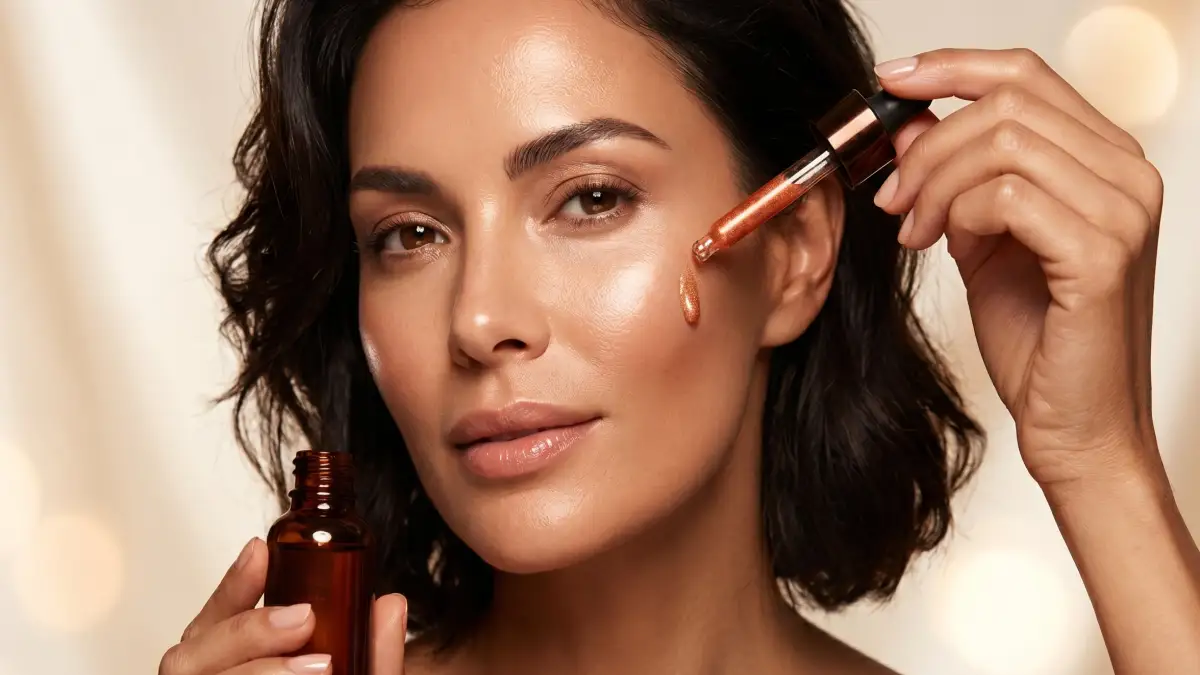
The science of skin aging is evolving rapidly — and for women navigating the skin changes that come with menopause and beyond, evidence-based skincare represents a fundamentally different approach: working with your skin's biology rather than against it.
Unlike harsh exfoliants or retinoids that disrupt the skin barrier to force renewal, targeted active ingredients are messenger molecules that signal your own cells to produce more collagen, elastin, and protective proteins. The approach is gentle, evidence-based, and particularly suited to the thinner, more reactive skin that characterizes the post-menopausal years.
GHK-Cu's Tissue Repair and Remodeling Mechanism
The wound healing properties of GHK-Cu were among the first biological activities identified for this peptide, and they remain among the most thoroughly documented. Dr. Loren Pickart's original research in the 1970s demonstrated that GHK-Cu accelerated wound closure in both in vitro and animal models, and subsequent decades of research have elucidated the specific mechanisms underlying this effect. GHK-Cu promotes all four phases of wound healing: hemostasis (through effects on platelet function), inflammation (by modulating cytokine release to prevent excessive inflammation while maintaining necessary immune signaling), proliferation (by stimulating fibroblast migration, proliferation, and collagen synthesis), and remodeling (by orchestrating the transition from provisional wound matrix to organized mature tissue). The peptide's ability to coordinate this complex multi-phase process reflects its fundamental role as a systemic regenerative signal — GHK-Cu released from damaged tissue serves as a biological beacon that recruits repair cells and activates healing programs.[1]
A particularly significant aspect of GHK-Cu's wound healing activity is its effect on stem cell recruitment and activation. Research has demonstrated that GHK-Cu stimulates the proliferation and differentiation of mesenchymal stem cells, enhances the migration of bone marrow-derived stem cells to wound sites, and activates dermal stem cell populations. In skin, this stem cell recruitment contributes to the regeneration of functional tissue structures including hair follicles, sebaceous glands, and organized dermal architecture — processes that distinguish regenerative healing from simple scar formation. Animal studies have shown that GHK-Cu-treated wounds produce less scar tissue and more normal-appearing skin compared to untreated controls, with improved tensile strength and more normal collagen organization in the healed tissue.
Clinical research confirms that the anti-inflammatory component of GHK-Cu's wound healing mechanism is particularly relevant for cosmetic and dermatological applications. Chronic low-grade inflammation is a hallmark of aging skin and a primary driver of collagen degradation, barrier dysfunction, and visible aging. GHK-Cu suppresses the expression of multiple pro-inflammatory genes including interleukin-6 (IL-6), tumor necrosis factor alpha (TNF-alpha), and several chemokines that recruit inflammatory cells. Simultaneously, it upregulates anti-inflammatory mediators and antioxidant enzymes. This inflammation-modulating activity explains why GHK-Cu is effective not only for acute wounds but for chronic inflammatory skin conditions and the ongoing tissue damage associated with skin aging. The peptide essentially shifts the skin's biological state from a catabolic, inflammatory phenotype toward an anabolic, regenerative one.
For skincare applications beyond acute wound care, GHK-Cu's wound healing mechanisms translate directly into anti-aging and skin repair benefits. The same biological pathways that accelerate wound closure — enhanced fibroblast activity, organized collagen deposition, angiogenesis, and stem cell activation — are precisely the processes needed to reverse the structural deterioration of aging skin. Post-procedure applications represent another evidence-based use case: applying GHK-Cu after laser resurfacing, chemical peels, or microneedling procedures has been shown to accelerate healing time, reduce post-inflammatory hyperpigmentation, and improve the quality of remodeled tissue. The peptide's anti-inflammatory properties reduce the risk of prolonged erythema and inflammation that can lead to complications in post-procedure skin.
Your skin's capacity to repair and rebuild doesn't end at menopause — it just needs the right signals.
— Dr. Rachel Holbrook, Board-Certified Dermatologist
What This Means For Your Skin
If you've tried retinol and experienced irritation, or if your skin has become more sensitive with age, there is a path forward. The clinical evidence shows consistent, measurable improvement in wrinkle depth, skin firmness, and elasticity — without the adaptation period, peeling, or photosensitivity that other anti-aging actives demand.
Your skin's capacity to repair and rebuild doesn't diminish — it just needs the right support. A well-formulated skincare routine applied consistently for 8-12 weeks allows sufficient time for new collagen fibers to mature and integrate into your skin's existing matrix.
The science is clear. The evidence is consistent. The results are measurable.
What happens next is up to you.