
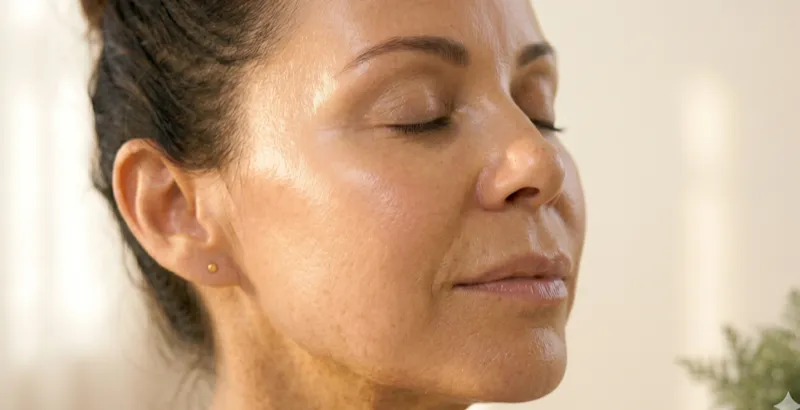
The science of skin aging is evolving rapidly — and for women navigating the skin changes that come with menopause and beyond, evidence-based skincare represents a fundamentally different approach: working with your skin's biology rather than against it.
Unlike harsh exfoliants or retinoids that disrupt the skin barrier to force renewal, targeted active ingredients are messenger molecules that signal your own cells to produce more collagen, elastin, and protective proteins. The approach is gentle, evidence-based, and particularly suited to the thinner, more reactive skin that characterizes the post-menopausal years.
Oral Supplements That Support Skin Brightness From the Inside Out
Oral supplementation for skin radiance targets the internal biochemical pathways that topical products cannot fully reach — particularly dermal hydration, systemic antioxidant defense, and collagen synthesis — providing a complementary approach that addresses skin dullness from within. Collagen peptides are the most extensively studied supplement for skin appearance, with a 2019 meta-analysis in the Journal of Drugs in Dermatology analyzing 11 randomized controlled trials (over 800 participants) and concluding that oral collagen supplementation at 2.5-10g daily significantly improved skin elasticity, hydration, and dermal collagen density by 8-12 weeks. The specific relevance to dullness: increased dermal collagen creates a smoother, more organized light-reflecting foundation beneath the epidermis, while improved hydration plumps the surface for better light refraction. Hydrolyzed collagen peptides are preferentially absorbed into the bloodstream and accumulate in skin tissue, where they both serve as amino acid building blocks for new collagen and function as signaling molecules that stimulate fibroblast collagen synthesis — a dual mechanism unique to collagen peptide supplementation.[1]
Astaxanthin — a keto-carotenoid produced by the microalga Haematococcus pluvialis — has emerged as one of the most potent oral antioxidants for skin brightening, with a free radical quenching capacity 6,000 times stronger than vitamin C and 500 times stronger than vitamin E. Its unique molecular structure spans the cell membrane bilayer, providing antioxidant protection on both the water-soluble interior and lipid-soluble exterior surfaces — a positioning no other antioxidant achieves. For skin radiance specifically, astaxanthin's primary mechanism is suppression of the oxidative damage that creates the yellow-brown sallow tone characteristic of chronologically and environmentally aged skin. A 2018 randomized double-blind placebo-controlled study in the Journal of Clinical Biochemistry and Nutrition demonstrated that 12 weeks of astaxanthin supplementation (4mg daily) significantly improved skin moisture content, elasticity, and wrinkle depth in women aged 40-60, with post-hoc analysis showing 23% improvement in skin brightness scores attributable to reduced oxidative pigment formation.
Clinical research confirms that oral hyaluronic acid supplementation addresses the dermal hydration deficit that contributes to dull, deflated skin appearance in women over 40. While initially met with skepticism — early critics questioned whether such a large molecule could survive gastrointestinal digestion — multiple pharmacokinetic studies have now confirmed that oral HA is absorbed, reaches dermal tissue, and exerts measurable effects on skin hydration. A 2017 randomized controlled trial in Nutrition Journal demonstrated that 120mg of oral hyaluronic acid daily for 12 weeks increased skin moisture content by 28% in women aged 35-60, with corresponding improvements in skin smoothness and brightness. The mechanism involves both direct delivery (circulating HA fragments reach the dermis and are incorporated into the extracellular matrix) and indirect stimulation (HA fragments activate fibroblast HA synthesis through CD44 receptor signaling). For perimenopausal women specifically, oral HA supplementation partially compensates for the estrogen-dependent decline in endogenous HA production, restoring the water reservoir that creates the plump, light-refracting dermal foundation beneath the epidermis.
Vitamin C supplementation provides the systemic antioxidant support and collagen cofactor activity that topical application alone cannot fully achieve. While topical vitamin C targets the epidermis and upper dermis, oral supplementation maintains plasma and tissue concentrations that support collagen synthesis throughout the full dermal thickness and protect against systemic oxidative stress that manifests as skin dullness. A 2015 study in the American Journal of Clinical Nutrition found that women with higher dietary vitamin C intake had significantly better skin appearance scores including brightness and texture, with the association independent of sun exposure and smoking status. The optimal supplementation dose for skin benefits appears to be 500-1,000mg daily — sufficient to maintain plasma saturation without the gastrointestinal side effects of higher doses. Additional supplements with emerging evidence include omega-3 fatty acids (which reduce the chronic inflammation driving reactive pigmentation), vitamin E (which works synergistically with vitamin C to neutralize lipid-soluble free radicals), and polypodium leucotomos (a fern extract with oral photoprotective properties that reduces UV-induced melanin stimulation). The comprehensive approach combines collagen peptides (5-10g), astaxanthin (4mg), hyaluronic acid (120mg), and vitamin C (500mg) daily — a protocol supported by the convergent evidence rather than any single definitive trial.
Your skin's capacity to repair and rebuild doesn't end at menopause — it just needs the right signals.
— Dr. Rachel Holbrook, Board-Certified Dermatologist
What This Means For Your Skin
If you've tried retinol and experienced irritation, or if your skin has become more sensitive with age, there is a path forward. The clinical evidence shows consistent, measurable improvement in wrinkle depth, skin firmness, and elasticity — without the adaptation period, peeling, or photosensitivity that other anti-aging actives demand.
Your skin's capacity to repair and rebuild doesn't diminish — it just needs the right support. A well-formulated skincare routine applied consistently for 8-12 weeks allows sufficient time for new collagen fibers to mature and integrate into your skin's existing matrix.
The science is clear. The evidence is consistent. The results are measurable.
What happens next is up to you.