
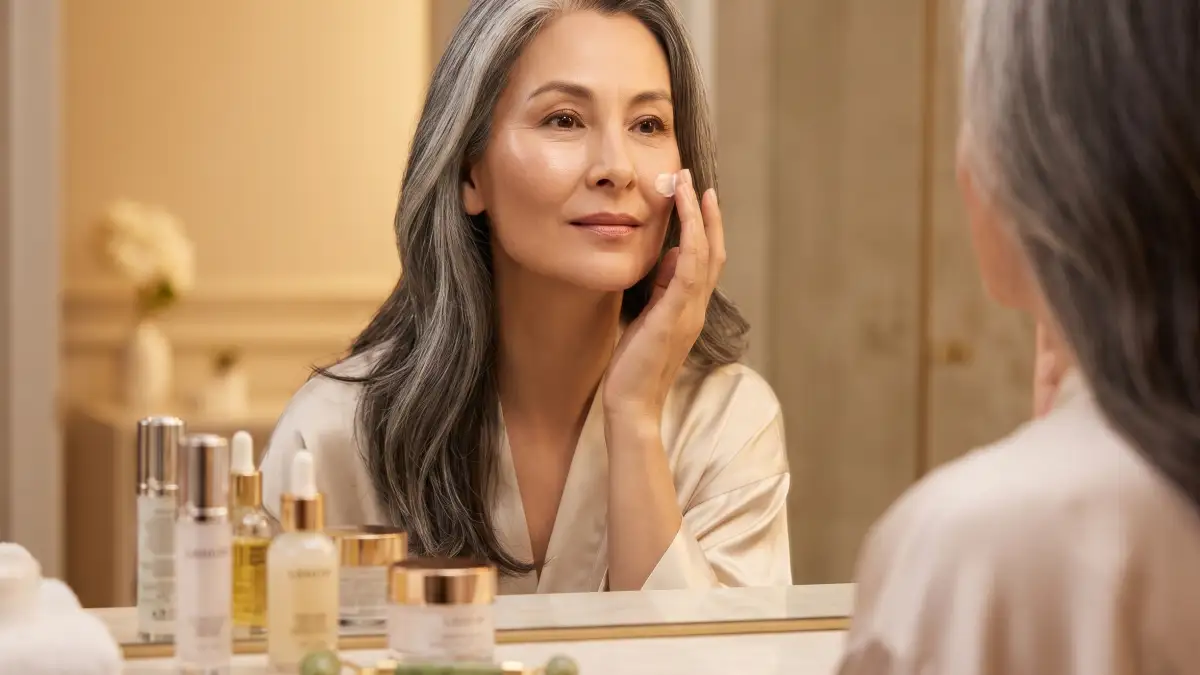
The science of skin aging is evolving rapidly — and for women navigating the skin changes that come with menopause and beyond, evidence-based skincare represents a fundamentally different approach: working with your skin's biology rather than against it.
Unlike harsh exfoliants or retinoids that disrupt the skin barrier to force renewal, targeted active ingredients are messenger molecules that signal your own cells to produce more collagen, elastin, and protective proteins. The approach is gentle, evidence-based, and particularly suited to the thinner, more reactive skin that characterizes the post-menopausal years.
Intensive Hydration Protocol for Extreme Dryness
Menopausal dryness differs fundamentally from typical dry skin because it originates from multiple simultaneous deficits rather than a single cause. Estrogen decline reduces sebaceous gland output by 20-30%, decreases epidermal hyaluronic acid content, impairs ceramide synthesis in the stratum corneum, and slows keratinocyte turnover — creating a four-way assault on skin hydration that no single moisturizer can adequately address. Effective management requires a layered approach that targets each deficit independently.[1]
The humectant layer — applied to damp skin immediately after cleansing — is the foundation of menopausal dry skin management. Hyaluronic acid at multiple molecular weights provides both surface hydration from high-molecular-weight forms and deeper dermal hydration from low-molecular-weight fragments. Glycerin at 5-10% concentration offers complementary humectant action through a different mechanism, drawing water from the atmosphere and dermis into the epidermis. Applied together on damp skin, these humectants can increase stratum corneum water content by 30-40%.
Clinical research confirms that the emollient layer follows, filling the gaps between corneocytes that ceramide deficit has created. Squalane, jojoba oil, and meadowfoam seed oil mimic the skin's natural lipid profile and integrate into the intercellular matrix more effectively than mineral oil-based emollients. For extreme menopausal dryness, these plant-derived emollients provide hours of sustained softening without the occlusive heaviness that many women find uncomfortable during daytime wear.
The occlusive seal — particularly important at night — prevents the evaporative loss that undoes the work of humectants and emollients. Petrolatum remains the most effective occlusive, reducing transepidermal water loss by over 98%, but formulations combining shea butter, beeswax, and dimethicone offer cosmetically elegant alternatives that achieve 85-90% occlusion. For menopausal women experiencing extreme dryness, applying this occlusive layer over a hyaluronic acid serum and ceramide cream creates a humidity chamber effect that dramatically accelerates barrier recovery.
Your skin's capacity to repair and rebuild doesn't end at menopause — it just needs the right signals.
— Dr. Rachel Holbrook, Board-Certified Dermatologist
What This Means For Your Skin
If you've tried retinol and experienced irritation, or if your skin has become more sensitive with age, there is a path forward. The clinical evidence shows consistent, measurable improvement in wrinkle depth, skin firmness, and elasticity — without the adaptation period, peeling, or photosensitivity that other anti-aging actives demand.
Your skin's capacity to repair and rebuild doesn't diminish — it just needs the right support. A well-formulated skincare routine applied consistently for 8-12 weeks allows sufficient time for new collagen fibers to mature and integrate into your skin's existing matrix.
The science is clear. The evidence is consistent. The results are measurable.
What happens next is up to you.