
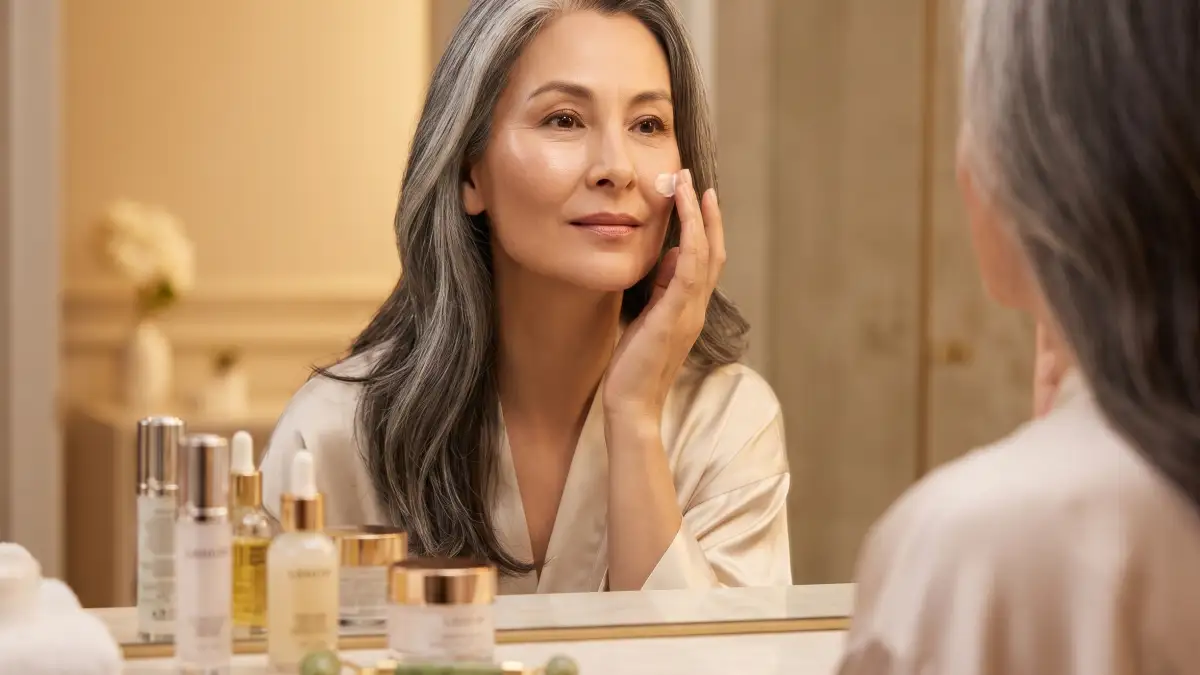
The science of skin aging is evolving rapidly — and for women navigating the skin changes that come with menopause and beyond, evidence-based skincare represents a fundamentally different approach: working with your skin's biology rather than against it.
Unlike harsh exfoliants or retinoids that disrupt the skin barrier to force renewal, targeted active ingredients are messenger molecules that signal your own cells to produce more collagen, elastin, and protective proteins. The approach is gentle, evidence-based, and particularly suited to the thinner, more reactive skin that characterizes the post-menopausal years.
PM Repair Protocol for Collagen Regeneration
Nighttime represents the optimal window for active skin repair during menopause, as circadian-regulated increases in blood flow and cellular proliferation enhance the penetration and efficacy of topical treatments. Growth hormone secretion peaks during deep sleep, supporting collagen synthesis when stimulating ingredients like retinoids are present. This biological synchronization makes the evening routine the most impactful component of a menopausal skincare protocol.[1]
Double cleansing in the evening — an oil-based cleanser followed by a gentle water-based formula — ensures complete removal of sunscreen, environmental pollutants, and oxidized sebum without barrier stripping. This two-step approach is particularly important for menopausal skin because accumulated environmental damage on compromised barrier structures can trigger inflammatory cascades that accelerate collagen degradation overnight if not properly removed.
Clinical research confirms that retinoid application is the centerpiece of the nighttime menopausal routine. For women new to retinoids during menopause, starting with retinaldehyde or encapsulated retinol allows gradual receptor upregulation without the severe irritation that tretinoin can provoke on a weakened barrier. The goal is consistent, sustained use rather than aggressive concentration — studies show that even 0.025% retinol applied consistently over 12 weeks produces measurable increases in procollagen production in postmenopausal skin.
The final step — an occlusive barrier cream rich in ceramides, squalane, and shea butter — serves as both a treatment and a protective seal. This occlusive layer reduces transepidermal water loss by up to 40% overnight, creating a hydrated environment that optimizes retinoid efficacy while simultaneously delivering barrier-repairing lipids. For menopausal skin, this combination of active stimulation under occlusive protection produces significantly better outcomes than either approach alone.
Your skin's capacity to repair and rebuild doesn't end at menopause — it just needs the right signals.
— Dr. Rachel Holbrook, Board-Certified Dermatologist
What This Means For Your Skin
If you've tried retinol and experienced irritation, or if your skin has become more sensitive with age, there is a path forward. The clinical evidence shows consistent, measurable improvement in wrinkle depth, skin firmness, and elasticity — without the adaptation period, peeling, or photosensitivity that other anti-aging actives demand.
Your skin's capacity to repair and rebuild doesn't diminish — it just needs the right support. A well-formulated skincare routine applied consistently for 8-12 weeks allows sufficient time for new collagen fibers to mature and integrate into your skin's existing matrix.
The science is clear. The evidence is consistent. The results are measurable.
What happens next is up to you.