
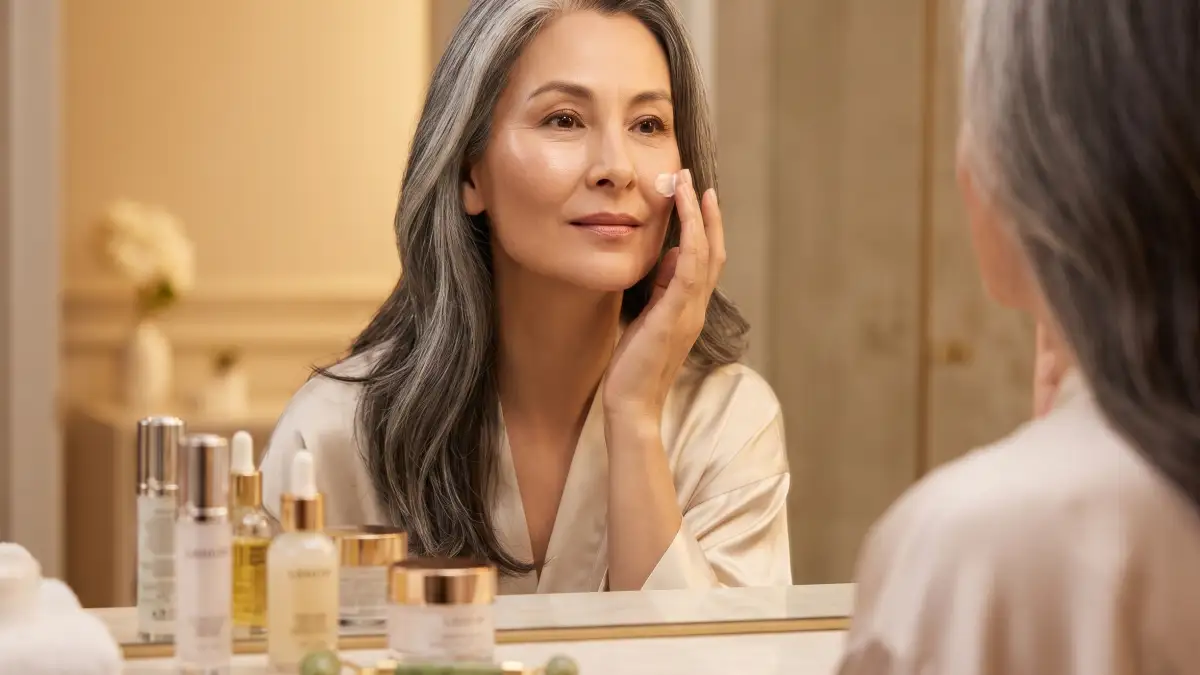
The science of skin aging is evolving rapidly — and for women navigating the skin changes that come with menopause and beyond, evidence-based skincare represents a fundamentally different approach: working with your skin's biology rather than against it.
Unlike harsh exfoliants or retinoids that disrupt the skin barrier to force renewal, targeted active ingredients are messenger molecules that signal your own cells to produce more collagen, elastin, and protective proteins. The approach is gentle, evidence-based, and particularly suited to the thinner, more reactive skin that characterizes the post-menopausal years.
Why Your Pre-Menopause Routine No Longer Works
Menopause triggers a cascade of dermatological changes that fundamentally alter skin physiology. Estrogen decline reduces collagen synthesis by approximately 2.1% per year, with cumulative losses reaching 30% within the first five postmenopausal years. This collagen deficit manifests as decreased skin thickness, reduced elasticity, and accelerated formation of fine lines and deeper wrinkles across the face and neck.[1]
The menopausal skin barrier undergoes simultaneous compromise as ceramide production decreases and transepidermal water loss increases significantly. Sebaceous gland activity diminishes, leading to chronic dryness that topical moisturizers alone cannot adequately address. These changes require a coordinated, multi-target skincare protocol rather than the single-product adjustments many women attempt.
Clinical research confirms that a comprehensive menopausal skincare routine must address four simultaneous deficits: collagen stimulation through retinoids and peptides, barrier reconstruction through ceramides and fatty acids, hydration restoration through humectants like hyaluronic acid, and antioxidant protection against the increased oxidative stress that accompanies hormonal decline.
Clinical trials demonstrate that women who adopt targeted skincare protocols within the first two years of menopause maintain significantly better skin quality metrics — including elasticity, hydration, and thickness — compared to those who continue their pre-menopausal routines unchanged. The window of intervention matters, and earlier protocol adjustment yields measurably superior outcomes.
Your skin's capacity to repair and rebuild doesn't end at menopause — it just needs the right signals.
— Dr. Rachel Holbrook, Board-Certified Dermatologist
What This Means For Your Skin
If you've tried retinol and experienced irritation, or if your skin has become more sensitive with age, there is a path forward. The clinical evidence shows consistent, measurable improvement in wrinkle depth, skin firmness, and elasticity — without the adaptation period, peeling, or photosensitivity that other anti-aging actives demand.
Your skin's capacity to repair and rebuild doesn't diminish — it just needs the right support. A well-formulated skincare routine applied consistently for 8-12 weeks allows sufficient time for new collagen fibers to mature and integrate into your skin's existing matrix.
The science is clear. The evidence is consistent. The results are measurable.
What happens next is up to you.