
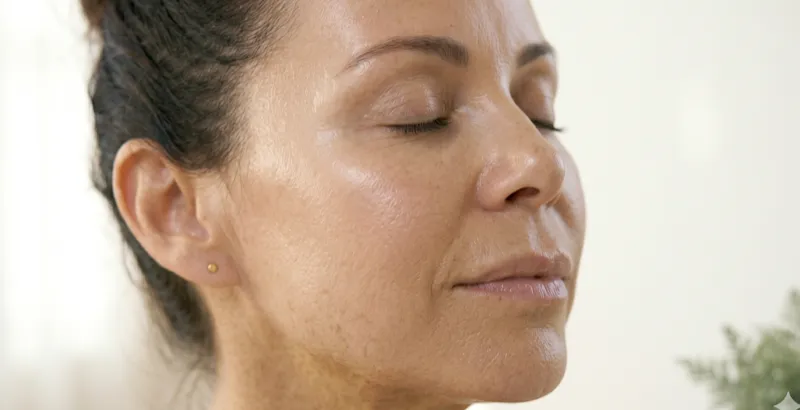
The science of skin aging is evolving rapidly — and for women navigating the skin changes that come with menopause and beyond, evidence-based skincare represents a fundamentally different approach: working with your skin's biology rather than against it.
Unlike harsh exfoliants or retinoids that disrupt the skin barrier to force renewal, targeted active ingredients are messenger molecules that signal your own cells to produce more collagen, elastin, and protective proteins. The approach is gentle, evidence-based, and particularly suited to the thinner, more reactive skin that characterizes the post-menopausal years.
Which Pore Treatments Actually Work for Mature Skin
The pore treatment landscape for women over 40 spans a vast range of efficacy, cost, and evidence quality — from over-the-counter pore strips to professional laser and radiofrequency treatments. Pore strips, while immensely popular, represent the least effective option for mature skin pore reduction. These adhesive strips physically extract the superficial portion of sebaceous filaments (the waxy plugs visible as dark dots on the nose and cheeks), providing temporary visual improvement that typically lasts 24-72 hours. A 2007 study in the Journal of the Society of Cosmetic Chemists measured pore appearance before and after strip application and found that while 89% of extracted follicular casts regenerated to pre-treatment size within 3 days, the repeated mechanical pulling associated with strip removal progressively weakened the periostial collagen of the already-fragile mature skin, potentially worsening long-term pore enlargement. For women over 40, pore strips are contraindicated near the eyes and on thin-skinned areas where telangiectasia or capillary fragility is present.[1]
Professional in-office treatments for pore reduction include fractional laser resurfacing, microneedling, radiofrequency, and chemical peels at concentrations higher than those available for home use. Fractional CO2 laser creates thousands of microscopic columns of thermal injury in the dermis, triggering a robust wound-healing response that generates new collagen around and between pilosebaceous units. A 2013 study in Lasers in Surgery and Medicine demonstrated that a single fractional CO2 treatment reduced facial pore cross-sectional area by 27% at 3 months, with improvement maintained at 12 months due to the permanence of newly synthesized collagen. However, the treatment requires 5-7 days of visible downtime, carries risk of post-inflammatory hyperpigmentation (5-15% in intermediate skin types), and costs $750-2,000 per session. Non-ablative fractional laser (1540nm or 1927nm) offers a gentler alternative with 2-3 days of subtle redness and 15-20% pore improvement per session, typically requiring 3-4 sessions spaced 4-6 weeks apart for optimal results.
Clinical research confirms that radiofrequency (RF) microneedling combines the collagen-stimulating effects of both modalities, delivering thermal energy directly to the papillary and reticular dermis through insulated microneedles. This approach is particularly effective for mature skin pore enlargement because it targets the exact tissue depth where perifollicular collagen resides (0.5-3.5mm), bypassing the epidermis entirely and eliminating surface-level side effects. A 2020 prospective study in Dermatologic Surgery evaluating RF microneedling for facial pore reduction in women aged 40-60 reported a mean 32% reduction in pore area on standardized photography at 3 months post-treatment, with 91% patient satisfaction. The treatment requires 3 sessions spaced 4-6 weeks apart, with 24-48 hours of mild redness and pinpoint bleeding as the primary downtime. At $400-800 per session, RF microneedling occupies a mid-range position in cost-effectiveness for pore reduction — more effective per dollar than fractional CO2 for pore-specific concerns, though less effective for combined pore and deep wrinkle treatment where ablative resurfacing excels.
The cost-effectiveness analysis for pore treatment in women over 40 reveals that topical retinoid and niacinamide therapy delivers the highest long-term value when measured as pore reduction per dollar per year. A consistent retinoid plus niacinamide regimen costing approximately $30-60 per month produces 15-22% pore reduction over 6 months — requiring ongoing maintenance but at minimal ongoing cost. Professional treatments produce faster, more dramatic results (25-35% reduction in 1-3 sessions) but require periodic maintenance sessions every 12-18 months as collagen remodeling plateaus. The optimal approach for most women over 40 combines both: establish a daily topical foundation (retinol + niacinamide + SPF) for ongoing structural maintenance, then augment with 1-2 professional RF microneedling sessions per year for breakthrough collagen stimulation that exceeds what topicals alone can achieve. A 2021 retrospective analysis confirmed that this combined approach produced 44% greater pore reduction at 12 months compared to either topical-only or professional-only strategies.
Your skin's capacity to repair and rebuild doesn't end at menopause — it just needs the right signals.
— Dr. Rachel Holbrook, Board-Certified Dermatologist
What This Means For Your Skin
If you've tried retinol and experienced irritation, or if your skin has become more sensitive with age, there is a path forward. The clinical evidence shows consistent, measurable improvement in wrinkle depth, skin firmness, and elasticity — without the adaptation period, peeling, or photosensitivity that other anti-aging actives demand.
Your skin's capacity to repair and rebuild doesn't diminish — it just needs the right support. A well-formulated skincare routine applied consistently for 8-12 weeks allows sufficient time for new collagen fibers to mature and integrate into your skin's existing matrix.
The science is clear. The evidence is consistent. The results are measurable.
What happens next is up to you.