
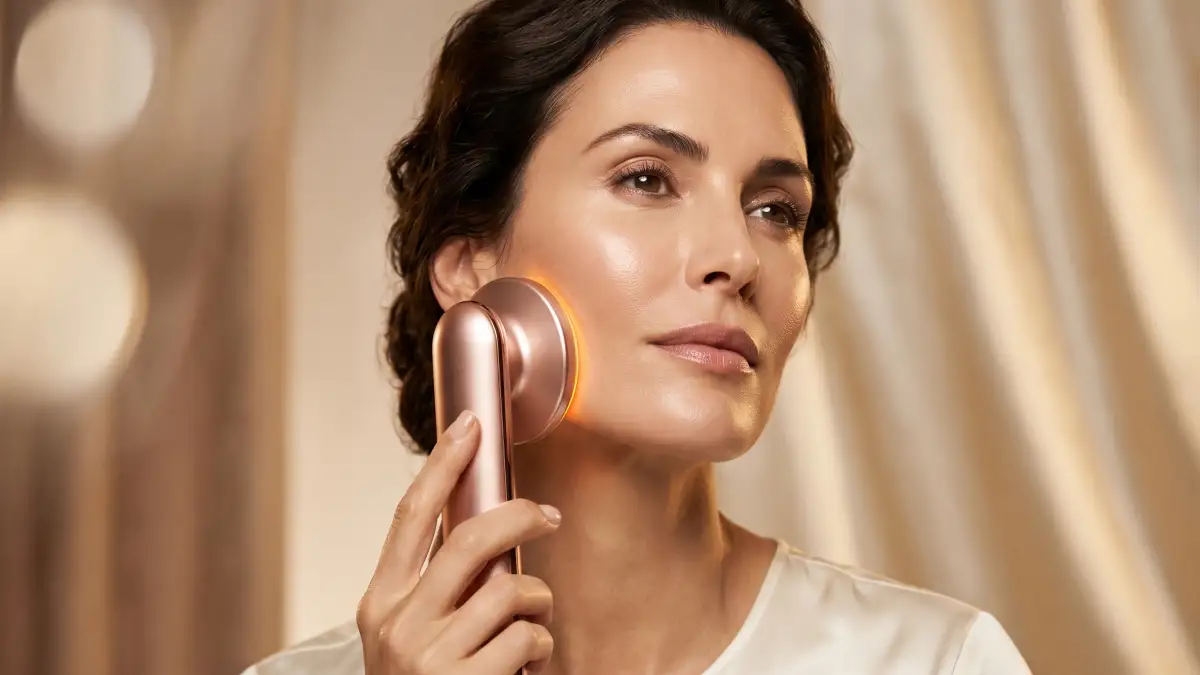
The science of skin aging is evolving rapidly — and for women navigating the skin changes that come with menopause and beyond, evidence-based skincare represents a fundamentally different approach: working with your skin's biology rather than against it.
Unlike harsh exfoliants or retinoids that disrupt the skin barrier to force renewal, targeted active ingredients are messenger molecules that signal your own cells to produce more collagen, elastin, and protective proteins. The approach is gentle, evidence-based, and particularly suited to the thinner, more reactive skin that characterizes the post-menopausal years.
How to Integrate Radiofrequency Into Your Daily Protocol
Integrating an at-home RF device into your skincare routine requires understanding three principles that determine whether the combination enhances or undermines results: conductive gel is mandatory for both safety and efficacy, post-RF skin has enhanced absorption that can be leveraged for active ingredient delivery, and certain skincare ingredients should be avoided immediately before RF treatment because they alter the skin's thermal response. Optimizing the sequence around these principles transforms RF from a standalone treatment into an integrated system that amplifies your entire skincare protocol.[1]
The optimal RF treatment sequence — evening routine (recommended timing for RF due to post-treatment redness and enhanced absorption of nighttime actives): Step 1: Double cleanse to remove all makeup, sunscreen, and sebum. Clean skin is essential for RF — any barrier between the device and skin reduces energy delivery and can cause uneven heating. Step 2: Apply conductive gel generously to the treatment area. The gel serves dual functions: it couples RF energy from the device to the skin (without gel, energy reflection at the skin surface reduces penetration by 40-60%) and it provides a thermal buffer that distributes heat evenly. Use the manufacturer's provided gel or a water-based gel — never oil-based products, which are poor RF conductors. Step 3: Perform RF treatment following your device's protocol (typically 10-20 minutes for full face). Step 4: Remove conductive gel with a warm, damp cloth. Step 5: Within the 30-minute enhanced absorption window, apply your most potent active — retinol or retinaldehyde, which benefits most from increased penetration.
Clinical research confirms that post-RF absorption window strategy: RF treatment increases dermal blood flow and temporarily increases transepidermal water loss, creating a 20-30 minute window during which topical ingredients penetrate more effectively. This window can be strategically used to enhance active ingredient delivery. Recommended post-RF actives: Retinoid (the enhanced penetration means starting with a lower concentration if new to retinoids — retinaldehyde 0.05% rather than retinol 0.5%). Copper peptides (GHK-Cu) — these activate collagen synthesis through growth factor pathways, complementing the thermal collagen stimulus from RF. Niacinamide — supports the skin barrier repair that follows thermal treatment. Avoid post-RF: Vitamin C at high concentrations (above 15%) — the acidic pH combined with thermally sensitized skin may cause irritation. AHA/BHA exfoliants — chemical exfoliation after thermal treatment can compromise the skin barrier. Essential oils or fragrance-heavy products — sensitized post-RF skin may react to potential irritants.
Weekly integration schedule for RF combined with other devices and actives: A comprehensive at-home anti-aging protocol that includes RF requires scheduling to avoid overtreatment and allow the skin adequate recovery between thermal sessions. Recommended schedule: Monday, Wednesday, Friday — RF treatment (evening) followed by retinoid and peptides. Tuesday, Thursday — microcurrent treatment (morning or evening) followed by vitamin C serum. Saturday — recovery day with gentle hydrating routine only (no devices, no strong actives). Sunday — optional LED therapy or second microcurrent session. This schedule provides 3 RF sessions weekly during the building phase (first 12 weeks), which clinical studies show is the minimum frequency for cumulative collagen remodeling. After 12 weeks, reduce to 2 RF sessions weekly for maintenance. One critical rule: never use RF on the same day as chemical peels, microneedling, or other treatments that compromise the skin barrier — the combination of thermal injury plus barrier disruption significantly increases the risk of adverse reactions.
Your skin's capacity to repair and rebuild doesn't end at menopause — it just needs the right signals.
— Dr. Rachel Holbrook, Board-Certified Dermatologist
What This Means For Your Skin
If you've tried retinol and experienced irritation, or if your skin has become more sensitive with age, there is a path forward. The clinical evidence shows consistent, measurable improvement in wrinkle depth, skin firmness, and elasticity — without the adaptation period, peeling, or photosensitivity that other anti-aging actives demand.
Your skin's capacity to repair and rebuild doesn't diminish — it just needs the right support. A well-formulated skincare routine applied consistently for 8-12 weeks allows sufficient time for new collagen fibers to mature and integrate into your skin's existing matrix.
The science is clear. The evidence is consistent. The results are measurable.
What happens next is up to you.