
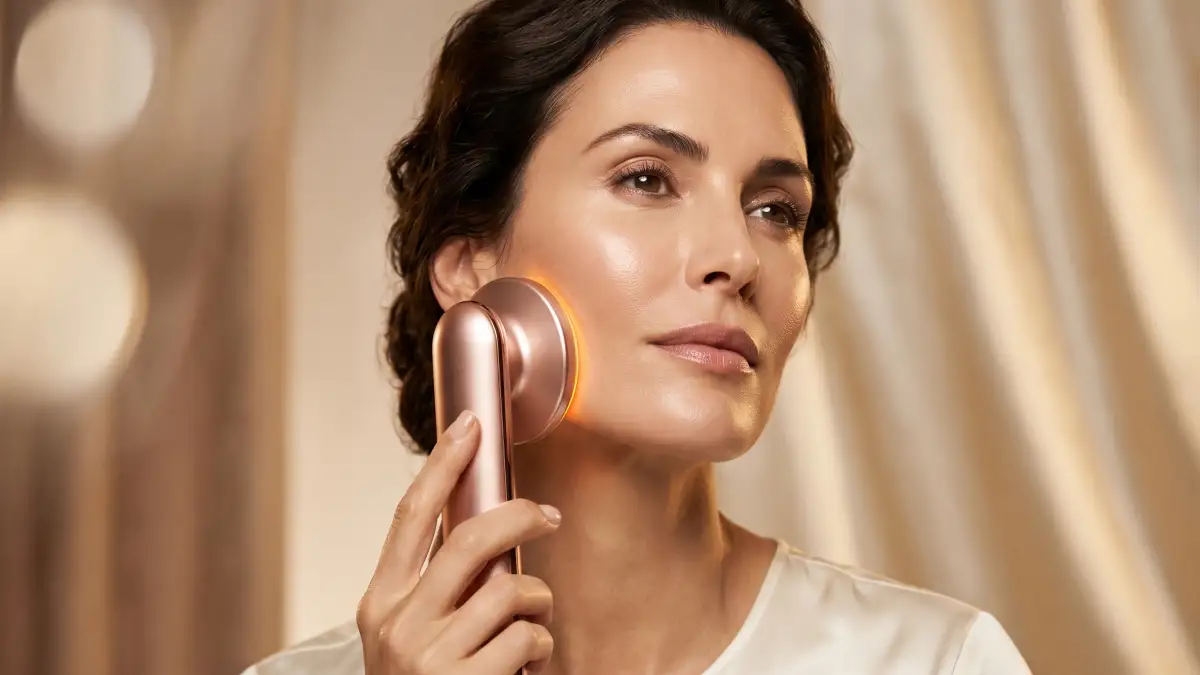
The science of skin aging is evolving rapidly — and for women navigating the skin changes that come with menopause and beyond, evidence-based skincare represents a fundamentally different approach: working with your skin's biology rather than against it.
Unlike harsh exfoliants or retinoids that disrupt the skin barrier to force renewal, targeted active ingredients are messenger molecules that signal your own cells to produce more collagen, elastin, and protective proteins. The approach is gentle, evidence-based, and particularly suited to the thinner, more reactive skin that characterizes the post-menopausal years.
Clinical Safety Profile, Contraindications, and How to Avoid Burns
Radiofrequency skin tightening has a strong clinical safety record — professional RF devices have been used in millions of treatments worldwide since FDA clearance in 2002, and the adaptation to lower-power at-home devices has further reduced the risk profile. However, because RF works through controlled thermal injury to dermal tissue, understanding safety parameters, recognizing contraindications, and following proper treatment protocols is essential to avoid the one significant risk that RF poses: thermal burns from improper use. The difference between therapeutic heating (40-45 degrees Celsius producing collagen remodeling) and injurious heating (above 48 degrees producing tissue damage) is narrow, making temperature awareness critical.[1]
Common side effects of at-home RF treatment (affecting 10-20% of users): Transient erythema (redness) lasting 30-60 minutes post-treatment — this is expected and indicates therapeutic dermal heating was achieved. Mild warmth or tingling during and after treatment — normal sensation from dermal heating. Temporary skin tightness — the immediate collagen contraction effect, which is actually the desired acute outcome. Minor edema (swelling) in treated areas lasting 1-4 hours — more common around the eyes where tissue is thinner. Rare side effects (affecting less than 2% of users): Superficial burns — almost exclusively caused by using the device on dry skin without conductive gel, holding the device stationary too long in one position, or using over bony prominences where tissue is thin. Temporary hyperpigmentation — more common in Fitzpatrick skin types IV-VI, typically resolving within 2-4 weeks. Blistering — extremely rare with at-home devices due to lower power output, but possible with improper technique.
Clinical research confirms that absolute contraindications for RF treatment: Metallic implants in the treatment area (plates, screws, dental implants in the jawline area) — metal concentrates RF energy and can cause localized overheating and burns. Cardiac pacemaker or defibrillator — RF energy can interfere with device function. Active skin infections, open wounds, or severe acne in the treatment area — thermal treatment can spread infection and damage compromised tissue. Pregnancy — insufficient safety data for developing fetus. Active cancer or history of skin cancer in the treatment area — thermal stimulation may affect cell proliferation. Autoimmune conditions affecting the skin (lupus, scleroderma) — abnormal wound-healing response to thermal injury. Recent injectable fillers (within 2 weeks) — heat can accelerate filler degradation or cause migration. Isotretinoin use within the past 6 months — impaired wound healing increases burn risk.
Burn prevention protocol for at-home RF use: Always apply conductive gel generously — gel is both the medium for energy delivery and the thermal buffer that prevents surface burns. Never hold the device stationary — keep it moving in slow, circular motions to distribute heat evenly. Avoid bony prominences (forehead ridges, orbital rim, jawline angle) — thinner tissue over bone heats faster and reaches dangerous temperatures more quickly. Start at the lowest intensity setting and increase gradually over the first 2-3 sessions as you learn your skin's heat tolerance. Use devices with built-in temperature sensors — these automatically reduce power when skin temperature approaches unsafe levels. If you feel sharp pain (distinct from warmth), stop immediately and move to another area. Do not treat the same area for more than the manufacturer-recommended duration. Following these protocols, the safety profile of at-home RF is excellent — clinical studies report adverse event rates below 5%, with the vast majority being transient erythema that resolves within one hour.
Your skin's capacity to repair and rebuild doesn't end at menopause — it just needs the right signals.
— Dr. Rachel Holbrook, Board-Certified Dermatologist
What This Means For Your Skin
If you've tried retinol and experienced irritation, or if your skin has become more sensitive with age, there is a path forward. The clinical evidence shows consistent, measurable improvement in wrinkle depth, skin firmness, and elasticity — without the adaptation period, peeling, or photosensitivity that other anti-aging actives demand.
Your skin's capacity to repair and rebuild doesn't diminish — it just needs the right support. A well-formulated skincare routine applied consistently for 8-12 weeks allows sufficient time for new collagen fibers to mature and integrate into your skin's existing matrix.
The science is clear. The evidence is consistent. The results are measurable.
What happens next is up to you.