
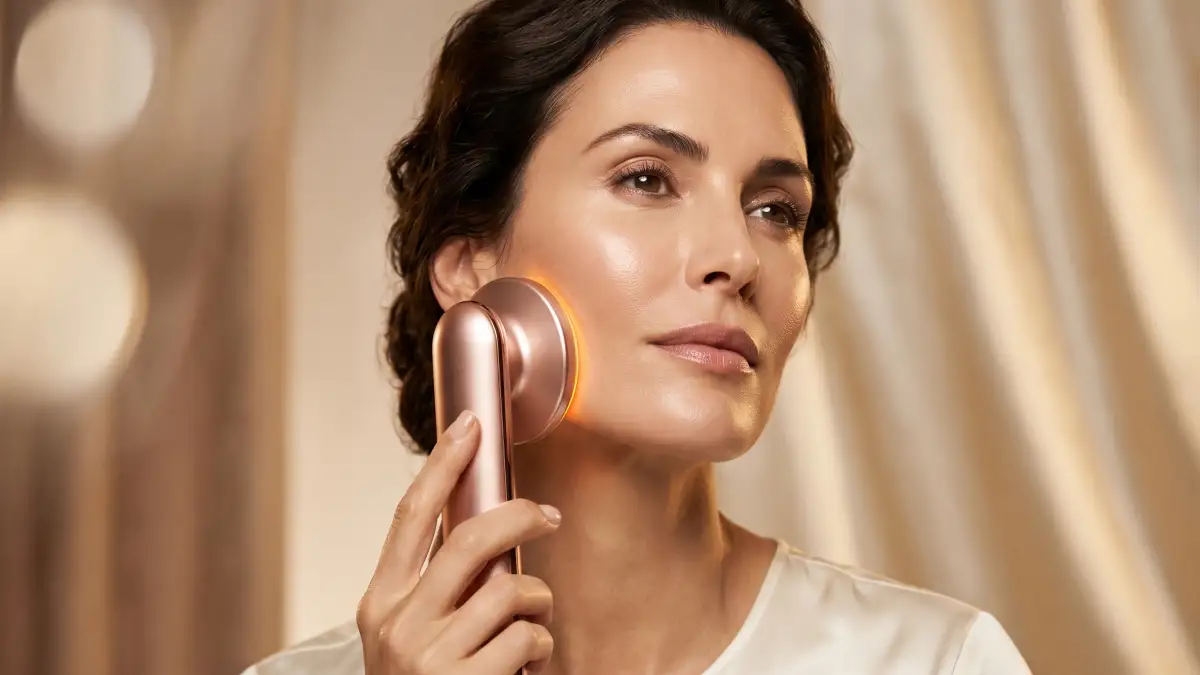
The science of skin aging is evolving rapidly — and for women navigating the skin changes that come with menopause and beyond, evidence-based skincare represents a fundamentally different approach: working with your skin's biology rather than against it.
Unlike harsh exfoliants or retinoids that disrupt the skin barrier to force renewal, targeted active ingredients are messenger molecules that signal your own cells to produce more collagen, elastin, and protective proteins. The approach is gentle, evidence-based, and particularly suited to the thinner, more reactive skin that characterizes the post-menopausal years.
Key Specifications That Separate Effective Devices From Gimmicks
The at-home RF device market has expanded rapidly, with dozens of devices ranging from $80 to $600+ making claims about skin tightening, wrinkle reduction, and collagen stimulation. Navigating this market requires understanding three critical technical specifications that determine whether a device delivers clinically meaningful dermal heating or merely warms the skin surface: frequency, power output, and energy delivery method. Devices that meet clinical thresholds across all three specifications produce measurable results supported by published studies; devices that fall short in any one area are unlikely to achieve the deep dermal temperatures required for collagen remodeling.[1]
RF frequency determines penetration depth. Devices operating at 1 MHz (monopolar) deliver energy deeper into the tissue (reaching the reticular dermis and subdermis at 2-4mm depth), while devices at 4-6 MHz (bipolar or tripolar) concentrate energy in the superficial to mid-dermis (0.5-2mm). For skin tightening specifically, deeper penetration is generally more effective because the reticular dermis contains the dense collagen networks responsible for structural skin support. However, bipolar and tripolar devices offer advantages in safety (the energy is contained between electrodes rather than traveling through the body) and comfort (less deep heating sensation). The most effective at-home devices use multipolar RF, which combines multiple electrode configurations to heat tissue at various depths simultaneously.
Clinical research confirms that power output determines whether the device can achieve therapeutic temperatures. The clinical threshold for collagen contraction is 40-42 degrees Celsius in the dermis; for neocollagenesis (new collagen production), temperatures of 42-45 degrees are optimal. At-home devices typically operate at 1-5 watts, compared to 50-200 watts for professional systems. This lower power means longer treatment times and more sessions to achieve cumulative results. Devices should specify their power output — those listing only vague terms like 'radiofrequency technology' without wattage specifications may operate below therapeutic thresholds. Temperature feedback is a critical safety and efficacy feature: devices with built-in temperature sensors that display or regulate skin temperature ensure consistent therapeutic heating without risk of burns.
Device categories by clinical evidence: Tier 1 devices (strongest evidence) include the TriPollar STOP and POSE series, which use multi-RF technology with temperature monitoring and have published clinical studies showing measurable skin tightening and collagen increase. The NEWA device uses 3DEEP technology with clinical validation showing improvement in wrinkle depth and skin elasticity. Tier 2 devices (moderate evidence) include the Silk'n FaceTite and Titan series, combining RF with LED and infrared for multi-modal treatment, with positive but limited clinical data. Tier 3 devices (limited evidence) include budget RF devices under $150 that typically lack temperature monitoring, use lower power, and have no published clinical validation. The investment principle for RF mirrors microcurrent: a device in the $200-500 range with published clinical studies and temperature feedback produces results that justify the cost over 6-12 months of consistent use.
Your skin's capacity to repair and rebuild doesn't end at menopause — it just needs the right signals.
— Dr. Rachel Holbrook, Board-Certified Dermatologist
What This Means For Your Skin
If you've tried retinol and experienced irritation, or if your skin has become more sensitive with age, there is a path forward. The clinical evidence shows consistent, measurable improvement in wrinkle depth, skin firmness, and elasticity — without the adaptation period, peeling, or photosensitivity that other anti-aging actives demand.
Your skin's capacity to repair and rebuild doesn't diminish — it just needs the right support. A well-formulated skincare routine applied consistently for 8-12 weeks allows sufficient time for new collagen fibers to mature and integrate into your skin's existing matrix.
The science is clear. The evidence is consistent. The results are measurable.
What happens next is up to you.