
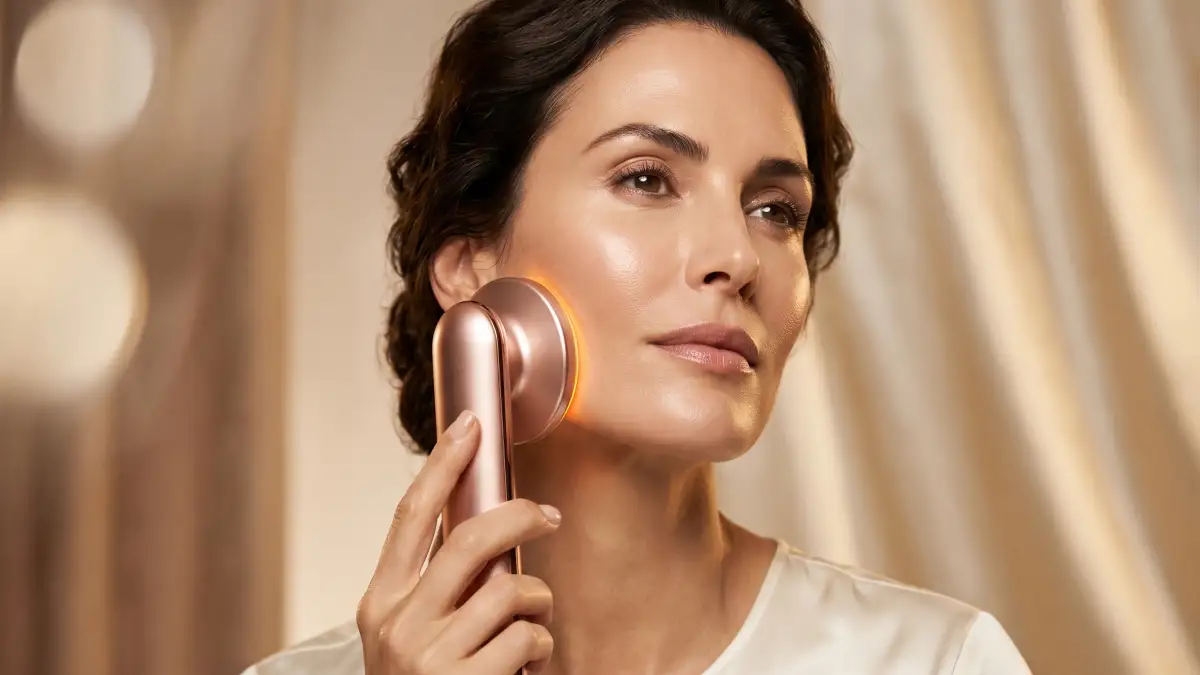
The science of skin aging is evolving rapidly — and for women navigating the skin changes that come with menopause and beyond, evidence-based skincare represents a fundamentally different approach: working with your skin's biology rather than against it.
Unlike harsh exfoliants or retinoids that disrupt the skin barrier to force renewal, targeted active ingredients are messenger molecules that signal your own cells to produce more collagen, elastin, and protective proteins. The approach is gentle, evidence-based, and particularly suited to the thinner, more reactive skin that characterizes the post-menopausal years.
Multi-Pathway Collagen Stimulation for Maximum Results
The combination of radiofrequency, retinol, and peptides represents a systematic approach to collagen stimulation that engages three independent biological pathways simultaneously — producing results that exceed the sum of their individual effects through genuine biochemical synergy. Each component activates a distinct step in the collagen production pipeline: RF provides the thermal stimulus that activates fibroblasts and triggers neocollagenesis through the wound-healing cascade, retinol activates collagen gene transcription through retinoic acid nuclear receptors, and peptides stimulate fibroblast proliferation and collagen secretion through cell-surface growth factor signaling. No single pathway produces maximum collagen output alone — but together, they create a comprehensive stimulus that addresses every rate-limiting step in the collagen synthesis process.[1]
The RF pathway (thermal activation): Radiofrequency energy heats the dermis to 40-45 degrees Celsius, triggering heat-shock protein expression (particularly HSP47) and releasing inflammatory cytokines (TGF-beta, IL-1) that activate dormant fibroblasts and recruit new fibroblasts to the treated area. This pathway produces: increased fibroblast density in the dermis (more cells available to produce collagen), activation of the wound-healing cascade (switching fibroblasts from quiescent to synthetic phenotype), and immediate collagen contraction (providing temporary tightening while neocollagenesis builds). The thermal pathway is unique to device-based treatments — no topical product can replicate the deep dermal heating that RF provides. The retinol pathway (gene activation): Retinol is converted through enzymatic steps to retinoic acid, which binds to RAR/RXR nuclear receptors on fibroblasts, directly upregulating transcription of COL1A1 and COL3A1 genes encoding type I and type III collagen. Studies show retinoid use increases procollagen synthesis by 50-80% through this gene-activation mechanism. The retinoid pathway also suppresses MMP-1 (collagenase), protecting both existing and newly synthesized collagen from enzymatic degradation.
Clinical research confirms that the peptide pathway (growth factor signaling): Signal peptides such as palmitoyl pentapeptide-4 (Matrixyl) and GHK-Cu (copper tripeptide) bind to cell-surface receptors and activate intracellular signaling cascades (particularly the TGF-beta/Smad pathway) that stimulate fibroblast proliferation and collagen secretion. Clinical studies show Matrixyl increases collagen synthesis by 25-44% through this growth-factor-mediated mechanism. Crucially, the peptide pathway operates independently of both the thermal pathway (different signaling cascade) and the retinoid pathway (cell-surface receptors versus nuclear receptors), meaning all three pathways can operate simultaneously without competition or interference. The synergy: when fibroblasts are simultaneously thermally activated (RF), genetically upregulated for collagen production (retinol), and receiving growth factor signals to proliferate and secrete collagen (peptides), the net collagen output exceeds what any two pathways could achieve together.
The practical protocol for combining all three: Evening routine on RF days (3x weekly): cleanse, apply conductive gel, perform RF treatment (10-20 minutes), remove gel, apply retinaldehyde or retinol serum within the post-RF absorption window, wait 15 minutes, apply peptide serum (Matrixyl + GHK-Cu), apply moisturizer. Evening routine on non-RF days (4x weekly): cleanse, apply retinol serum, wait 15 minutes, apply peptide serum, apply moisturizer. The critical sequencing rule: retinol is applied after RF during the enhanced absorption window, which means starting with a lower concentration than you would use without RF (the enhanced penetration increases retinoid delivery to the dermis by an estimated 20-30%). Begin with retinaldehyde 0.05% or retinol 0.25% on RF nights, increasing concentration gradually over 4-6 weeks as tolerance develops. Peptides are applied after retinol on all nights because they work through different receptors and do not interfere with retinoid activity. This triple-pathway protocol represents the most potent non-invasive collagen stimulation strategy currently achievable with at-home technology and products.
Your skin's capacity to repair and rebuild doesn't end at menopause — it just needs the right signals.
— Dr. Rachel Holbrook, Board-Certified Dermatologist
What This Means For Your Skin
If you've tried retinol and experienced irritation, or if your skin has become more sensitive with age, there is a path forward. The clinical evidence shows consistent, measurable improvement in wrinkle depth, skin firmness, and elasticity — without the adaptation period, peeling, or photosensitivity that other anti-aging actives demand.
Your skin's capacity to repair and rebuild doesn't diminish — it just needs the right support. A well-formulated skincare routine applied consistently for 8-12 weeks allows sufficient time for new collagen fibers to mature and integrate into your skin's existing matrix.
The science is clear. The evidence is consistent. The results are measurable.
What happens next is up to you.