
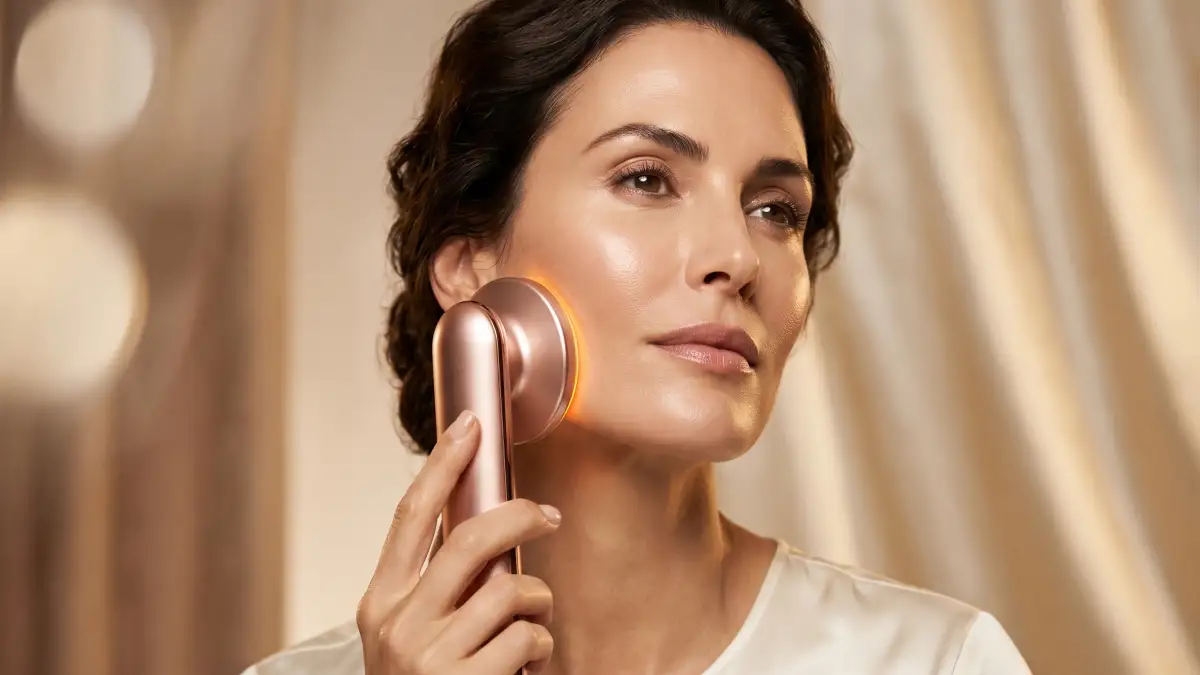
The science of skin aging is evolving rapidly — and for women navigating the skin changes that come with menopause and beyond, evidence-based skincare represents a fundamentally different approach: working with your skin's biology rather than against it.
Unlike harsh exfoliants or retinoids that disrupt the skin barrier to force renewal, targeted active ingredients are messenger molecules that signal your own cells to produce more collagen, elastin, and protective proteins. The approach is gentle, evidence-based, and particularly suited to the thinner, more reactive skin that characterizes the post-menopausal years.
The Thermal Cascade That Triggers New Collagen Production
The collagen-stimulating effect of radiofrequency is the technology's most clinically significant benefit — and it operates through a well-documented molecular cascade that begins with controlled thermal injury and culminates in the deposition of new, organized collagen fibers in the dermis. Understanding this cascade explains why RF results are delayed (peak improvement at 3-6 months), why consistency matters (each treatment adds to the cumulative stimulus), and why the new collagen produced is functionally superior to the aging collagen it supplements.[1]
The thermal cascade proceeds through four phases. Phase 1 — Immediate collagen contraction (minutes): When RF energy heats dermal collagen to 40-45 degrees Celsius, the hydrogen bonds stabilizing the collagen triple helix are partially disrupted, causing the fiber to contract to approximately 30% of its original length. This produces the immediate tightening visible after treatment. The contraction is reversible — the bonds re-form as tissue cools — but the temporary deformation triggers cellular signaling that initiates the repair response. Phase 2 — Inflammatory response (hours to days): The controlled thermal injury activates heat-shock proteins (particularly HSP47, which is specific to collagen synthesis) and releases inflammatory cytokines including TGF-beta, IL-1, and TNF-alpha. These signaling molecules recruit fibroblasts to the treated area and switch them from a quiescent state to an active synthetic phenotype. Zelickson's histological analysis confirmed increased HSP47 expression in RF-treated dermis within 48 hours of treatment.
Clinical research confirms that phase 3 — Neocollagenesis (weeks to months): Activated fibroblasts begin synthesizing new procollagen molecules — primarily type I and type III collagen, the two types that provide structural support and elasticity to the skin. The procollagen is secreted into the extracellular space, where it is cleaved by enzymes into tropocollagen, which self-assembles into collagen fibrils and fibers. This process takes 4-12 weeks from initial synthesis to functional fiber formation. Crucially, the new collagen is deposited in an organized pattern that mirrors the stress lines of the dermis, producing fibers that are structurally functional rather than the disorganized scar collagen produced by more aggressive thermal injuries. Phase 4 — Remodeling (months): The newly deposited collagen undergoes cross-linking — enzymatic bonds form between collagen molecules, increasing the tensile strength and durability of the new fibers. This phase continues for 6-12 months after the initial thermal stimulus, which is why clinical studies consistently show continued improvement well beyond the active treatment period.
The clinical evidence for RF-induced neocollagenesis is robust. Zelickson's landmark 2004 study performed skin biopsies before and after RF treatment and documented: significant increase in dermal collagen density, new collagen fiber formation in the papillary and reticular dermis, thickening of the dermal-epidermal junction, and increased expression of HSP47 and procollagen markers. A follow-up study by Weiss and colleagues confirmed these findings and demonstrated that the new collagen maintained structural organization at 6-month follow-up. For at-home RF devices, the same biological cascade occurs at a lower intensity per session — each treatment produces a smaller thermal stimulus, but regular treatment (3-5 times weekly) creates a sustained collagen-stimulating signal that drives continuous neocollagenesis. The cumulative effect of 40-60 at-home sessions over 12 weeks produces collagen remodeling comparable to a single professional treatment, achieved through frequency rather than intensity.
Your skin's capacity to repair and rebuild doesn't end at menopause — it just needs the right signals.
— Dr. Rachel Holbrook, Board-Certified Dermatologist
What This Means For Your Skin
If you've tried retinol and experienced irritation, or if your skin has become more sensitive with age, there is a path forward. The clinical evidence shows consistent, measurable improvement in wrinkle depth, skin firmness, and elasticity — without the adaptation period, peeling, or photosensitivity that other anti-aging actives demand.
Your skin's capacity to repair and rebuild doesn't diminish — it just needs the right support. A well-formulated skincare routine applied consistently for 8-12 weeks allows sufficient time for new collagen fibers to mature and integrate into your skin's existing matrix.
The science is clear. The evidence is consistent. The results are measurable.
What happens next is up to you.