
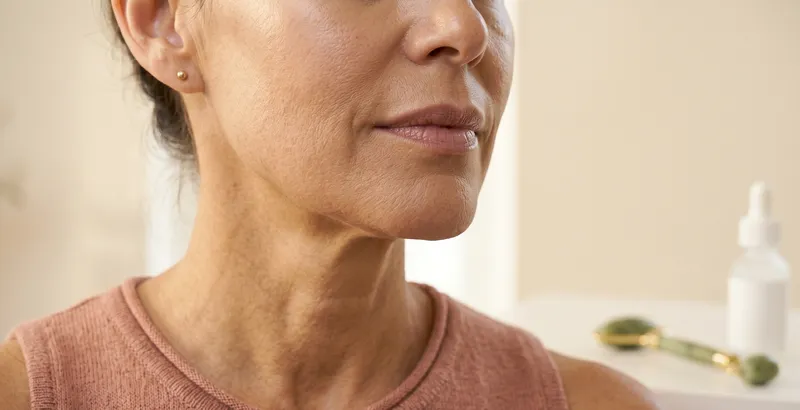
The science of skin aging is evolving rapidly — and for women navigating the skin changes that come with menopause and beyond, evidence-based skincare represents a fundamentally different approach: working with your skin's biology rather than against it.
Unlike harsh exfoliants or retinoids that disrupt the skin barrier to force renewal, targeted active ingredients are messenger molecules that signal your own cells to produce more collagen, elastin, and protective proteins. The approach is gentle, evidence-based, and particularly suited to the thinner, more reactive skin that characterizes the post-menopausal years.
Distinguishing Malassezia Folliculitis From Androgen-Driven Breakouts
The distinction between Malassezia (pityrosporum) folliculitis—commonly termed 'fungal acne'—and true hormonal acne vulgaris is a critical diagnostic differentiation that is frequently missed in women over 40, leading to months or years of ineffective treatment and unnecessary frustration. This diagnostic confusion arises because both conditions present as inflammatory papules and pustules on the face, and because they can coexist in the same patient (Malassezia colonization is influenced by sebum composition, which is itself altered by hormonal changes). However, the two conditions have fundamentally different etiologies requiring opposite treatment approaches: hormonal acne results from androgen-driven sebaceous hyperactivity with secondary Cutibacterium acnes colonization and inflammation, while Malassezia folliculitis results from overgrowth of lipophilic Malassezia yeasts (primarily M. globosa, M. restricta, and M. furfur) within the hair follicle, triggering an immune response against fungal cell wall components. The practical consequence of misdiagnosis is significant—standard acne treatments (antibiotics, benzoyl peroxide) can worsen Malassezia folliculitis by disrupting competing bacterial flora and allowing further fungal expansion, while antifungal treatments have no effect on true hormonal acne. In perimenopausal women, changes in sebum lipid composition (increased triglycerides, decreased free fatty acids due to altered lipase activity) create conditions favoring Malassezia proliferation, making accurate diagnosis especially important in this demographic.[1]
Clinical differentiation between the two conditions relies on careful observation of lesion morphology, distribution pattern, associated symptoms, and response to previous treatments. Malassezia folliculitis presents as monomorphic (uniform-sized) papules and pustules typically 1-2mm in diameter, clustered rather than scattered, often with a slightly follicular-centered appearance. The hallmark symptom is pruritus—Malassezia folliculitis itches, while hormonal acne is typically painful rather than itchy. Distribution favors the forehead, upper cheeks, and truncal areas (chest, upper back, shoulders) where Malassezia density is highest, though it can affect any sebaceous area. In contrast, hormonal acne presents as polymorphic lesions (comedones, papules, nodules, and cysts of varying sizes), concentrated on the lower face (jawline, chin, perioral), and is characterized by tenderness and pressure pain rather than pruritus. Key historical clues favoring Malassezia folliculitis include: worsening with antibiotic use (oral or topical, by eliminating bacterial competitors), seasonal exacerbation in hot/humid weather, occurrence after sweating or occlusion, improvement with antifungal dandruff shampoos, and resistance to standard acne treatments over 3+ months. In women over 40, a particularly common scenario is the coexistence of both conditions—hormonal acne on the jawline with Malassezia folliculitis on the forehead and temples—which requires zone-specific treatment strategies.
Clinical research confirms that definitive diagnosis can be confirmed through several clinical techniques when visual assessment is uncertain. Dermoscopy of Malassezia folliculitis reveals perifollicular scaling with a yellowish hue and absence of the comedones (white/blackhead structures) characteristic of acne vulgaris. Wood's lamp examination in a darkened room may reveal yellow-green fluorescence of Malassezia colonies in affected follicles (though sensitivity is limited to approximately 50% as not all Malassezia species fluoresce). KOH preparation of a pustule's contents—gently expressed and mixed with 10% KOH on a glass slide—reveals round budding yeast forms and short hyphae ('spaghetti and meatballs' appearance) in Malassezia folliculitis versus the absence of fungal elements and presence of neutrophils and occasional bacteria in acne. Biopsy with PAS staining is rarely necessary but provides definitive confirmation: Malassezia folliculitis shows follicular dilatation filled with yeast organisms and neutrophilic inflammation centered on the upper follicle, while acne vulgaris shows follicular plugging, rupture of the follicular wall, and mixed perifollicular inflammation in deeper dermis. For women over 40 experiencing persistent facial papules and pustules unresponsive to 8+ weeks of appropriate acne therapy, Malassezia folliculitis should be considered and evaluated before escalating to more aggressive or systemic acne treatments.
Treatment approaches for the two conditions are fundamentally different and mutually exclusive in their primary mechanisms. Malassezia folliculitis requires antifungal therapy: topical ketoconazole 2% cream or shampoo (applied as a mask for 5-10 minutes to affected areas daily for 2-4 weeks), oral fluconazole (150-200mg weekly for 4-6 weeks for resistant cases), or oral itraconazole (200mg daily for 1-2 weeks). Long-term prevention requires maintaining a Malassezia-inhospitable skin environment: using skincare products free of fatty acids, esters, and oils that serve as Malassezia growth substrates (the yeast requires specific carbon chain lengths C11-C24 for growth); incorporating zinc pyrithione 1-2% into the daily routine as a maintenance antifungal; and applying sulfur-based treatments (precipitated sulfur 5-10%) that inhibit fungal metabolism. For women over 40 with confirmed coexisting conditions—hormonal acne plus Malassezia folliculitis—a zone-specific approach is required: anti-androgen therapy (spironolactone) and retinoids for the hormonal acne component (predominantly lower face), antifungal therapy for the Malassezia component (predominantly upper face and trunk), and shared-benefit ingredients (zinc, azelaic acid 15%, and niacinamide all demonstrate both anti-acne and anti-Malassezia activity through different mechanisms). The critical skincare principle for coexisting conditions is selecting products that are simultaneously non-comedogenic AND Malassezia-safe—which eliminates many popular skincare products containing fatty acids, polysorbates, and esters that feed Malassezia while being technically non-comedogenic for acne purposes.
Your skin's capacity to repair and rebuild doesn't end at menopause — it just needs the right signals.
— Dr. Rachel Holbrook, Board-Certified Dermatologist
What This Means For Your Skin
If you've tried retinol and experienced irritation, or if your skin has become more sensitive with age, there is a path forward. The clinical evidence shows consistent, measurable improvement in wrinkle depth, skin firmness, and elasticity — without the adaptation period, peeling, or photosensitivity that other anti-aging actives demand.
Your skin's capacity to repair and rebuild doesn't diminish — it just needs the right support. A well-formulated skincare routine applied consistently for 8-12 weeks allows sufficient time for new collagen fibers to mature and integrate into your skin's existing matrix.
The science is clear. The evidence is consistent. The results are measurable.
What happens next is up to you.