
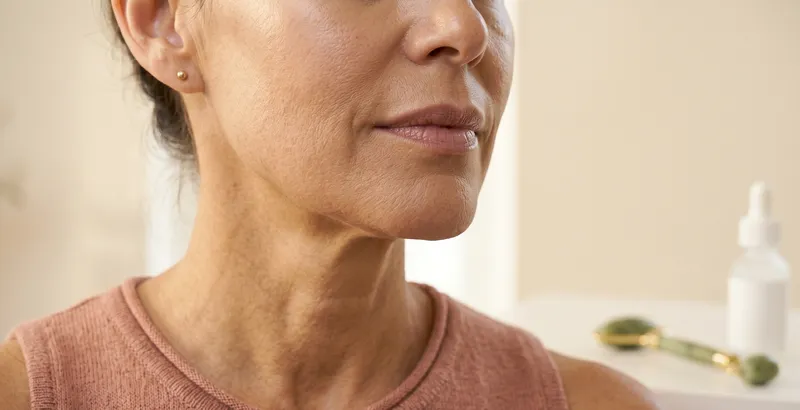
The science of skin aging is evolving rapidly — and for women navigating the skin changes that come with menopause and beyond, evidence-based skincare represents a fundamentally different approach: working with your skin's biology rather than against it.
Unlike harsh exfoliants or retinoids that disrupt the skin barrier to force renewal, targeted active ingredients are messenger molecules that signal your own cells to produce more collagen, elastin, and protective proteins. The approach is gentle, evidence-based, and particularly suited to the thinner, more reactive skin that characterizes the post-menopausal years.
Evidence-Based Botanical and Nutritional Approaches for Deep Lesions
Cystic acne during perimenopause presents a particularly challenging clinical scenario because the deep inflammatory nodules and cysts characteristic of this condition cause significant pain, scarring risk, and psychological distress, while many women in this life stage actively seek alternatives to conventional pharmaceuticals due to polypharmacy concerns, desire for natural approaches, or contraindications to standard treatments. The evidence base for natural and integrative treatments has expanded considerably in the past decade, with several botanical and nutritional interventions demonstrating meaningful anti-androgenic, anti-inflammatory, and sebum-modulating effects in randomized controlled trials. However, the critical distinction between evidence-based integrative dermatology and unsubstantiated naturopathic claims must be maintained: effective natural treatments for cystic acne work through defined biochemical mechanisms targeting the same pathways as conventional drugs—they simply employ plant-derived or nutritional compounds rather than synthetic molecules. The most promising interventions address the specific pathophysiology of perimenopausal cystic acne: relative androgen excess, heightened inflammatory signaling, dysregulated sebaceous lipogenesis, and impaired follicular barrier function.[1]
Spearmint tea represents one of the best-studied botanical anti-androgens with direct relevance to perimenopausal cystic acne. Two randomized controlled trials have demonstrated that consumption of spearmint tea (Mentha spicata, 2 cups daily or 900mg standardized extract) significantly reduces free testosterone levels by 27-30% and total testosterone by 17-20% over 30-day periods. The mechanism involves inhibition of 5-alpha-reductase activity and reduction of luteinizing hormone (LH) pulse frequency, mimicking—at a gentler level—the anti-androgenic actions of spironolactone. Saw palmetto (Serenoa repens, 320mg daily standardized to 85-95% fatty acids and sterols) provides complementary 5-alpha-reductase type 1 and 2 inhibition through competitive inhibition of DHT binding to the androgen receptor. A 2020 pilot study in adult women with hormonal acne demonstrated 35% reduction in inflammatory lesion count after 8 weeks of supplementation. Vitex agnus-castus (chasteberry, 20-40mg daily standardized to 6% aucubin) acts on the hypothalamic-pituitary axis to reduce prolactin secretion and normalize LH/FSH ratio, addressing the luteal phase deficiency common in perimenopause that contributes to premenstrual acne flaring. These three botanicals—spearmint, saw palmetto, and vitex—form a synergistic anti-androgen triad that, while less potent than pharmaceutical interventions, provides clinically meaningful improvement in mild-to-moderate hormonal cystic acne over 2-3 months.
Clinical research confirms that nutritional and supplemental interventions targeting the inflammatory and metabolic components of perimenopausal cystic acne have accumulated significant supporting evidence. Omega-3 fatty acids (EPA 1000mg + DHA 500mg daily) reduce inflammatory acne by 42% over 12 weeks through competitive inhibition of arachidonic acid incorporation into cell membranes, reducing pro-inflammatory prostaglandin E2 and leukotriene B4 synthesis that drives the neutrophilic inflammation characteristic of cystic lesions. Zinc picolinate (30mg elemental zinc daily) addresses the frequent zinc deficiency observed in acne patients and directly inhibits 5-alpha-reductase activity, reduces inflammatory cytokine production through NF-kB pathway modulation, and suppresses Cutibacterium acnes growth through disruption of bacterial cell membrane integrity. A 2021 meta-analysis of 12 RCTs confirmed that zinc supplementation reduces inflammatory acne lesion count by 34% compared to placebo. Diindolylmethane (DIM, 100-200mg daily), derived from cruciferous vegetables, promotes favorable estrogen metabolism by shifting the 2-hydroxyestrone to 16-alpha-hydroxyestrone ratio, providing mild anti-estrogenic and anti-androgenic effects. Probiotics targeting the gut-skin axis—specifically Lactobacillus rhamnosus SP1 and Bifidobacterium longum—reduce systemic inflammation and improve intestinal barrier function, with one RCT demonstrating 40% improvement in adult acne scores after 12 weeks of supplementation.
Topical natural therapies for perimenopausal cystic acne should target the deep inflammatory process while supporting the compromised barrier function of mature skin. Tea tree oil (Melaleuca alternifolia) at 5% concentration demonstrates equivalent efficacy to benzoyl peroxide 5% for inflammatory acne with significantly less dryness and irritation—critical for mature skin with already reduced barrier function. For cystic lesions specifically, a spot treatment combining 10% tea tree oil with 2% alpha-bisabolol (from chamomile) and 5% boswellic acid (frankincense extract, a potent 5-lipoxygenase inhibitor) addresses both bacterial proliferation and the leukotriene-mediated deep tissue inflammation driving cyst formation. Green tea extract (EGCG 2-3% in a serum vehicle) reduces sebum production by 60% through AMPK pathway activation in sebocytes while providing antioxidant and anti-inflammatory protection. Azelaic acid—while technically synthesized for pharmaceutical use—is naturally produced by Malassezia yeasts and at 15-20% concentration effectively treats both the comedonal and inflammatory components of cystic acne with additional anti-hyperpigmentation benefits. A comprehensive natural protocol combining internal anti-androgen botanicals, anti-inflammatory supplements, and targeted topical therapies can achieve 50-65% improvement in perimenopausal cystic acne over 12-16 weeks—approaching pharmaceutical efficacy for mild-to-moderate disease while maintaining a favorable side-effect profile and addressing the whole-body approach many women in this demographic prefer.
Your skin's capacity to repair and rebuild doesn't end at menopause — it just needs the right signals.
— Dr. Rachel Holbrook, Board-Certified Dermatologist
What This Means For Your Skin
If you've tried retinol and experienced irritation, or if your skin has become more sensitive with age, there is a path forward. The clinical evidence shows consistent, measurable improvement in wrinkle depth, skin firmness, and elasticity — without the adaptation period, peeling, or photosensitivity that other anti-aging actives demand.
Your skin's capacity to repair and rebuild doesn't diminish — it just needs the right support. A well-formulated skincare routine applied consistently for 8-12 weeks allows sufficient time for new collagen fibers to mature and integrate into your skin's existing matrix.
The science is clear. The evidence is consistent. The results are measurable.
What happens next is up to you.