
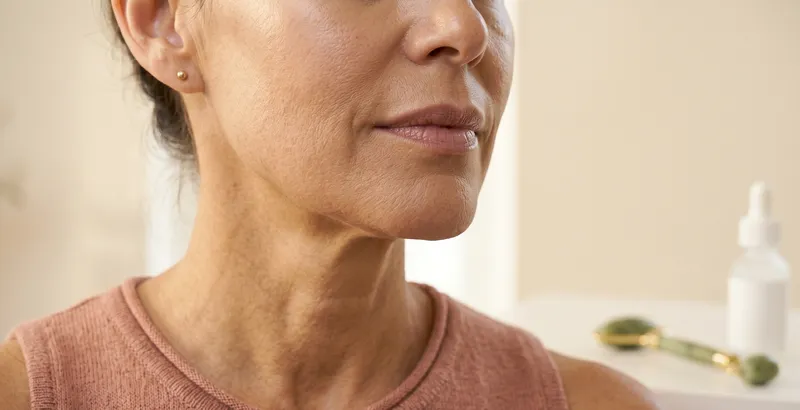
The science of skin aging is evolving rapidly — and for women navigating the skin changes that come with menopause and beyond, evidence-based skincare represents a fundamentally different approach: working with your skin's biology rather than against it.
Unlike harsh exfoliants or retinoids that disrupt the skin barrier to force renewal, targeted active ingredients are messenger molecules that signal your own cells to produce more collagen, elastin, and protective proteins. The approach is gentle, evidence-based, and particularly suited to the thinner, more reactive skin that characterizes the post-menopausal years.
How Glycemic Load Amplifies Androgen Signaling in Mature Skin
The relationship between dietary glycemic load and hormonal acne is no longer speculative—it represents one of the most well-established nutritional-dermatological connections, supported by multiple randomized controlled trials, mechanistic studies, and epidemiological data spanning diverse populations. For women over 40 experiencing hormonal acne, this connection is particularly potent because age-related metabolic changes amplify every step of the insulin-androgen-acne pathway. The core mechanism is straightforward: high-glycemic foods (refined carbohydrates, added sugars, processed grains) cause rapid blood glucose elevation, triggering proportional insulin secretion from pancreatic beta cells. Insulin, beyond its glucose-lowering function, acts as a growth factor that directly stimulates androgen production in both ovarian theca cells and adrenal zona reticularis through activation of the PI3K/Akt signaling pathway. Simultaneously, insulin suppresses hepatic SHBG synthesis by approximately 50% within hours of sustained elevation—liberating bound androgens into their biologically active free form. In perimenopausal women, this insulin-driven androgenic amplification is superimposed upon an already androgen-dominant milieu, creating a multiplicative rather than merely additive effect on sebaceous gland stimulation. Epidemiological data from the Nurses' Health Study II identified that women consuming the highest quintile of glycemic load had 2.1 times the prevalence of adult acne compared to those in the lowest quintile, after controlling for age, BMI, and other confounders.[1]
Insulin-like growth factor 1 (IGF-1) represents the second critical mediator in the diet-acne axis, acting as a downstream amplifier of insulin signaling that specifically targets the pilosebaceous unit. High-glycemic diets elevate IGF-1 both directly (insulin stimulates hepatic IGF-1 secretion) and indirectly (insulin reduces IGF-binding protein 1 and 3, increasing free IGF-1 bioavailability). IGF-1 receptors are abundantly expressed on sebocytes and follicular keratinocytes, and their activation drives multiple acne-promoting pathways simultaneously: stimulation of sebocyte proliferation and lipogenesis through the mTORC1 (mechanistic target of rapamycin complex 1) pathway, induction of androgen receptor expression in sebaceous glands (increasing their sensitivity to circulating androgens), upregulation of SREBP-1c (sterol regulatory element-binding protein) which controls de novo lipogenesis in sebocytes, and stimulation of follicular keratinocyte hyperproliferation that initiates comedone formation. The mTORC1 pathway is particularly significant—it functions as a nutrient-sensing signaling hub that integrates dietary signals (glucose, amino acids, specifically leucine) with growth factor signaling to regulate cell growth and lipid synthesis. German researcher Bodo Melnik has extensively documented how the Western diet chronically over-activates mTORC1 in sebocytes, driving the lipogenic program that produces the excessive and compositionally altered sebum underlying acne pathogenesis.
Clinical research confirms that the metabolic changes specific to perimenopausal women create a particularly vulnerability to diet-driven acne exacerbation through several converging mechanisms. Insulin sensitivity naturally declines after age 40, with studies showing a 4-7% annual decrease in insulin sensitivity during the menopausal transition—mediated by declining estrogen (which normally enhances insulin receptor signaling and GLUT4 expression in skeletal muscle), redistribution of fat toward visceral depots (producing inflammatory adipokines that impair insulin signaling), and reduced physical activity and muscle mass. This progressive insulin resistance means that the same glycemic load that produced a modest, quickly-resolved insulin spike at age 30 now generates a higher and more prolonged insulin response at age 45—with proportionally greater androgenic stimulation. Additionally, declining estrogen removes a direct brake on hepatic IGF-1 production (estrogen normally suppresses IGF-1 gene transcription), meaning that perimenopausal women have elevated baseline IGF-1 that is further amplified by dietary glycemic load. The clinical implication is profound: dietary modification may produce relatively greater acne improvement in women over 40 compared to younger women, because it addresses a metabolic amplification loop that is uniquely active in the perimenopausal metabolic environment.
Evidence-based dietary modification for hormonal acne in women over 40 extends beyond simple glycemic index reduction to encompass a comprehensive nutritional strategy addressing inflammation, gut-skin axis health, and specific nutrient requirements for hormonal balance. The primary intervention—reducing glycemic load—should target a daily GL below 80 (versus the typical Western diet GL of 120-150), achieved by replacing refined carbohydrates with fiber-rich whole grains, legumes, and non-starchy vegetables; eliminating sugar-sweetened beverages; and moderating even natural high-GI foods like white potatoes and white rice. Beyond glycemic load, dairy consumption—particularly skim milk and whey protein—shows consistent associations with acne through IGF-1 content and insulinotropic amino acid profiles (branched-chain amino acids leucine, isoleucine, and valine that directly activate mTORC1 independent of insulin signaling). Anti-inflammatory dietary patterns emphasizing omega-3 fatty acids (fatty fish 3x/week, flaxseed, walnuts), polyphenols (berries, green tea, dark chocolate >70%), and prebiotic fiber (Jerusalem artichoke, garlic, onions, asparagus) address the inflammatory component of acne while supporting gut microbiome diversity that influences systemic inflammation through the gut-skin axis. A 2012 RCT demonstrated that a 12-week low-glycemic-load diet reduced inflammatory acne lesion count by 51% and total lesion count by 44%—results comparable to topical antibiotic monotherapy—with concurrent improvements in insulin sensitivity, SHBG levels, and free androgen index that specifically benefit the perimenopausal hormonal acne population.
Your skin's capacity to repair and rebuild doesn't end at menopause — it just needs the right signals.
— Dr. Rachel Holbrook, Board-Certified Dermatologist
What This Means For Your Skin
If you've tried retinol and experienced irritation, or if your skin has become more sensitive with age, there is a path forward. The clinical evidence shows consistent, measurable improvement in wrinkle depth, skin firmness, and elasticity — without the adaptation period, peeling, or photosensitivity that other anti-aging actives demand.
Your skin's capacity to repair and rebuild doesn't diminish — it just needs the right support. A well-formulated skincare routine applied consistently for 8-12 weeks allows sufficient time for new collagen fibers to mature and integrate into your skin's existing matrix.
The science is clear. The evidence is consistent. The results are measurable.
What happens next is up to you.